

It sounds like it shouldn’t be possible: a leg is gone, but the foot still itches. This isn’t tied to one place or event. It shows up in lots of settings, from U.S. Civil War medical notes to modern rehab clinics in the UK and Japan. The basic reason is simple. The brain does not update its body map instantly just because the body changed. Nerves that used to carry signals from the missing limb can still fire. And the brain areas that used to “listen” to that limb can stay active, or get rewired, in ways that still feel like the limb is there.
Phantom limb is a brain experience, not a trick
After an amputation, many people report a clear sense of position: a hand “clenched,” a knee “bent,” toes “pressed into a shoe.” That detail matters because it shows the sensation isn’t only pain. It can be shape, movement, temperature, or touch. The brain runs a constantly updated model of the body to control movement. When the limb is gone, that model can keep generating expectations anyway. A missing limb can still feel present for the same reason a vividly imagined movement can feel almost physical.
Phantom sensation and phantom pain are related but not identical. Some people feel a neutral presence with no distress. Others feel severe burning, cramping, or electric shocks. The difference often depends on what signals are coming in from the remaining nerves and how the brain interprets them, not on a simple “more damage equals more pain” rule.
The nerves don’t go silent when a limb is removed
Amputation cuts through nerves, but the nerve endings remain in the residual limb. They can become irritated, hypersensitive, or tangled into neuromas. Those nerve endings still send messages up the spinal cord. The brain has to guess what those messages mean. If the wiring used to belong to the foot, the brain may still label the activity as “foot,” even when the true source is the stump, a scar, or pressure from a prosthetic socket.
A specific overlooked detail is that very ordinary inputs can trigger it. Heat, cold, or even a wrinkle in the prosthetic liner can set off bursts of nerve activity. Because the signals travel along old pathways, the felt location can be the missing heel or the absent fingertips, not the skin that actually got pressed.
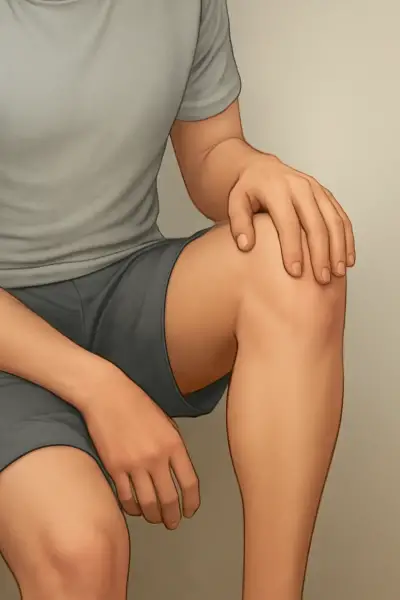
The brain’s body map can get rearranged
The brain devotes real estate to different body parts. When input from a limb stops, nearby brain regions can expand into that unused space. This is often discussed with the somatosensory cortex, where touch and body location are processed. The shift can be partial, messy, and different across people, which is one reason the experience varies so much. It is not always clear how tightly remapping predicts pain, but it does help explain why sensations can feel misplaced or oddly blended.
Some amputees notice that touching one area can spark sensation somewhere “missing.” A classic report is that face or upper-arm touch can sometimes evoke feelings in a missing hand. That doesn’t mean the hand is secretly “there.” It means the brain circuits that used to represent the hand are still reachable, and other inputs can end up activating them.
Memory, expectation, and stuck signals add to the feeling
The nervous system also remembers. If someone had years of arthritis pain in a knee before an above-knee amputation, the brain has a long history of labeling certain patterns as “knee pain.” After surgery, new nerve noise can be interpreted through that old template. That’s why some people describe the pain as eerily familiar, like the same cramp or twist they had before the limb was removed.
There is also a timing issue people don’t always expect. Phantom sensations can start immediately after surgery, but they can also appear later. Healing changes the residual limb. Prosthetic use changes pressure patterns. Stress, sleep loss, and illness can change how strongly the brain gates sensory signals. So the “missing limb” feeling can fade, flare, or shift location without a simple explanation visible from the outside.
A concrete example of how it can show up day to day
Imagine someone with a below-knee amputation who puts on a prosthesis in the morning. The socket fits a bit tighter than usual after a warm shower. A small pressure point forms on the residual limb. Instead of feeling “pressure on the stump,” the person feels a sharp pinch in the missing big toe, or a sense that the absent foot is twisted inward. The overlooked part is the mismatch in location: the trigger is local and physical, but the brain’s label points to a place that no longer exists.
Experiences like that are also why two people with similar surgeries can report totally different sensations. The peripheral nerve activity differs, the brain’s body map differs, and each person’s history of pain and movement differs. Put together, that can produce anything from a faint sense of presence to an intense, specific feeling that the missing limb is still trying to move.
If you liked this, you might also enjoy: