

A small shift people notice without naming
You can watch this happen in ordinary places, and it isn’t tied to one famous event. It shows up on a New York City subway platform, in a London office lobby, or at a family dinner where someone is about to speak. A person lifts their chest a little, lets their shoulders settle back, and their voice often comes out steadier. Other people react, too. Someone makes more eye contact. Someone stops interrupting. The basic mechanism is simple: posture changes breathing, facial tension, and where the gaze lands, and those small cues are exactly what humans use to judge confidence in real time.
Why it feels instant from the inside

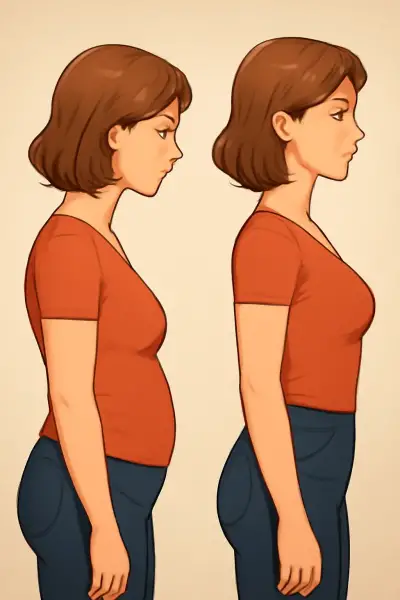
When posture collapses, the ribcage has less room to move. That tends to push breathing higher into the chest and neck. The throat can tighten a little. Even a slight chin tuck changes how the jaw sits, which changes speech clarity. People often interpret that internal strain as nervousness, even if nothing emotionally changed.
When the torso stacks more upright, breathing often drops lower and slows. That can reduce the sensation of urgency. The overlooked detail is the exhale. A longer, easier exhale quietly changes cadence and pauses. Listeners usually read those pauses as composure, not physiology, because they only hear the result.
What other people are reading in a few seconds
Observers don’t need a full body scan. They grab quick signals. Head position affects whether the eyes look up from under the brow or meet someone straight on. Shoulder position affects how much the arms move and whether gestures look cramped or open. A forward head and rounded shoulders can make the hands hover close to the body, which can look like self-protection.
There’s also a timing effect. When someone stands with a little more vertical length, they often turn their head more smoothly. They arrive at a gaze target and stay there a beat longer. That “settling” is easy to miss, but it changes how others predict the next moment. If a person’s movements look less hurried, people tend to assume the person isn’t being pushed around by the situation.
How posture changes the voice before the words land
Confidence is frequently judged by sound, not content. A compressed posture can raise pitch slightly and reduce volume because the breathing support isn’t as stable. That doesn’t mean the person is scared. It’s a mechanical constraint. The listener only hears a thinner signal and may decide the speaker is unsure.
A more upright posture can create clearer resonance. It also changes how consonants pop. That matters in group settings because crisp consonants cut through background noise. In a meeting room with HVAC hum, the person whose voice carries cleanly often gets treated as more certain, even when they’re saying something tentative.
A concrete moment where it shows up
Picture a conference Q&A. Someone walks to a microphone, glances down, and their shoulders roll forward as they read a note on their phone. The first sentence comes out fast. The mic picks up breath noise. A few heads tilt away, not out of cruelty, but because the signal sounds small and slightly strained.
Then the same person lifts their gaze toward the panel and brings their head back over the spine. Nothing about the question changes. The delivery does. The pace slows by a fraction, and the voice has more space around it. People look up again. One panelist leans in and waits. It’s a quick social recalibration, driven by tiny physical cues that most observers can’t name while they’re responding to them.
Related reads
- The shiver from a song: what causes musical goosebumps
- When a group all remembers the same detail that never happened
- Why your handwriting tightens when stress creeps in
- How snails rebuild cracked shells from the inside
- The Boston molasses tsunami of 1919 that swept trains and toppled buildings
- How a Habsburg envoy went out a window and sparked Prague’s uprising