

That moment you jump in
You’re in a normal conversation and someone pauses for half a beat—maybe in a meeting on Zoom, maybe at a noisy café—and you already know what they’re going to say. Sometimes you even say it out loud. This isn’t one single place or event. It happens in Tokyo trains, London offices, and at U.S. family dinners. The basic mechanism is prediction. The brain doesn’t wait passively for each word. It uses context, past experience, and the shape of a sentence so far to guess what comes next, then it updates that guess as sound arrives.
Your brain runs ahead of speech
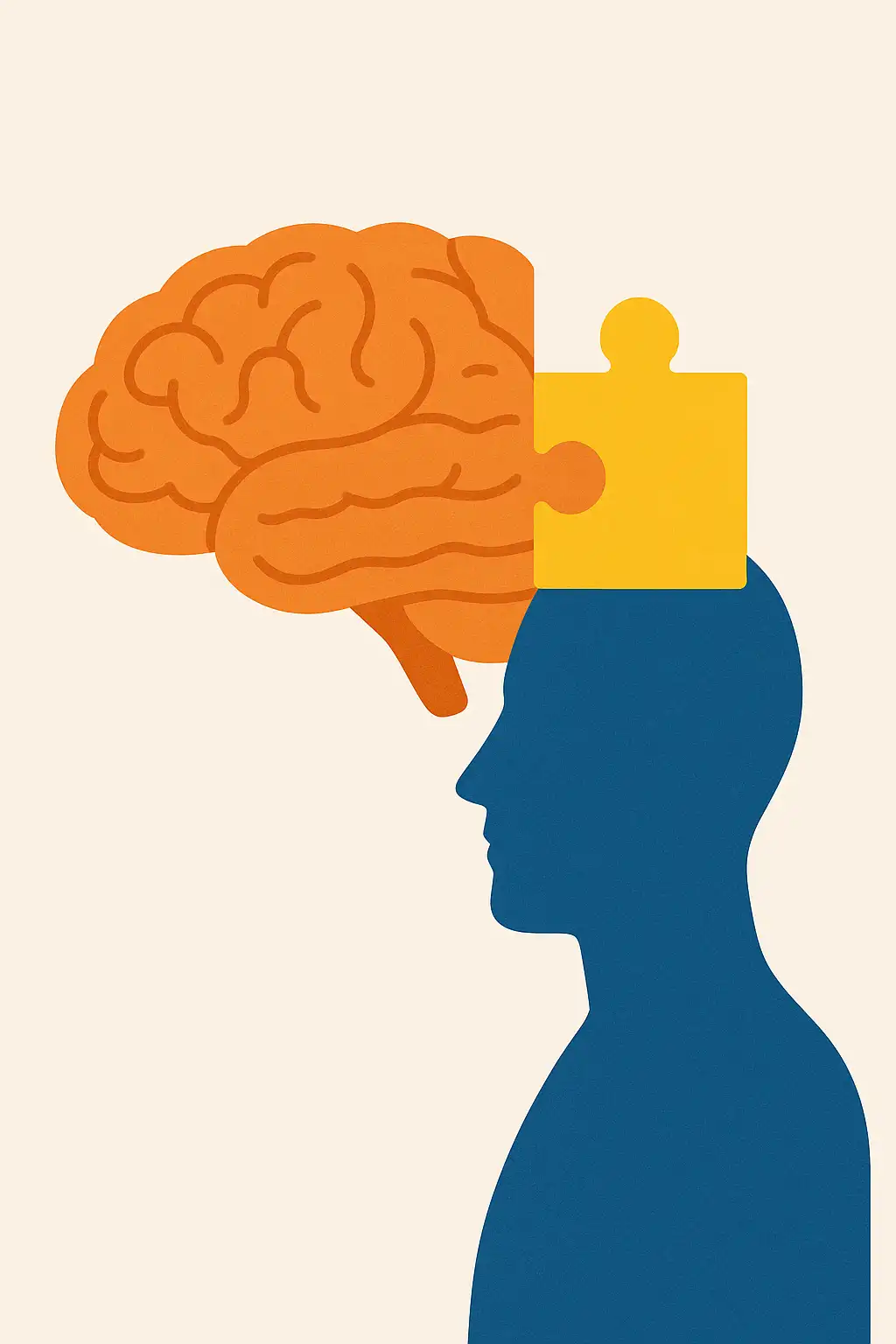
Speech is slow compared to thought. People talk at roughly a few words per second, but comprehension in the brain is built to keep up by anticipating. As someone speaks, listeners activate likely candidates for the next word based on grammar, meaning, and what’s typical in that situation. If a friend says, “Can you pass the…,” the brain doesn’t hold an empty slot. It quickly narrows to objects that make sense in reach and in the shared setting.
This prediction isn’t just about the next word. It also covers timing and turn-taking. Conversation has tight handoffs, often within a couple hundred milliseconds. That is too fast to wait for the other person to fully stop, decide what they meant, plan a response, and then begin speaking. Finishing a sentence is the extreme version of the same system: the listener has committed to a guess early enough that it can come out as speech.
Shared scripts make the ending feel obvious
People share a lot of ready-made language. Greetings, complaints, meeting phrases, and story beats come in familiar packages. “The Wi‑Fi is…” “I was thinking we could…” “The problem is that…” These are not clichés in a moral sense. They are predictable tools that reduce effort. When the opening of a phrase strongly cues the rest, the listener’s brain can fill it in with high confidence.
A concrete example is a weekly standup meeting. Someone says, “Blocked on the…” and half the room is already expecting “deployment,” “API,” or “merge.” The same thing happens in a kitchen: “Did you put the milk…” tends to end with “back?” because that’s a common household script. The overlooked detail is how much the physical environment contributes. Objects in view and recent actions shrink the number of plausible endings, so the brain’s “guess” is not magical. It’s constrained.
It’s also a coordination problem
Finishing someone’s sentence can come from the social job of staying in sync. Conversation is a joint activity, not two separate monologues. Nods, “mm-hmm,” and quick completions signal attention and alignment. The listener is showing they’re tracking the plan of the speaker’s message, not just the words. In close relationships, this can become a habit because both people have strong models of each other’s usual stories and preferred phrases.
But the same mechanism can misfire. If the listener predicts too early, they may grab the floor and change the speaker’s trajectory. That’s why sentence-finishing can feel supportive in one moment and rude in another. The brain’s prediction system isn’t designed to protect anyone’s conversational “ownership.” It’s designed to keep the exchange moving with minimal gaps, even when that means taking a risk.
Why mistakes happen so confidently
When the brain predicts, it doesn’t just hold a neutral possibility. It often partially commits. That commitment can make the expected word feel like it was actually heard, especially in noisy settings or on a laggy call. If the speaker hesitates, the listener’s internal version can get louder than the incoming sound. That’s one reason people sometimes interrupt with the wrong ending and still feel momentarily certain.
There’s also a memory angle people miss. When someone starts a sentence that resembles something said before, the listener may retrieve the earlier version and treat it like the current one. It’s not lying; it’s the brain economizing. The result is a completion that matches a familiar past conversation rather than the speaker’s new intent. When the speaker then finishes differently, the listener experiences that small jolt of surprise, like the room shifted by an inch.
Related reads
- Why we replay awkward conversations in our heads at night
- Victorian resurrectionists who dug up graves to keep London’s anatomy theatres supplied
- How honeybees feel a flower’s electric whisper
- The road that plays a song when your tires roll over it
- Tube worms farming bacteria: how vents host self-sustaining farms
- How desert ants use polarized light to find home