
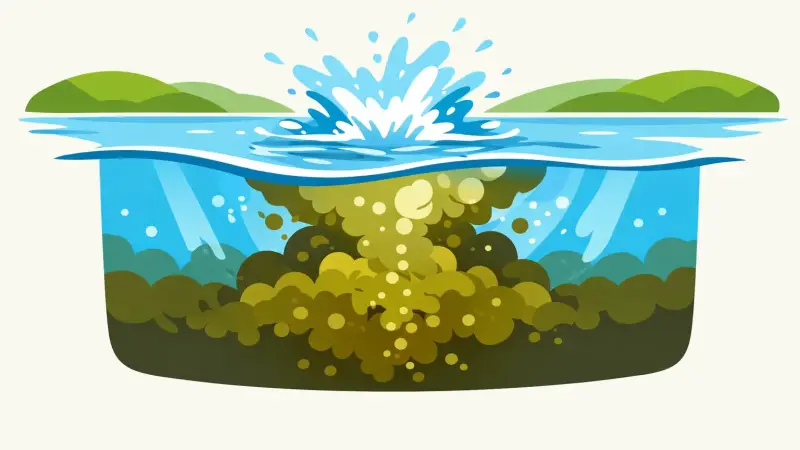
How can a lake suddenly turn dangerous?
People often think of lakes as “mixed bowls” of water. Wind stirs the surface. Inflows slosh through. So it’s surprising that a lake can spend months acting like a layered drink that won’t combine, and then flip fast. This is not one single incident; it’s a pattern that shows up in different places, from summer fish kills in Lake Erie (USA/Canada) to nutrient-loaded lakes across northern Europe, and to rare but dramatic gas-release events like Lake Nyos in Cameroon in 1986. The core mechanism is simple: when mixing suddenly changes, water from the bottom can surge upward carrying oxygen-free water and dissolved chemicals that were trapped down there.
Layers form quietly, before anything “happens”
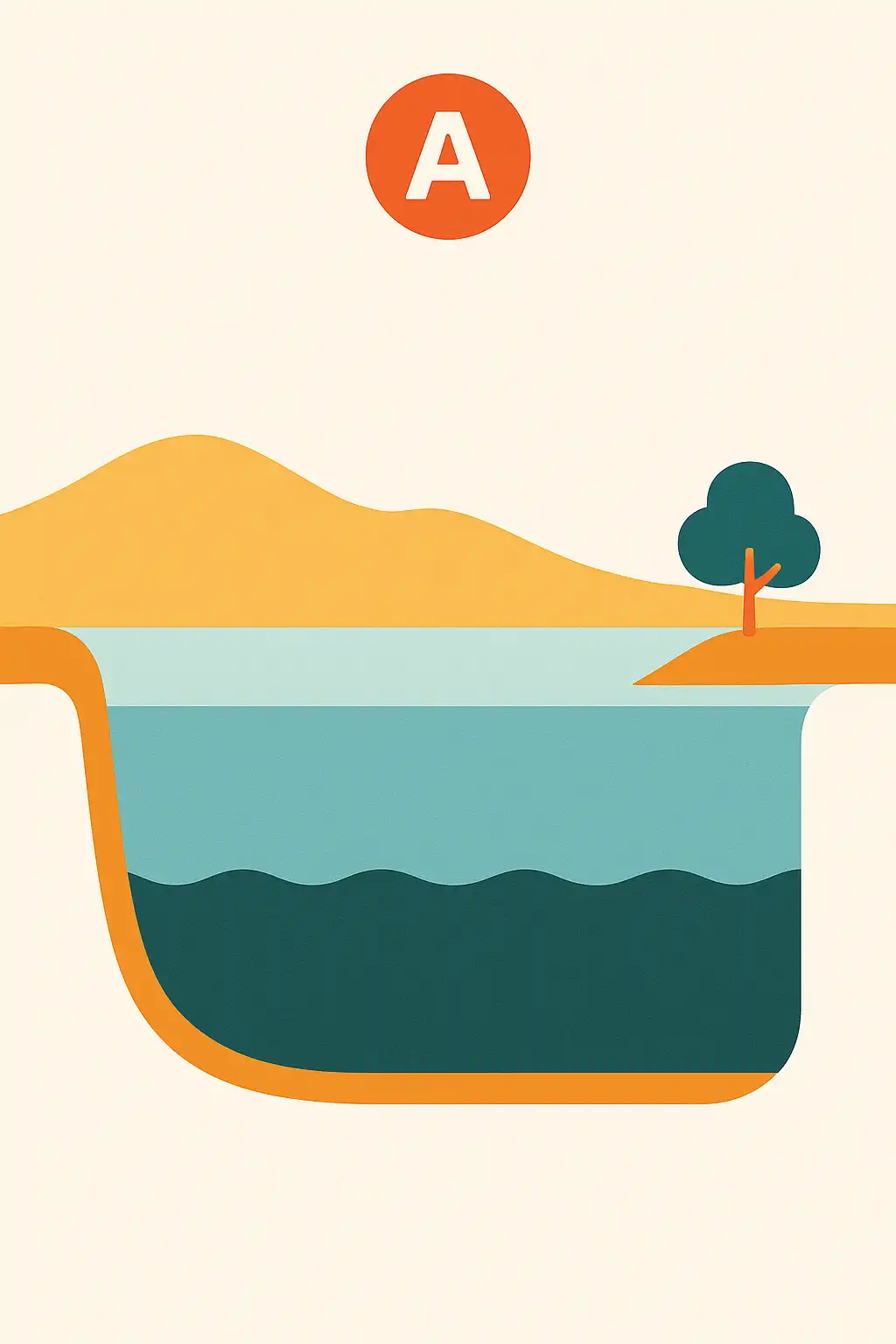
Most lakes stratify at least part of the year. Warm, lighter water sits on top. Cooler, heavier water stays below. The boundary between them is the thermocline, and it can act like a lid. Oxygen gets into the lake mainly through the surface, by contact with air and photosynthesis. But oxygen is used up everywhere, especially at the bottom where bacteria break down sinking organic matter. If the lid holds long enough, the deep layer turns anoxic, meaning essentially no oxygen.
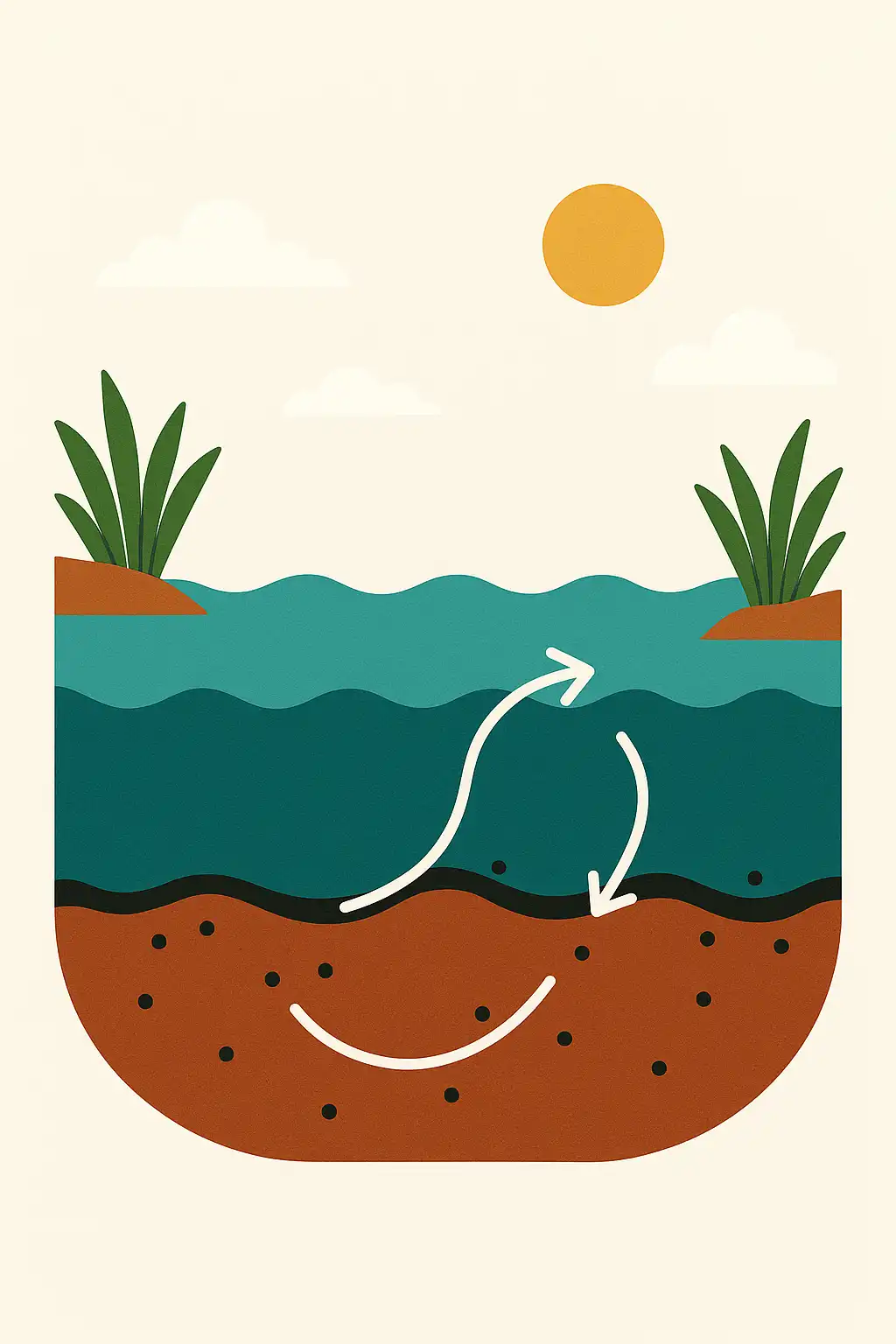
One detail people overlook is how strongly the sediments control what the bottom water becomes. When oxygen is present, phosphorus tends to stay bound to iron compounds in the mud. When oxygen disappears, that chemistry flips. Phosphorus can be released back into the water, along with dissolved iron and manganese. So the bottom layer isn’t just “stale.” It can become a concentrated solution of nutrients and metals that behaves differently the moment it meets oxygen again.
What makes the bottom layer toxic
Anoxic water changes which microbes thrive. Without oxygen, microbes use other chemicals to get energy. One common pathway is sulfate reduction, which produces hydrogen sulfide. That’s the “rotten egg” smell some lakes give off when disturbed, and it can be directly toxic to fish and invertebrates at low concentrations. Another pathway produces methane and carbon dioxide. In most lakes those gases leak out slowly, but in deep, isolated waters they can build up.
“Toxic” here can mean a few things at once. Hydrogen sulfide can damage gills. High carbon dioxide can stress or kill fish by interfering with respiration even if oxygen returns later. Released ammonia from decomposing organic matter can also become a problem. And when phosphorus comes up into sunlit water, it can fertilize algae or cyanobacteria, setting up blooms that create their own toxins and then worsen oxygen loss when they die and sink.
The flip: when separation fails
A flip is usually a mixing event that breaks stratification. It can be seasonal turnover in autumn when surface water cools and becomes dense enough to sink. It can be a storm that injects wind energy deep into the water column. It can be inflow from heavy rain that is colder or denser and plunges downward, pushing bottom water up elsewhere. The speed varies by lake shape, depth, and weather. Some mix over days. Some can shift a lot in hours, especially shallow lakes.
When the bottom water rises, the first visible sign is often not the chemistry. It’s behavior. Fish cluster at the surface or near inflows because the mixed water is suddenly low in oxygen. Then you may see a fish kill, or a sulfur smell, or dark water near shore. In eutrophic systems like parts of Lake Erie, the mixing can also deliver a pulse of phosphorus that helps sustain late-season cyanobacteria. In meromictic lakes that rarely mix at all, the risk is different: deep water can stay isolated for years, letting gases accumulate until a disturbance finally breaks the stability.
When it’s extreme: gas-rich deep water
Lake Nyos is the case people point to when they mean a true, catastrophic flip. It’s a deep volcanic crater lake where carbon dioxide can seep in from below. In 1986, a sudden release of CO₂ formed a dense cloud that moved downslope and killed people and animals nearby. The precise trigger is still discussed in sources, but the essential ingredient was a deep layer holding a large amount of dissolved gas under pressure. When some of that water rose, the gas came out of solution, making the water more buoyant and accelerating the upwelling.
Most lakes will never behave like Nyos. But the same physics—stable layering that stores something at depth, followed by rapid mixing—shows up on smaller scales all over. Sometimes the “toxin” is hydrogen sulfide and ammonia. Sometimes it’s just oxygen absence that’s lethal. Sometimes it’s nutrients that set up the next bloom. The part that tends to be missed is that the bottom layer is not passive. It’s being manufactured all season by sediment chemistry and microbial metabolism, waiting for the day the lake stops staying politely separated.
Related reads
- Why your brain finishes other people’s sentences
- Why we replay awkward conversations in our heads at night
- Victorian resurrectionists who dug up graves to keep London’s anatomy theatres supplied
- How honeybees feel a flower’s electric whisper
- The road that plays a song when your tires roll over it
- Tube worms farming bacteria: how vents host self-sustaining farms