

A strange kind of “rain”
People look up during a storm expecting water, maybe hail. But sometimes the ground ends up dotted with small fish or tiny frogs that weren’t there a minute ago. It isn’t one single famous event with one agreed-on story. Reports pop up in different places and years, like the fish that fell on Texarkana, Texas in 1947, and the frog fall described in Serbia in 2005. The core idea is simple. Strong winds can pick up lightweight animals from shallow water and drop them somewhere else. It feels like they “fell from the sky” because, for the person standing there, they did.
How animals get into the air at all
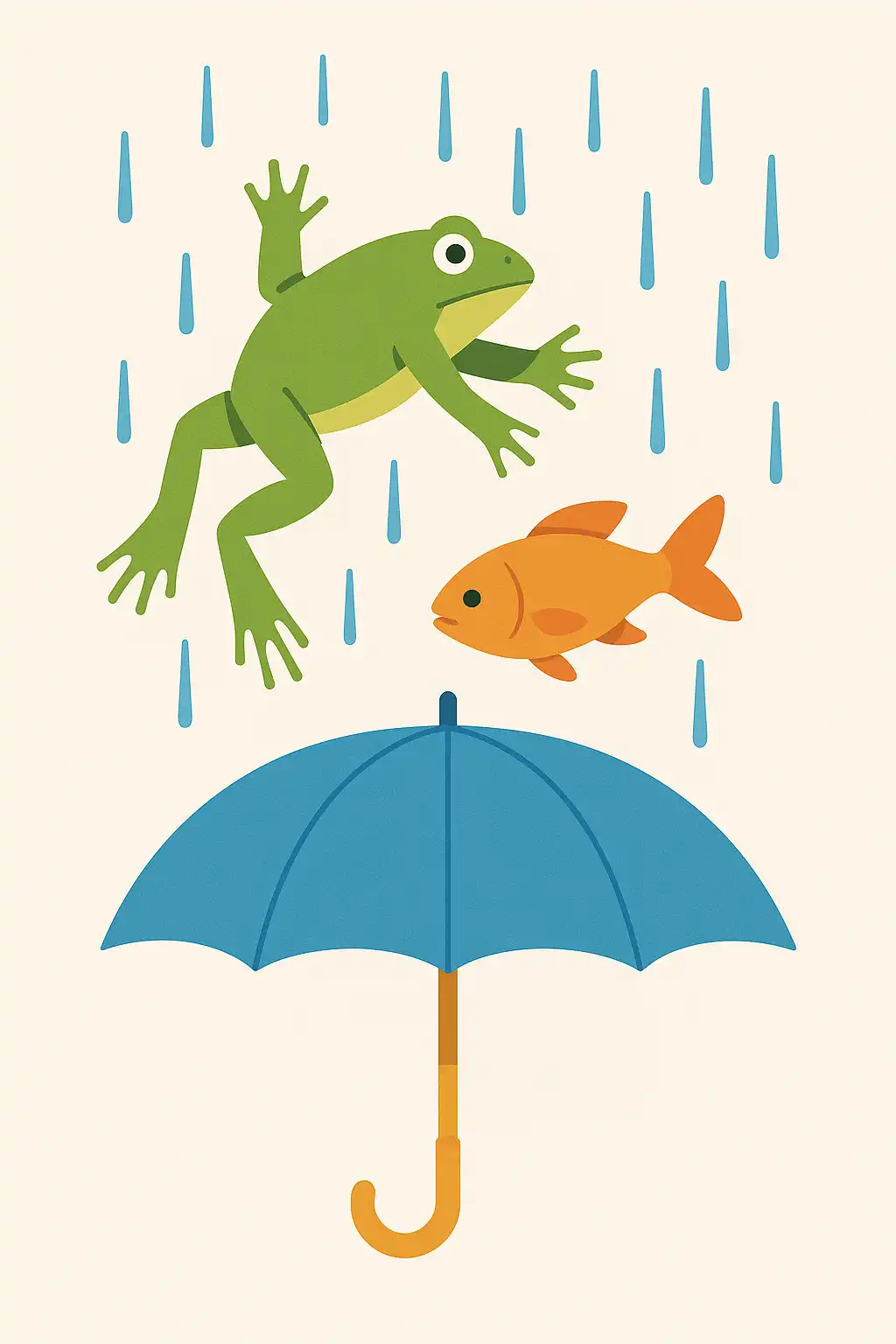
The most common explanation is a waterspout or tornado passing over a pond, flooded field, or slow river edge. A waterspout is basically a rotating column of air over water. If it crosses a spot crowded with small fish, tadpoles, or juvenile frogs, it can loft them the way it lofts spray. This doesn’t require Hollywood-strength suction. It just requires the right mix of shallow water, lots of small animals near the surface, and a tight updraft.
Size matters. Tiny fish, fingerlings, and young amphibians are more likely to be lifted and carried without being smashed immediately. That’s why these events often involve small individuals, sometimes all about the same length. It’s also why people sometimes find only one type of animal on the ground, even though the water source held many species.
Why it can fall in one spot and not another
Even if animals are lifted, the “drop” depends on the storm structure. Updrafts and downdrafts don’t spread things evenly. They create narrow corridors. One street can get pelted while a few blocks away gets normal rain. That patchiness is one reason eyewitnesses argue about what happened. Not everyone sees the same thing, even in the same town.
A specific detail people often overlook is what happens right before the fall. If the air carrying the animals suddenly hits cooler, denser air, or loses its rotation, it can dump its load quickly. That can create a short, intense burst that looks like a single “shower” of fish, not a long drizzle. Then it’s over, and the storm moves on.
What observers usually notice on the ground
Descriptions tend to have a few recurring features. The animals are often alive or freshly dead, not dried out. They can show up on rooftops, in gutters, or on car hoods, which makes “they crawled here” hard to argue. Sometimes they’re mixed with bits of vegetation, small sticks, or mud, which fits a scoop from a shoreline. And people often report that the regular rain kept falling at the same time, which is consistent with a storm cell dropping ordinary precipitation while also shedding whatever it picked up earlier.
There are also cases where the details don’t match perfectly. A few reports mention larger fish, or a fall that seems too clean, with no plant debris. Those are harder to pin down from a distance because “fish on the ground” can come from other odd routes too, like birds dropping prey during a squall, or fish carried onto roads by flash flooding and then mistaken for a fall from the clouds.
Why these stories keep happening
Part of it is that storms do grab and move things, and shallow water is full of small animals at the exact height winds can reach. Part of it is perception. If someone hears splats on a roof and then sees fish in the yard, the brain connects the timing. It’s a reasonable connection, even if the fish arrived a minute earlier in a gust and only became visible when the rain eased.
And part of it is recordkeeping. These events are brief, local, and rarely captured well. Reports often come from newspapers, short weather notes, or personal accounts, and the exact location, number of animals, and storm type can be unclear. That uncertainty doesn’t stop the phenomenon from being real. It just means the most believable cases are the ones with a clear storm nearby, small animals consistent with a nearby water source, and a tight, odd little patch on the ground where everything landed.
Related reads
- The town where the postman still delivers every letter by canoe
- Luggage that repeatedly showed up on flights to the wrong continent
- Microbes that breathe metals and reshape subterranean chemistry
- Coral skeletons as time capsules of ocean heat spikes
- A streetlamp that lights only when neighborhood cats pass
- A mineral that drinks fog: how crystals harvest water from air