

You stop noticing it faster than you expect
Someone walks into the office in London or Seoul and the scent arrives before they do. Ten minutes later, they might not smell it on themselves at all. This isn’t one single event or place. It happens everywhere perfume is worn. The basic reason is simple: the smell system is built to notice change, then quiet down when a signal doesn’t change. With your own fragrance, the signal is steady and close. So your brain treats it like background.
A concrete example is the “first spray” moment in a department store. The first sniff feels sharp. A little later, even with the scent still on skin and clothes, it fades from awareness. Other people still notice because they’re getting a fresh, changing sample each time you move past them.
Your nose adapts at the receptors
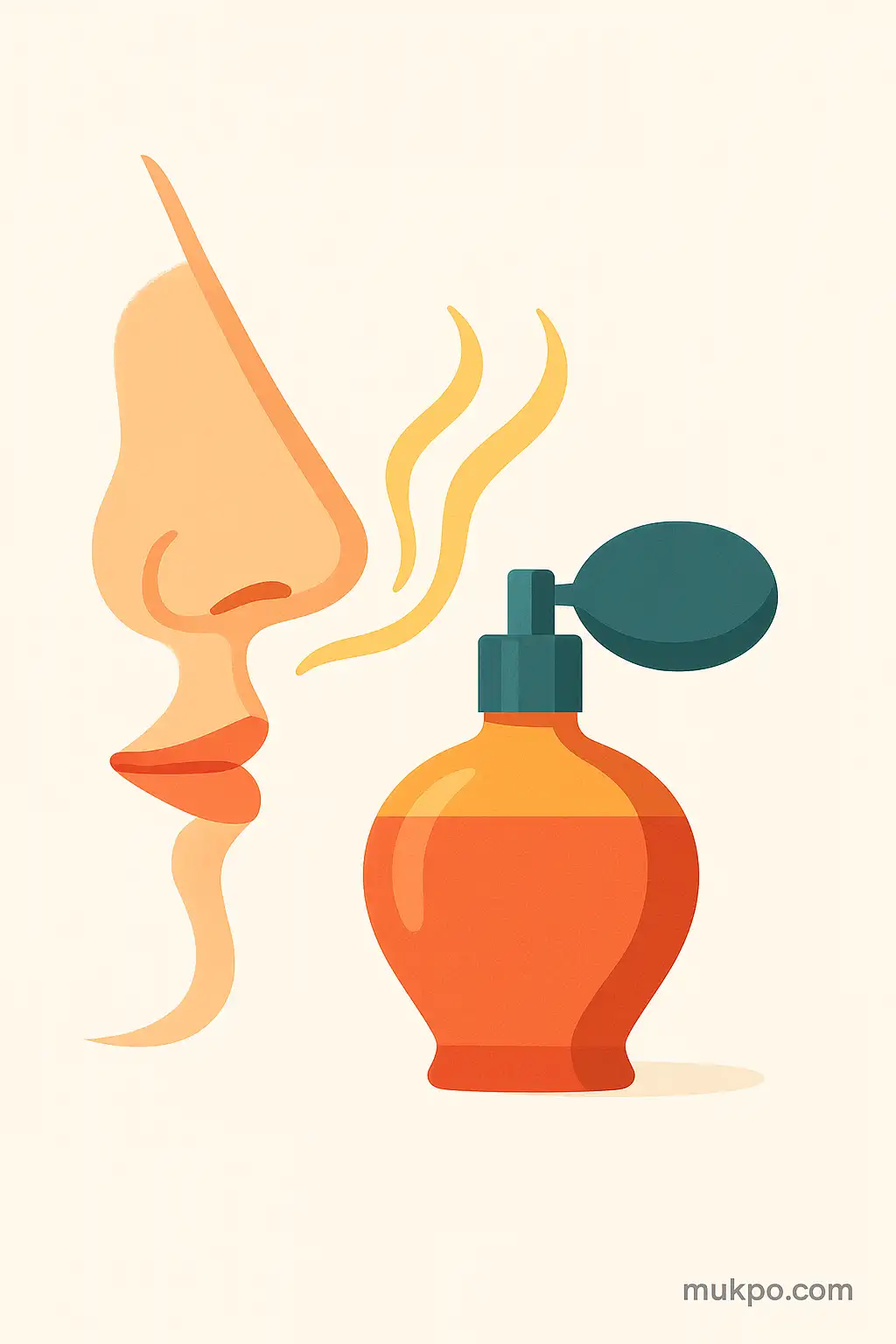
Odor molecules land on receptors high in the nasal cavity, in the olfactory epithelium. Those receptors fire signals to the brain. If the same molecules keep arriving, the receptor cells and nearby circuits reduce their response. This is called sensory adaptation. It’s normal. It’s also fast for many odors, sometimes within minutes, though the exact timing varies by molecule and person.
One overlooked detail is that smelling isn’t just “air in, smell detected.” A thin layer of mucus and odor-binding proteins helps deliver odor molecules to receptors. As that surface gets saturated with the same compounds, the effective “new information” drops. The fragrance may still be present, but the system is not responding like it did at the start.
Your brain filters steady signals on purpose
Adaptation isn’t only happening in the nose. The brain also down-weights repetitive input. The olfactory bulb and higher brain areas learn very quickly that a constant odor is not urgent. This is useful. If the brain didn’t do this, daily life would be overwhelmed by fixed smells like your own shampoo, your home, or your clothing detergent.
That filtering works especially well for smells that track with “self.” Your perfume is anchored to your body, so the pattern is predictable. A passing smell from someone else keeps changing in strength and timing as they move, which makes it stand out. Your own scent has fewer surprises, so it gets edited out.
Perfume changes, but you change with it
Perfume isn’t one smell. It’s a mix of many volatile compounds that evaporate at different speeds. The “top notes” lift off first, then the middle and base notes last longer. People often assume they stopped smelling it because it’s gone. Sometimes it’s still there, but the noticeable part shifted into a quieter phase, and adaptation has already kicked in.
Skin chemistry also changes what gets released. Warmth, sweat, and skin oils affect evaporation and how long certain molecules linger. Clothing holds onto heavier compounds differently than skin does. So the scent other people detect can be different from what reaches your own nose, especially after an hour or two.
Position, airflow, and tiny habits matter
Your nose doesn’t sample air evenly. Airflow in each nostril shifts during the day in a normal cycle, and breathing patterns change the route odor molecules take. A scent on your wrists or neck might not travel upward to your nose consistently unless you move in a way that pushes air there. Meanwhile, someone standing next to you is sitting inside the “cloud” that disperses off fabric with every arm swing.
Small situational details can flip the experience. An elevator concentrates scent because the air is still and shared, so other people notice. Outdoors, moving air dilutes it, and you may not get enough bursts to overcome adaptation. Even a brief change—walking from a cool street into a warm train station—can make the fragrance bloom for a moment, then disappear again as your system settles back into ignoring it.
Related reads
- The apartment where each mirror shows a different hallway
- Why you walk into a room and forget your purpose
- The elevator rule: why tiny strangers’ talk feels so awkward
- When it literally rained frogs and fish
- The town where the postman still delivers every letter by canoe
- Luggage that repeatedly showed up on flights to the wrong continent