
It isn’t one “whale map”
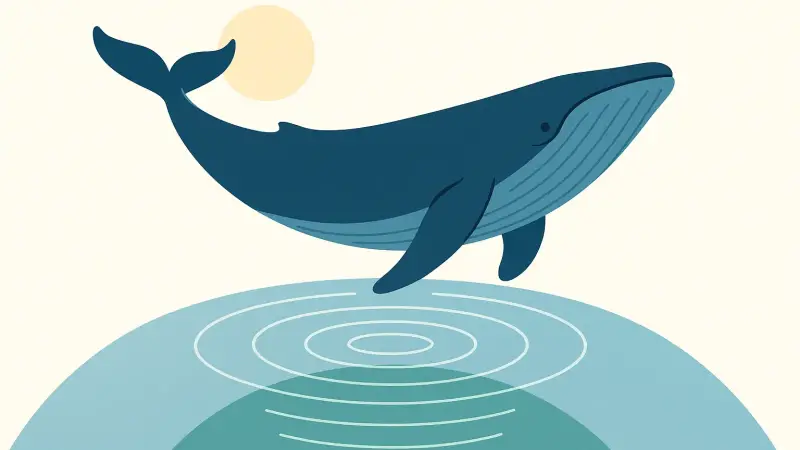
People rarely ask how an animal that spends weeks out of sight keeps a straight course. Whales do not navigate in one single place or one famous event. It varies by species and route. But there are some well-known cases that keep showing up in studies and headlines, like strandings along New Zealand’s Farewell Spit, mass strandings in Tasmania, and migration corridors on the U.S. East Coast. One idea that fits those patterns is that whales can sense small changes in Earth’s magnetic field. Not a compass needle feeling, more like noticing ripples and seams in an invisible background that’s always there.
The core mechanism is magnetoreception: the ability to detect magnetic intensity and direction. It’s still unclear exactly how whales do it. But the ocean does carry magnetic information, and the field is not smooth. It shifts with geology, with latitude, and even with short-lived magnetic disturbances from space weather.
What “magnetic ripples” actually are
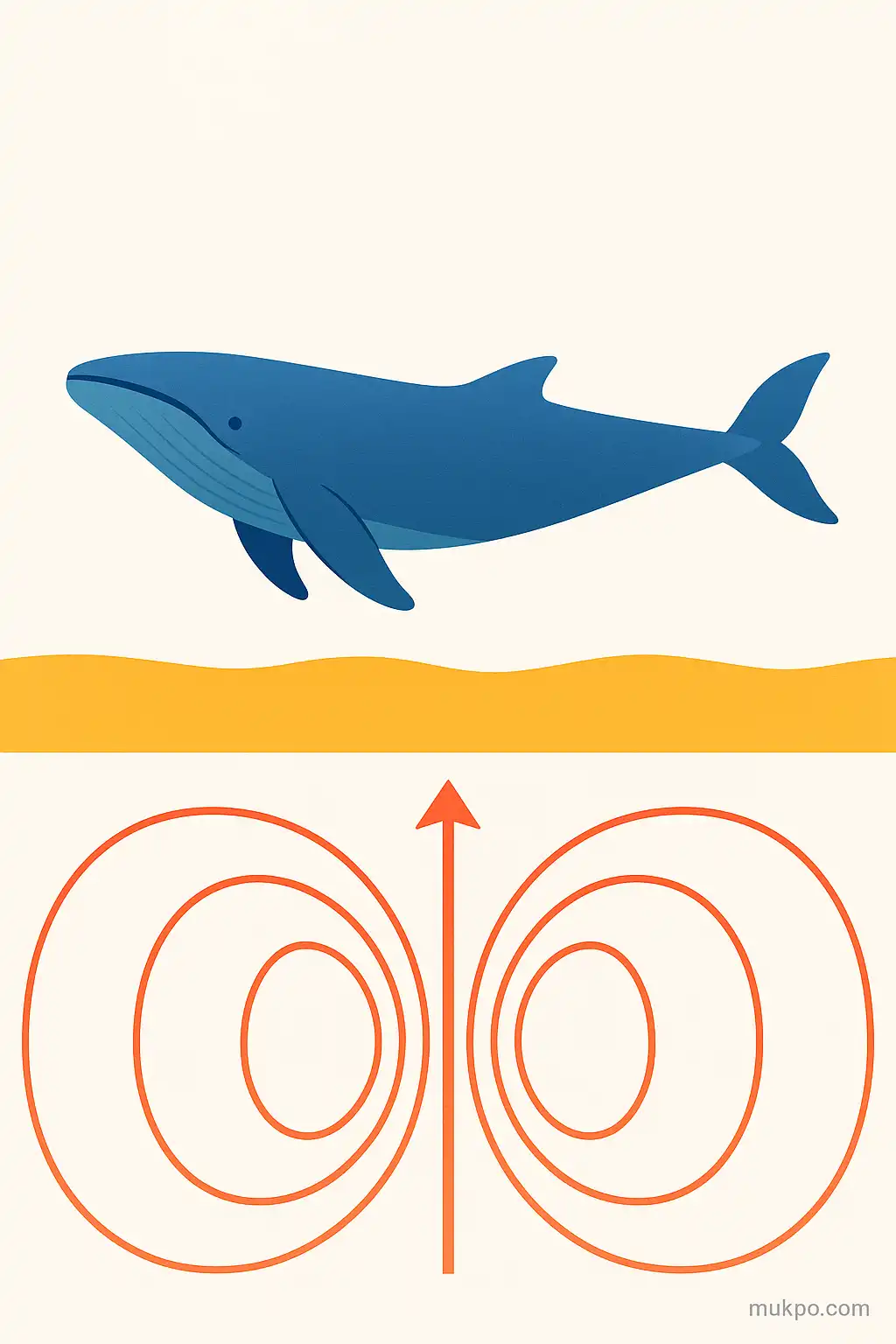
Earth’s magnetic field has a broad structure, but it also has wrinkles. Some are fixed to the planet. Different rocks in the crust have different magnetic properties, and that creates regional magnetic anomalies. Over the open ocean, those anomalies can form long bands tied to seafloor spreading. A whale crossing them would experience a gradual change in magnetic intensity or inclination as it moves.
Other ripples are temporary. Geomagnetic storms, driven by solar activity, can jostle the field for hours or days. That can change local magnetic conditions enough to matter if an animal uses the field as a reference. This part is often overlooked: the “map” is not perfectly stable. A route that normally feels consistent could feel slightly different during a storm, even if currents and weather look normal at the surface.
How a whale could sense it underwater
There are two main biological ideas on the table. One involves tiny magnetic materials, like magnetite, acting as physical detectors. If those particles exist in certain tissues, they could tug on nearby structures when the magnetic field changes, creating a signal the nervous system can read. Magnetite has been found in many animals, but in whales the evidence is indirect and not settled.
The other idea is chemical: light-sensitive proteins (often discussed in birds) might form reactions influenced by magnetic fields. That model depends on conditions in the eye and nervous system, and it’s harder to translate to animals that spend long stretches in dim, deep water. Because whales are mammals with very different sensory priorities than birds, researchers are cautious. At the moment, it’s more honest to say whales appear to respond to magnetic features than to claim we know the exact receptor.
What the magnetic sense is used for
Magnetic information is most useful when it’s combined with other cues. A whale can follow temperature gradients, coastline shape, smell in the air near shore, and sound. But those cues can be patchy offshore. A global field is always present, which makes it appealing as a baseline. If an animal can learn that a certain magnetic “signature” corresponds to a familiar feeding ground or breeding area, it can use that signature like a rough address.
One concrete way this shows up is in how some strandings line up with local magnetic features. Several studies have reported correlations between stranding locations and magnetic anomalies along coastlines. Correlation is not proof, and it doesn’t mean magnetism “causes” strandings. But it does fit a practical scenario: an animal following a magnetic contour near shore may be more vulnerable to tides, sloping beaches, or sudden shallows. The overlooked detail here is slope. A gently shelving beach gives fewer acoustic and pressure cues than a steep drop-off, so a small navigation error can turn into a big problem fast.
Why it sometimes goes wrong
If whales do use magnetic cues, then magnetic noise matters. Geomagnetic storms can add confusion. So can local distortions from undersea cables and other infrastructure, though how strong those effects are at a whale’s swimming distance is debated. Navigation is usually redundant, but redundancy only helps if the cues agree. Fog, storms, unusual currents, or unfamiliar coastlines can take away other inputs, leaving the magnetic sense to do more work than it’s built for.
Group behavior adds another twist. Many whales and dolphins travel socially, and individuals may follow a leader or stay with a pod even when conditions feel wrong. That can turn one animal’s mistake into many animals in the same place. The ocean is loud, the coast is complex, and the magnetic field is not a clean grid. So when whales “feel” magnetic ripples, it’s less like reading a perfect instrument and more like tracking a background pattern that usually holds steady—until it doesn’t.
Related reads
- The bacterium that cements sand into rock
- When fireflies flash together: the physics of synchronized light
- How desert varnish forms on sun-baked rocks
- Why hummingbird wings create tiny vortices that aid hovering
- A street whose lawns rearrange their stripes overnight
- How seawater ice traps air bubbles that record ancient storms