
Why methane doesn’t always escape
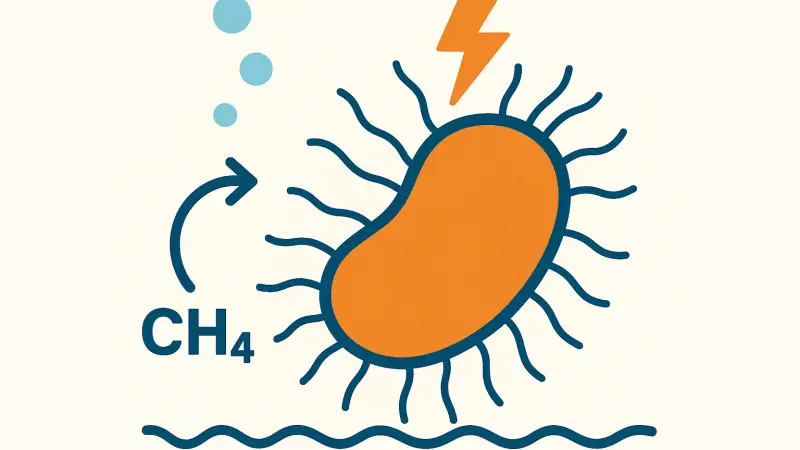
It’s a quiet contradiction. Methane seeps out of the seafloor in places like Hydrate Ridge off Oregon, yet a lot of it never reaches the surface. Instead, it gets “used up” down in the dark, where there’s no sunlight and oxygen can be scarce. The basic mechanism is chemical: microbes take methane and strip electrons from it, then pass those electrons to something else so they can make energy and grow.
This isn’t one single site or one single community. It happens at cold seeps in the Gulf of Mexico, along the Cascadia Margin, and near methane hydrate deposits in the Arctic. The exact mix of microbes and conditions varies by location and depth, and scientists don’t always agree on who is doing what in every sediment layer. But the overall pattern is consistent: methane becomes food, not just gas.
The main trick: oxidizing methane without oxygen

The process most people miss is that methane can be oxidized even when oxygen is absent. In deep marine sediments, a common pathway is anaerobic oxidation of methane, often shortened to AOM. Methane is the electron donor. Sulfate (SO42−) from seawater is frequently the electron acceptor. The end products are usually bicarbonate (which can contribute to carbonate rock formation) and sulfide.
That sulfate detail is easy to overlook because it sounds like a side note, but it sets a hard boundary. Sulfate is plentiful near the seafloor and drops off with depth as microbes consume it. Methane often increases with depth as it rises from deeper sources. Where those two gradients meet, a narrow zone forms where AOM can run fast. It’s sometimes only centimeters to decimeters thick, but it can control the fate of methane coming up from meters below.
Who does it: microbial teamwork and weird wiring
AOM is commonly linked to archaea called ANME (anaerobic methanotrophic archaea). They are not the same as the bacteria that eat methane in oxygenated seawater. Many ANME appear to work in partnership with sulfate-reducing bacteria. The archaea handle the methane side of the chemistry. The bacteria handle the sulfate side. Together they complete an electron-transfer chain that neither partner seems to run as effectively alone.
How electrons move between them can be surprisingly physical. In some seep communities, evidence points to direct interspecies electron transfer, where electrons may pass through conductive cell surfaces or mineral-like connections rather than by a freely diffusing chemical intermediate. Researchers debate the exact mechanisms in different settings, and it may vary by community. But the repeated observation is that the “handoff” is central, and it shapes who can live where in the sediment.
What energy looks like down there
Even when the chemistry works, the energy payoff can be small. Deep-sea microbes often operate near the minimum energy needed to stay alive, especially in cold, high-pressure sediments. That’s one reason these communities can grow slowly. They don’t behave like a fast bloom near the surface. They behave like a steady, long-lived filter.
Pressure and temperature matter because they change what methane is doing physically. At many depths, methane can be trapped in hydrates—ice-like solids that hold gas molecules. Hydrates can seal methane in, then release it when conditions shift. Microbes don’t “eat hydrates” as a solid block. They rely on methane that dissolves into porewater. That small, local availability can decide whether a seep is active or quiet at a given moment.
The visible traces: rocks, smells, and patchy habitats
When AOM produces bicarbonate, it can increase alkalinity in porewater. That promotes carbonate precipitation, which is why some seeps develop carbonate crusts and chimneys. Those hard surfaces become habitat for other organisms, and they can change how fluids move through sediment. A seep is often a patchwork: active flow in one spot, cemented ground nearby, and soft sediment just meters away.
The sulfide produced by sulfate reduction is another trace, and it has consequences. It can be toxic to many animals, yet it also feeds sulfur-oxidizing microbes that form mats and support seep ecosystems. That mix of chemistry and biology is why two sites with similar methane flux can look different on the seafloor. Local flow paths, sediment grain size, and the thickness of that sulfate–methane overlap zone can all tilt the balance.
Related reads
- Why morning dew forms on some car hoods and not others
- The beetle that drinks fog as its water source
- The chemistry behind glass frogs’ see-through skin
- How wind vortexes carry maple seeds tens of kilometers
- The fossil tooth that changed what we know about mammal diets
- The pistol shrimp that snaps bubbles louder than a gun