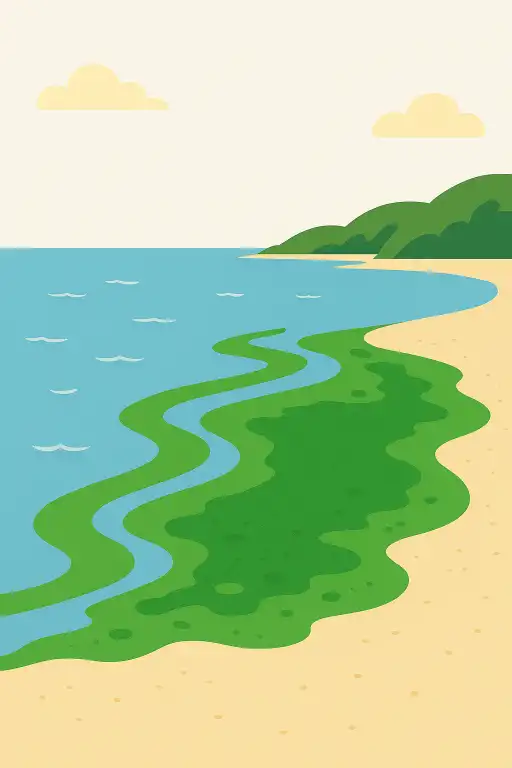
Seeing a bay go neon
People notice it because it looks wrong. A sandy bay that was pale tan yesterday can turn bright, almost paint-like green today, especially around the tideline. It is not one single famous incident. It shows up in a lot of places where sheltered water meets sand, from Florida’s Gulf Coast to parts of the Baltic Sea and the Mediterranean. The basic mechanism is simple: a huge number of tiny algae cells end up concentrated in shallow water, then they get stranded or swirled into a thin layer where their green pigments dominate what your eyes see. The sand is still sand. The water is still water. The color shift is about how light hits a dense film of living material.
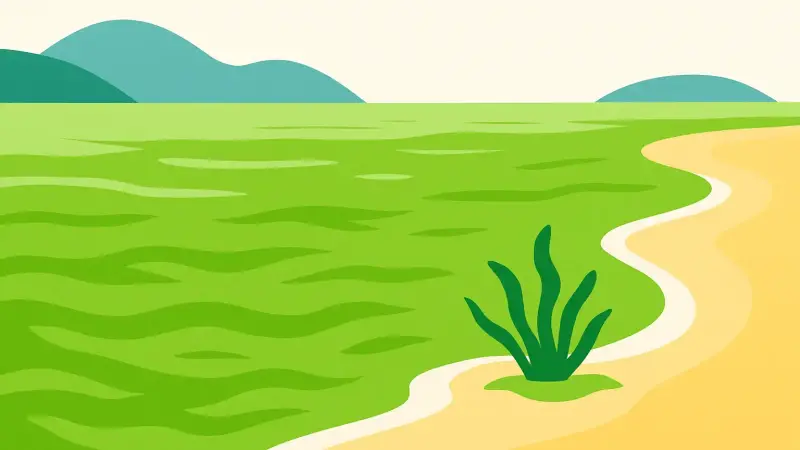
The detail most people overlook is how little algae it takes to change the color when it is spread as a sheet. A bloom that is only a few millimeters thick can look vivid from a distance because the surface is doing most of the reflecting. If the algae are floating right at the top, the green reads as “the whole bay,” even when the deeper water is relatively clear.
Which algae can do it
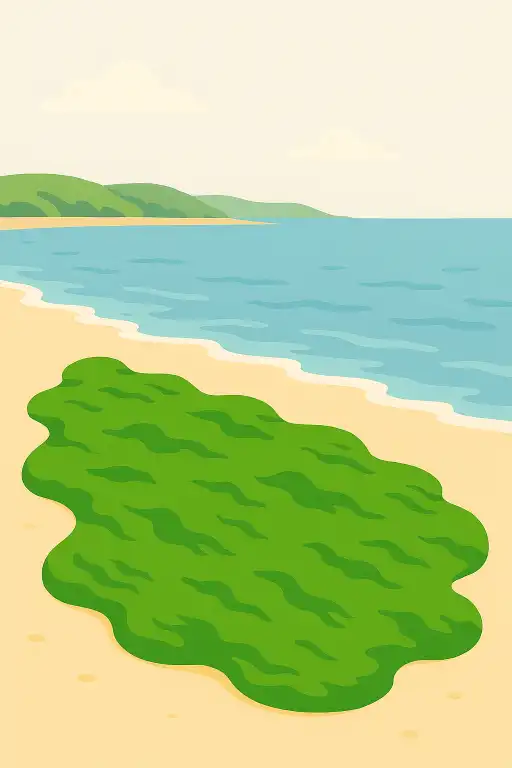
Several different groups can create that bright green look, and which one shows up depends on local conditions. In marine and brackish water, common culprits include green algae (like Ulva, often called sea lettuce when it forms sheets) and microscopic phytoplankton that are green because of chlorophyll. In fresher or low-salinity water near river mouths, cyanobacteria can also produce striking green surface accumulations, even though they are bacteria. The color can be similar, but the biology is different.
The “sandy bay” part matters because sand tends to sit in gentle, shallow basins where water movement is just strong enough to deliver nutrients, but not always strong enough to flush everything away. Those bays also warm quickly in the sun. Warm, bright, nutrient-receiving water is a good recipe for rapid growth. If the algae involved are the kind that can double in a day under good conditions, the change can feel sudden even if the buildup has been happening for a week.
How a bloom ends up painted onto the shore
Growth is only half the story. Concentration is the other half. Wind can push surface water toward one side of a bay, and algae that float or hover near the surface go with it. A mild onshore breeze over several hours can corral cells into a corner, a cove, or a stretch of beach, then keep them there. The same thing happens with pollen scum in spring. It is a sorting process that happens at the surface.
Waves and tides then do something very specific: they spread the algae into a thin film at the waterline. Each wave lifts material, then sets it down higher on the sand as the water drains back. If the algae are filamentous or slimy, they cling. If they are tiny cells, they can stick to bubbles and organic foam, which also sticks. That is why you sometimes see a bright green band that follows the contour of the beach, not a uniform green across the whole bay.
Why the color is so intense
Algae look green because chlorophyll absorbs red and blue light and reflects green. When algae are dispersed through deeper water, the water itself filters light and the green looks muted. When algae are at the surface, there is less water above them to dull the signal. Add a pale background like sand, and the contrast jumps. A shallow bay with light sand can make a moderate bloom look dramatic, while the same algae over dark mud might look like a dull stain.
Sun angle also changes what people perceive. Low-angle light in the morning or late afternoon makes surface films glare and shimmer, so the green can look almost fluorescent. Under midday sun, the same patch may look flatter and darker. Another overlooked piece is that many blooms are patchy on the scale of meters. From a boardwalk or a dune, your brain averages those patches into “the whole bay is green,” even though a boat drifting through might pass in and out of clear lanes.
What usually sets it up in the first place
Nutrients are the usual fuel. Nitrogen and phosphorus enter coastal water from many sources, and which one dominates varies by location. Farm runoff, leaky septic systems, wastewater outfalls, and stormwater can all raise nutrient levels. So can natural inputs like upwelling, bird colonies, or decaying sea grass after storms. A sandy bay near a river mouth gets pulses after heavy rain. A more enclosed lagoon might build nutrients slowly over a season.
Water residence time matters as much as nutrients. A bay that flushes quickly with open-ocean water can dilute a bloom before it becomes visible. A bay with a narrow inlet, weak tides, or a wind pattern that holds water in place can keep algae around long enough to multiply and then pile up onshore. Temperature swings can tip the balance too. A short heat spell can speed growth, while a sudden cool, windy day can break up surface accumulations and make the green vanish as quickly as it arrived.
Sometimes the green is not just living algae. It can be a mix of algae, fine organic particles, and bacteria bound together in a slick. It can also include strands of macroalgae ripped loose and shredded by wave action. That is why one bay’s “green tide” looks like bright paint, while another looks like wet lawn clippings. The look depends on the species, the stage of the bloom, and whether the material is still actively photosynthesizing or already breaking down.