

Sticky dust sounds wrong at first
It’s not one single place or event. People infer it from lots of young-star systems and lab work, from the ALMA images of the HL Tauri disk to scattered-light views around stars like TW Hydrae. The basic problem is simple: dust is tiny and dry, and yet planets exist. In the early disk around a young star, grains collide constantly. At first they can stick because surface forces matter more than gravity. That’s the core mechanism. Then the collisions get faster and messier, and “sticking” has to compete with bouncing, breaking, and rapid inward drift.
Why the tiniest grains can attach at all
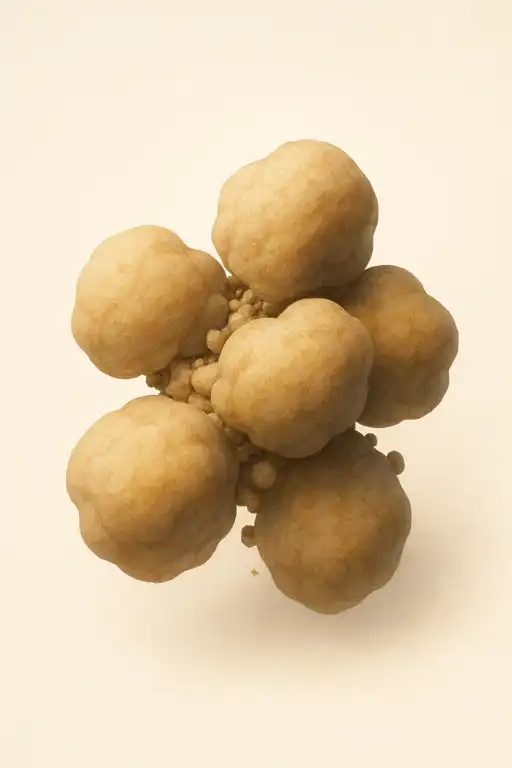
Micron-sized dust grains don’t need glue. At that scale, van der Waals forces can make two rough surfaces cling when they touch. The first contacts are often between fluffy, irregular grains, not perfect spheres. That matters because a spiky or porous grain can dissipate impact energy by deforming a little and making several contact points. In cold regions, water ice can increase surface stickiness, while in warmer inner regions silicate grains dominate and behave differently.
A detail people tend to overlook is that early growth is usually “hit and stick,” not “hit and melt.” The collisions are so gentle at first that the grains don’t need to heat up or fuse. They just build open, fractal clumps. Those clumps have a lot of area compared to their mass, so gas drag stays important longer than most people expect.
Collisions change once pebbles appear
As aggregates grow from dust to sand-sized bits and then to pebble-sized objects, the disk gas stops being a quiet background. Gas orbits the star slightly slower than the speed a solid would like to orbit, because gas pressure provides support. Solids feel a headwind. That headwind robs them of angular momentum and makes them drift inward. It also sets up relative velocities between particles of different sizes, because they couple to the gas differently.
Those higher-speed impacts trigger the awkward middle phase. Some collisions still stick, but many bounce, and some fragment. This is where “growth barriers” come from: the bouncing barrier (grains act like rubbery clumps and rebound) and the fragmentation barrier (impacts shatter aggregates). Which barrier dominates varies with composition, porosity, and local turbulence. It’s not fully settled, and different models emphasize different parts of the physics.
How disks get past bouncing and fragmentation
One route is that not all collisions are equal. If a small projectile hits a much larger, porous target at the right speed, it can deposit material instead of destroying it. Lab experiments and simulations suggest a mix of sticking, erosion, and “mass transfer” can slowly bias growth upward. Another route is that aggregates compact over time. Compaction reduces fluffiness, changes how they break, and changes how strongly they feel gas drag.
Disk structure helps too. Pressure bumps—regions where the gas pressure peaks—can trap drifting pebbles. These can be linked to features seen in protoplanetary disks as rings and gaps, like those in HL Tauri. The exact cause of any given ring can be unclear. It might be a planet, a change in chemistry, or a magnetic effect. But the practical outcome is the same: solids pile up instead of draining inward.
When gravity takes over: clumping into planetesimals
At some point, “sticking” isn’t the main story. The key shift is collective behavior. A dense layer of pebbles can interact with the gas and create clumps through aerodynamic effects, especially the streaming instability. In that situation, pebbles concentrate into filaments and knots. If a clump gets dense enough, its own gravity can collapse it into a planetesimal—something kilometer-scale or larger—fast compared to the slow grind of one-by-one sticking.
That handoff from surface forces to gravity is why the earliest steps matter so much. You need pebbles in the first place, and you need them to survive long enough in the disk to gather. After planetesimals exist, their gravity reshapes the local environment. They stir the pebble sea, accrete more solids, and begin the long process of becoming planetary cores while the young star is still surrounded by gas.
Related reads
- A microbe in Antarctic ice that eats methane without sunlight
- How cactus spines harvest fog into tiny water droplets
- How abandoned boats and tires turn into accidental reefs
- What causes red sprites to flash above thunderstorms
- The jellyfish that can reverse its life cycle
- A soil microbe that munches plastic in the lab