

Not all alpine plants do it, but you can watch it happen
If you spend a night near the timberline in the Alps or the Colorado Rockies, some small plants look slightly different by morning. Leaves that sat flat in late afternoon can be folded, rolled, or angled down after dark. It’s not one single species or one single mountain where this happens. It varies. You can see versions of it in cushion plants on European peaks, in Arctic–alpine plants in Scandinavia, and in high-elevation meadows in western North America. The basic mechanism is simple: parts of the leaf change pressure inside their cells, and the leaf changes shape.
The motion comes from water pressure, not muscles
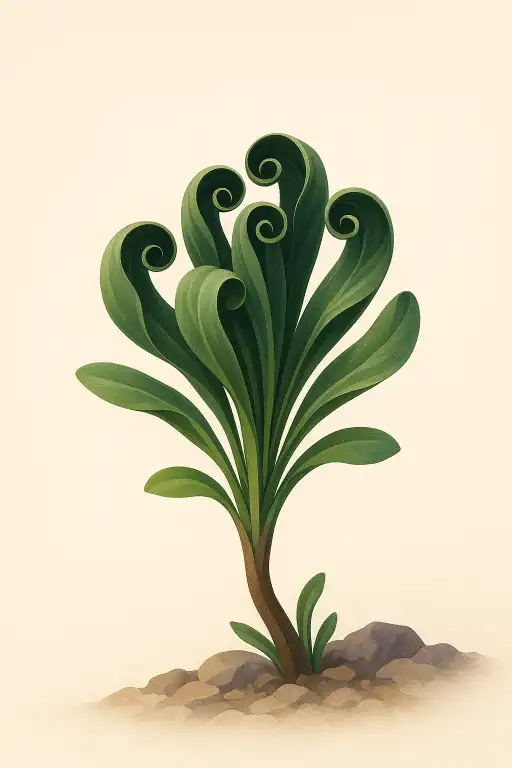
Plants don’t have muscles, but they do have hydraulics. In many leaf-curling and leaf-folding movements, cells on one side of a leaf or at the leaf base lose turgor pressure as ions move and water follows. When those cells go slightly slack, the leaf bends. When pressure returns, it opens back up. This kind of daily movement is often called nyctinasty, and it can be driven by an internal clock, by light cues, or by temperature cues depending on the species.
A detail people often overlook is how little motion is required to change the leaf’s “view” of the sky. A leaf doesn’t have to wrap into a tube to matter. A small change in angle can reduce exposure to the cold night sky and change how quickly the surface loses heat by radiation.
Cold nights make leaf position a heat-and-ice problem
High elevations swing hard between day and night. Even in summer, a calm, clear night can bring frost while the air a meter up stays a bit warmer than the ground. Leaves near the surface are exposed to radiative cooling, so they can drop below the surrounding air temperature. Curling or folding can reduce the area directly facing the sky, which can slow heat loss. It can also slightly thicken the layer of still air near the leaf surface, which changes how fast the leaf exchanges heat.
Ice matters because freezing damages cells in more than one way. If a plant can avoid freezing outright, or keep ice formation confined to certain spaces, it reduces risk. A rolled edge or folded blade can also shelter delicate tissues like stomata and young leaf margins from direct frost deposition in still conditions, which is a very local, micro-scale effect.
Curling can also be about water loss when the air is dry
It feels counterintuitive because nights are cooler, but alpine air can be extremely dry, and wind can keep the boundary layer thin. Some plants reduce exposed surface area at night and create a more protected pocket of air near the stomata. That can reduce transpiration if stomata are not fully closed, which varies by species and conditions. Some plants leak a little water vapor even with stomata mostly shut, and at high elevation that leak can add up over a season.
Another overlooked piece is dew and rime. If a leaf shape encourages condensation in a sheltered curl rather than across a broad flat surface, the plant changes where moisture sits and how long it stays. That can matter for both hydration and fungal risk, though exactly which direction it helps can depend on the plant and the local climate.
It isn’t always about survival tonight—sometimes it’s about tomorrow’s sun
Alpine sunlight is intense, and cold morning air slows biochemical reactions. That combination can stress photosynthetic machinery when the sun hits suddenly. By changing leaf orientation overnight, a plant can alter how quickly it warms and how directly it receives early light. Some leaves end up more vertical at dawn, which can reduce the initial light load until the leaf warms and metabolism catches up. In other cases the change is small and may be a side effect of the same pressure shifts that close stomata and change leaf water status at night.
So when you notice a plant looking “tucked in” before sunrise, you’re often seeing a low-energy adjustment. It’s made of tiny shifts in cell pressure, tuned to a place where frost, dry wind, and sudden bright mornings all compete on the same square centimeter of leaf.
Related reads
- Why bioluminescent plankton pulse when ships pass
- Why Martian dust devils can fling pebbles across plains
- How mangrove roots enlist microbes to stitch new coastline
- A row of doors each fitted with a different custom keyhole
- A bench that refuses to warm for the same person twice
- Why some people whisper instructions to themselves