
That odd flicker of recognition
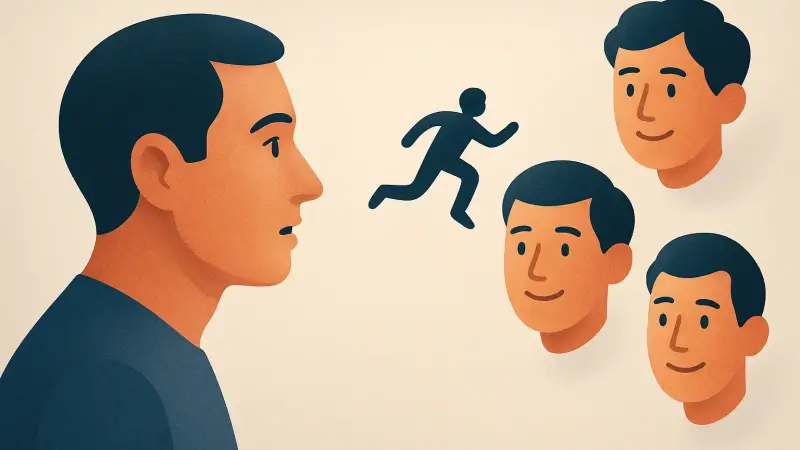
It’s not one single incident or place. People describe it in airports, on subways, in office elevators, and while scrolling through TikTok or Instagram. A stranger’s face lands in view and there’s a tiny, confident feeling: I know you. Then the feeling slips, leaving only the awkward certainty that it was “almost” real. The core mechanism is a small timing error in how the brain matches a face to a stored pattern. Recognition is fast. Identifying the person is slower. When the fast part fires without the slow part catching up, the face can feel familiar even when it isn’t.
Recognition comes before identity
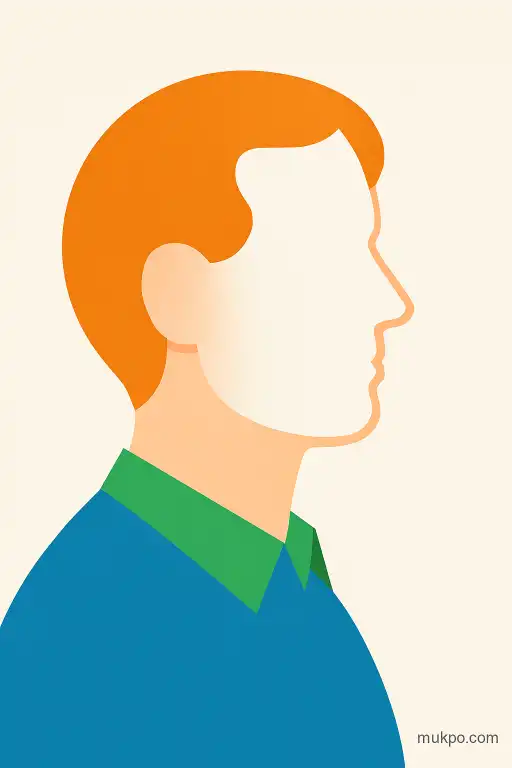
Face perception runs on speed. The visual system grabs a rough configuration—eyes, spacing, shape, movement—and produces a quick “seen before” signal. That signal can happen with very little detail. The step people expect, the one that supplies a name or a place, often comes later or not at all. That gap is the “skip.” Familiarity arrives as a feeling, not a fact, because it’s computed from partial matches.
One overlooked detail is how much the brain relies on the middle of the face. When the nose/cheek area is partly obscured or de-emphasized, recognition leans harder on whatever is left. That can make a match feel stronger than it should. It’s one reason a face glimpsed through a train window, a car windshield reflection, or a quick head turn can trigger a strong sense of knowing someone even though the viewing conditions were poor.
Familiarity is a feeling with loose standards
The brain doesn’t need a perfect match to produce familiarity. It’s enough that a few features fit a stored template: a particular eyebrow angle, a smile line, the way the eyes narrow. This is why two unrelated people can “ping” as the same person from far away, and why the feeling often disappears the moment you see them straight-on under good lighting. The standard for familiarity is permissive because it’s useful for fast social scanning.
A concrete example shows how small the trigger can be. Someone passes in a grocery store aisle wearing a hat pulled low and a winter scarf. Only the eyes and upper cheeks are visible. For a second, the eyes match a coworker’s eyes in shape and movement. Familiarity pops up. Then the person looks up, the voice doesn’t fit, and the brain drops the match. The feeling came from a narrow slice of information that briefly fit well enough.
Context can “preload” a face match
Familiarity is not driven by the face alone. Context primes expectations before a face even appears. If someone is in a place where you often see familiar people—your usual café, your kid’s school pickup line, the lobby at work—the brain quietly raises the odds that any given face belongs to someone from your life. That makes the fast familiarity signal easier to trigger. It can happen even when the person’s features are only loosely similar to someone you know.
Digital life adds another layer. Repeated exposure to a face online can create a sense of knowing it without the usual anchors like a shared memory or a real-world meeting. That’s why a stranger on a street can feel oddly familiar if they resemble a creator you’ve seen in short clips for months. The brain has stored patterns. It just hasn’t stored the right label for where they belong, so the “I know this face” feeling floats free.
When the signal sticks longer than it should
Sometimes the skip doesn’t resolve quickly. The familiarity feeling can linger even after obvious evidence says you don’t know the person. That tends to happen when the face is processed fluently—good lighting, clear view, steady expression—because fluent processing itself can be misread as familiarity. The brain is good at this face, so it interprets that ease as prior experience with the person, not just easy perception.
There are also rarer cases where recognition systems misfire more dramatically, such as in certain neurological conditions. Prosopagnosia (face blindness) can make even close family hard to identify. The opposite pattern—strong feelings of recognition tied to incorrect identity—shows up in some delusional misidentification syndromes, like Capgras syndrome, where a familiar face is judged as not being the real person. Those are not the everyday “stranger feels familiar” moment, but they underline the same separation: the brain can generate a recognition signal and an identity judgment that don’t line up.
Related reads
- That strange moment when your hand feels like it’s not yours
- Why we say sorry for things that don’t need apologizing
- Why video calls make us miss tiny facial cues
- Why bread yeast bubbles leave honeycomb holes in dough
- How glowworms choreograph light to catch flying insects
- The rock in a backyard that turned out to be a meteorite and what it revealed