
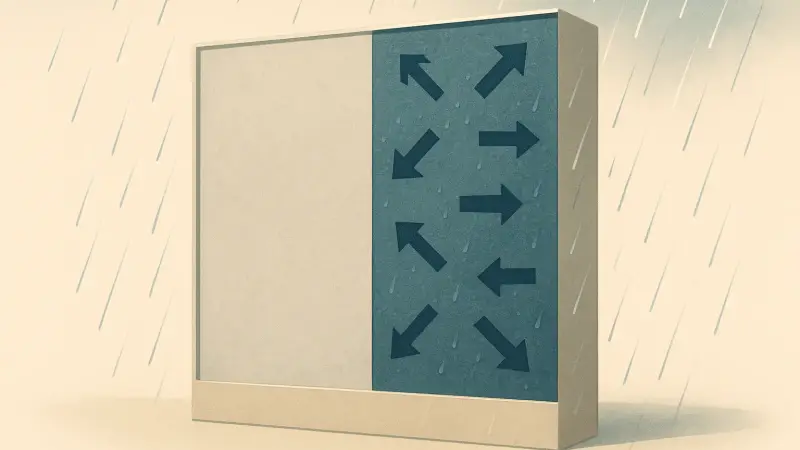
What you see on a dry day
You can walk past a wall a hundred times and never notice it’s hiding anything. Then it rains, and suddenly there are arrows, words, or a map-like line that wasn’t there five minutes ago. This isn’t one single famous mural in one town. Variations show up as street art and public wayfinding experiments in different places, including rain-activated paintings that have appeared in cities like Seattle and London. The core trick is simple: the surface is engineered so water changes the contrast. The “hidden” layer isn’t added by the rain. It’s already there, waiting for the wall to get wet.
The basic mechanism: water changes contrast
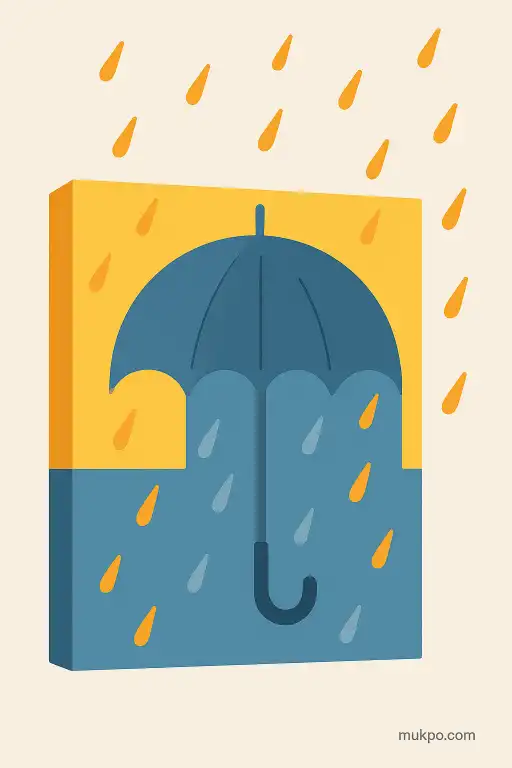
Most of these pieces rely on hydrophobic and hydrophilic behavior. One part of the paint layer repels water, so it stays relatively dry-looking even in a downpour. The other part wets out. Wet surfaces often look darker because water reduces the tiny air gaps that normally scatter light. When those gaps fill, light passes through differently and more of it is absorbed instead of bouncing back to your eyes. So a rain-darkened background can “switch on” a paler shape, or a rain-darkened symbol can pop against a background that stays brighter.
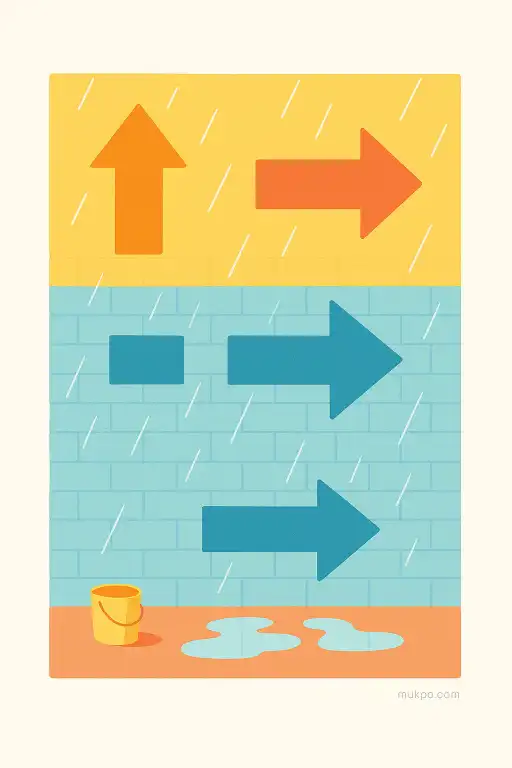
The directions themselves are usually just a second pattern laid on top of the first one. Sometimes it’s a clear coat applied through a stencil. Sometimes it’s a second paint with a different surface energy. From ten feet away on a dry day, both patterns can look identical. When everything gets wet, the wall stops being visually uniform, and the hidden pattern starts reading like signage.
How artists get “invisible” marks to stay invisible
The hard part isn’t making something appear in rain. It’s making it disappear again without leaving a ghost image. That’s why many rain-reveal murals avoid strong pigments in the hidden layer. They lean on clear or near-clear coatings that only change how the surface holds water. The hidden directions can be made with a hydrophobic spray, a varnish, or a clear acrylic medium. On a dry day, those coatings mostly change sheen at certain angles, which people rarely notice while walking past.
One detail people overlook is texture. A wall with heavy stucco, old brick, or flaking paint makes rain-activation harder to control. Water pools in pits and runs down high spots. That can blur edges and make arrows look fuzzy. Clean, sealed surfaces give crisp reveals. Rough, porous surfaces create a more smeared, “only readable up close” effect, which changes whether it works as true wayfinding or more like a surprise message.
What “hidden directions” can realistically do
When a rain-reveal mural acts like directions, it usually points to something nearby: a venue entrance, a transit stop, a temporary exhibit, a safe walkway around construction. Long-distance navigation is rare because rain patterns are inconsistent. A light mist might not wet the wall enough. Wind can keep one half dry. A strong sun break can dry the surface unevenly. So the mural tends to work best as a short-range nudge rather than a reliable map.
It also depends on how the viewer approaches. A sign that only appears when you’re already in front of it can’t guide you from far away. Some designs solve this by placing the reveal on the ground plane—sidewalks and plazas—because people naturally look down when it rains. Wall-based ones often use large, simple geometry: thick arrows, minimal text, and high-contrast shapes that read while you’re moving.
Why it fades, fails, or needs rebuilding
These murals are fragile in a very specific way. They don’t just wear off like ordinary paint. They lose their “switch” when the surface chemistry changes. Dirt, exhaust residue, and algae can make hydrophobic areas start wetting out. Pressure washing can do the opposite and strip the coating so everything behaves the same in rain. Even repeated cycles of wetting and drying can slowly flatten the surface, changing how water beads and how light scatters.
That’s why some rain-activated pieces are intentionally temporary, like campaigns or short installations. The reveal might be strong for a season and then become subtle. And because the effect depends on the exact materials and the wall beneath them, two murals made with “the same idea” can behave very differently once they’re out in real weather.
Related reads
- Why people cling to ‘lucky’ routines long after they stop working
- How forcing a smile can shift your mood in minutes
- The tiny mental skip that makes a face feel strangely familiar
- That strange moment when your hand feels like it’s not yours
- Why we say sorry for things that don’t need apologizing
- Why video calls make us miss tiny facial cues