
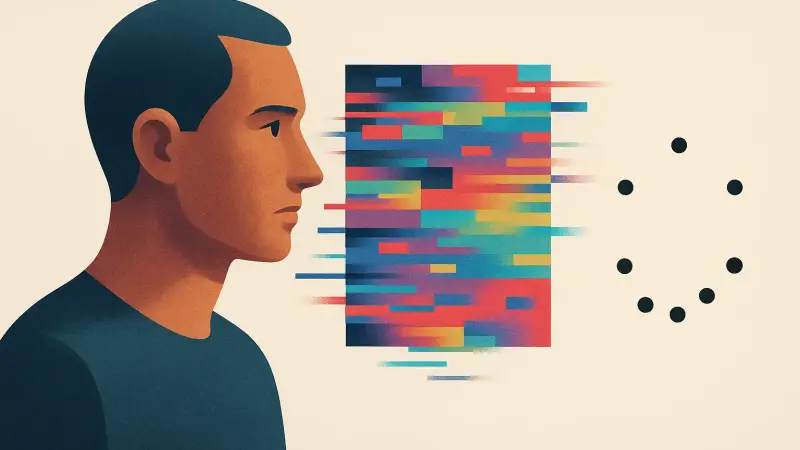
A brain that keeps spotting shapes
People notice patterns in clouds, in stock charts, and in the way a few coincidences line up in a single day. This isn’t one specific place or incident. It shows up everywhere, from lottery “hot number” talk in the US to astrology columns in the UK to rumors after an earthquake in Japan. The core mechanism is simple: the brain is built to detect structure fast, and it would rather guess “this means something” than miss a real signal. That default setting works great for faces and language. It gets weird when the input is basically random.
Pattern detection is not optional
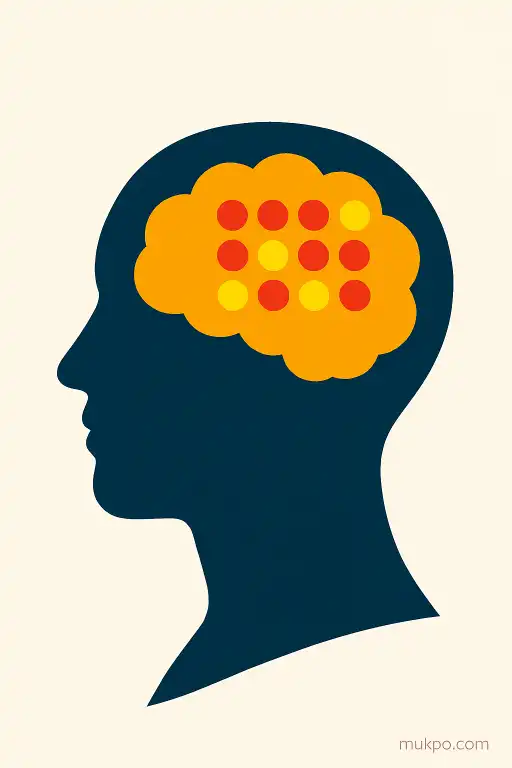
Human perception is not a camera. It compresses and predicts. It fills gaps. That’s why a few dots can become a face, and why a familiar melody is recognized even when it’s played badly. The same machinery keeps running when there is no real structure to find. Random sequences still have clusters. Noise still has streaks. The system that normally helps people navigate a messy world starts to overinterpret.
A concrete example shows up in casinos. A roulette wheel can land on red five times in a row, and someone will feel sure black is “due.” Another person will feel sure red is “hot.” Both reactions are driven by the same discomfort: a short run of outcomes feels like it should “balance out” or “keep going,” even though each spin is independent. The overlooked detail is that people often judge randomness by how it looks, not by how it works. True randomness regularly produces neat-looking streaks.
Meaning sneaks in through coincidence
Coincidences are emotionally loud. A stranger mentions a band, then that band plays in the next shop, and it sticks. The brain tags it as special because it’s a surprising match. The quiet part is everything that didn’t match that day. Those non-events don’t get stored with the same weight. So the memory record becomes lopsided, full of hits and light on misses.
This is why people can feel that a license plate, a repeated time on the clock, or a “sign” in a headline is aimed right at them. The repetition is real. The interpretation is the add-on. A number like 11:11 is easy to notice because the digits repeat. That’s a practical design feature of the display, not a message. The often-missed detail is how many times people check the clock without encoding the time. The moments that don’t look interesting slide right past attention.
Stories form faster than statistics
Once a pattern is suspected, a story forms around it. The story gives the pattern edges: a beginning, a reason, a villain, a lesson. That story feeling is strong evidence to the person experiencing it, because coherence feels like truth. But coherence is something the brain can generate on demand. It’s the same reason a conspiracy theory can feel “tighter” than a boring explanation that includes chance and incomplete information.
Financial markets are a clean example. Charts are full of shapes, and people draw lines through them because it’s hard not to. Some of those lines can be useful signals. Many are just what random variation looks like when it’s graphed. The overlooked detail is selection. If a person scrolls through years of data and only stops when a dramatic pattern appears, they’ve already filtered for something that looks meaningful. The pattern didn’t announce itself. It was chosen.
Why the glitch is hard to turn off
This isn’t a flaw that only “gullible” people have. It’s a normal feature of a social species with a prediction engine. Detecting agency quickly kept ancestors alive. Hearing intent in a sound, or spotting a face in the brush, is a cheap bet when the cost of being wrong is low and the cost of being wrong the other way is high. That bias doesn’t disappear just because the modern world contains spreadsheets, algorithms, and giant streams of random-looking data.
It also gets stronger under stress, fatigue, or isolation. When life feels unstable, the mind reaches for structure. The same event can feel ordinary one week and “loaded with meaning” the next, depending on context that isn’t obvious from the outside. People rarely notice that shift happening in real time. They notice the pattern. They notice the pull. And the rest of the machinery runs quietly underneath.

Related reads
- The necklace scandal that entangled Marie Antoinette and unraveled royal credibility in pre-Revolution Paris
- A mural that reveals hidden directions whenever it rains
- Why people cling to ‘lucky’ routines long after they stop working
- How forcing a smile can shift your mood in minutes
- The tiny mental skip that makes a face feel strangely familiar
- That strange moment when your hand feels like it’s not yours