
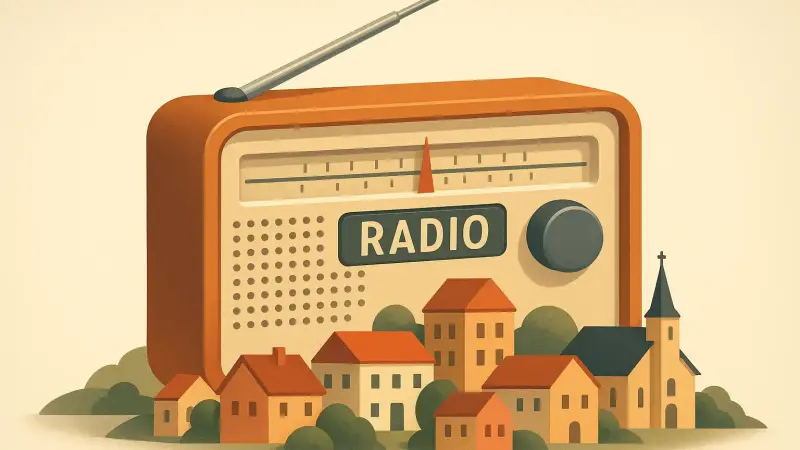
People assume place names are old and stubborn. But every so often a town treats its name like a signboard you can swap out, especially if someone dangles a prize. One of the cleanest examples is in Saskatchewan, Canada: in 1943, the village of Whiskey Gap changed its name to Climax as part of a radio contest promotion. The mechanism is simple. A broadcaster or brand offers attention, equipment, or cash. The town agrees to adopt a new name—sometimes temporarily, sometimes for good—because being talked about can be worth more than the prize itself.
What a “rename for a contest” usually looks like
Most of these contests aren’t asking a place to invent a name out of thin air. They usually want a town to take on a sponsor’s name, a product name, or a catchy word the station can repeat on air. That repetition is the point. A town name becomes a built-in jingle that newsreaders, DJs, and mail sorters keep saying for free.
The offer is often framed like a game, but it runs on practical incentives. Small places get a spike of publicity they could never buy. The sponsor gets a story that feels “local” instead of corporate. And the radio station gets days of easy programming—call-ins, interviews, live remotes, and follow-up segments about whether the town “really went through with it.”
The Climax, Saskatchewan example (and what’s easy to miss)
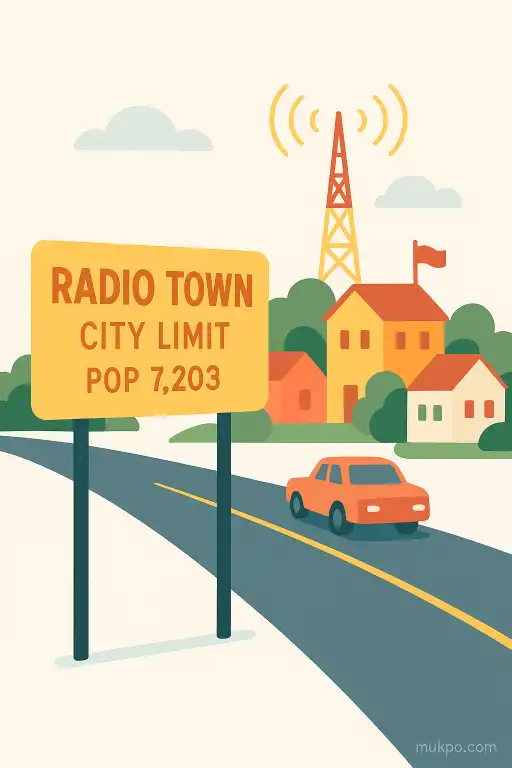
When Whiskey Gap became Climax in 1943, the name itself did most of the work. It was short, memorable, and slightly shocking for the era. That mattered for radio, where a town’s name has to land instantly in the listener’s ear. The overlooked detail is that the name change wasn’t just a punchline. It had to be recognized on paper: maps, postal routing, and official records all become part of the story once the change is formal.
That paperwork tends to be where the “fun” version of the story meets reality. A local council (or equivalent) typically has to vote. The change often needs approval from a provincial or state naming authority. And even after approval, the old name doesn’t vanish. Land titles, cemetery records, business stationery, and family memories keep the previous name alive for decades.
Why a name is worth trading
A town doesn’t need to be struggling to consider this. It just needs to be small enough that attention is rare. Being “the town that did the thing” can produce a chain reaction: reporters call, tourists detour, and nearby cities suddenly know where the place is. For rural communities, that can matter more than the original prize. A few thousand extra visitors in one season can outperform a one-time payout.
There’s also a social side. A rename campaign gives locals a project with a deadline and a clear outcome. Even arguments help. People pick sides, show up to meetings, and talk about what kind of place they want to be associated with. In places that don’t get many new institutions or events, a naming fight can become an instant civic focal point.
What can make it messy
Even when a contest winner is announced on air, the rename can stall. Legal naming processes move slowly. Some jurisdictions treat names as part of emergency management, postal logistics, and geographic data, not local branding. If a proposed name duplicates another nearby place, sounds too similar over radio, or causes confusion for dispatchers, it can be rejected or modified.
Then there’s the cost people forget to count. New signage isn’t free. Neither is changing letterhead, updating business registrations, or correcting misdirected shipments while databases catch up. A sponsor may cover some of it, but not always. That’s why some communities try for a temporary or ceremonial rename instead, even if the legend later gets repeated as if it were permanent.
How these stories survive
Radio contests are designed to create a neat narrative: before name, after name, big reveal. Real life is less clean. Often the contest materials don’t survive, and details can vary depending on who’s telling it—local histories, newspaper clippings, and station archives don’t always agree on what was promised and what was delivered. But the public memory stays crisp because the hook is crisp.
And once a town’s name becomes the story, it keeps renewing itself. Every new map label, highway sign, or “Welcome to…” photo gives the original contest another round of airtime, even long after the station has changed formats or disappeared entirely.
Related reads
- Why laughter spreads through a crowd even when no one plans it
- A pond that spits out coins every few summers
- A warehouse full of undeliverable returns with no senders
- The pattern-hunting glitch that convinces us there’s meaning where there isn’t
- The necklace scandal that entangled Marie Antoinette and unraveled royal credibility in pre-Revolution Paris
- A mural that reveals hidden directions whenever it rains