
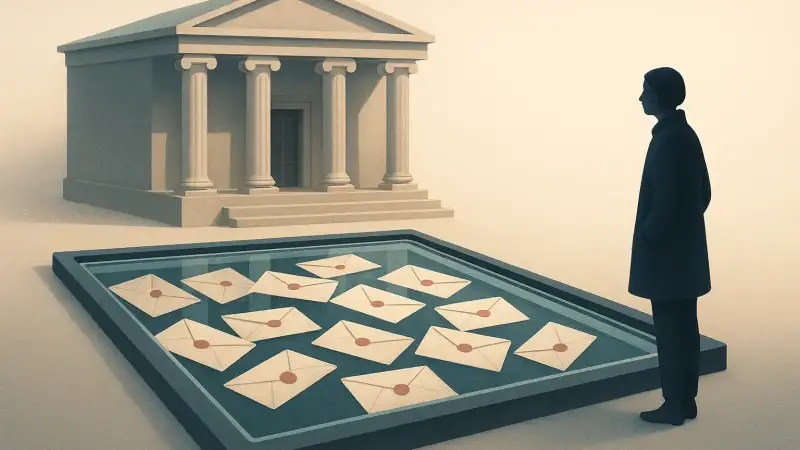
A letter you can’t get back
People treat letters like private objects. You write one, seal it, and assume it stays yours. But some museums run a stranger arrangement: visitors hand over sealed letters, staff place them under the building’s floor, and a rule forbids anyone from opening them. It isn’t one single place with one fixed script. Variations show up in different “time capsule” projects and installations. One of the best-known letter-focused examples is Future Library in Oslo, which stores manuscripts to be printed later, though that’s a vault rather than a floor. The core idea is the same: the building becomes the lock, and time becomes the keeper.
How the sealing usually works
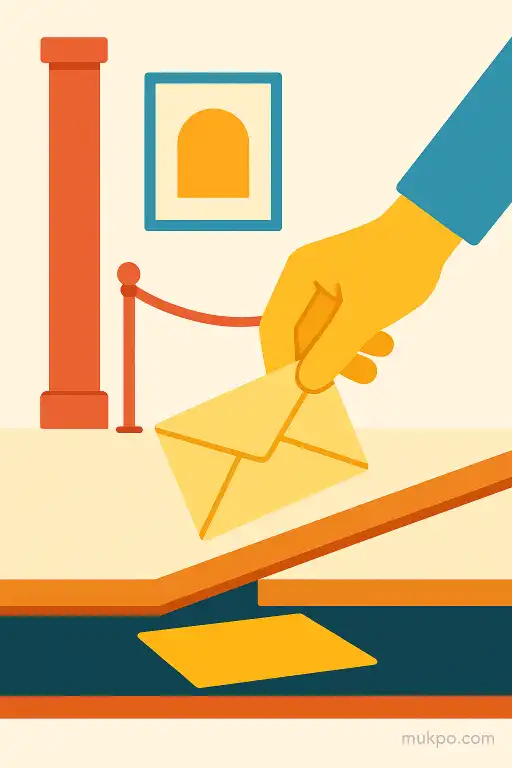
The mechanics tend to be plain, almost boring on purpose. A visitor writes on provided paper or brings a prewritten letter. It gets sealed in an envelope, sometimes stamped with a date, sometimes logged with a short description. A staff member or curator takes it away instead of putting it on display. In the “under the floor” versions, the letters go into a container—often an archival box inside a larger sealed crate—then that container is placed beneath floorboards or into a floor cavity designed for storage.
One overlooked detail is humidity. Floors are not naturally safe places for paper. Museums that take preservation seriously will add acid-free enclosures, desiccants, or a second barrier like Mylar sleeves, because even a well-sealed envelope can take on moisture over decades. When they don’t, the rule against opening can become a preservation problem, not just an ethical one.
Why forbid opening something that’s already inside a museum
The “no opening” rule isn’t only about drama. It also keeps the museum from becoming a reader, editor, or judge. The staff can honestly say they don’t know what’s inside, which changes the trust relationship with the public. That matters when strangers are encouraged to write honestly. The prohibition also prevents accidental selection. If curators could read the letters, they could start privileging the poetic ones, the scandalous ones, the ones that fit an exhibition theme.
It also creates a clean boundary for handling. Museums have strict policies around personal data and sensitive content. A sealed, unread letter is still a physical object, but it’s not yet a processed document. The rule acts like a firewall: staff handle envelopes as artifacts, not as disclosures. That can be the difference between a quirky participatory piece and an institutional headache involving privacy, consent, and record retention.
What a museum actually collects when it collects unread letters
On paper, the museum is collecting writing. In practice, it’s collecting the act of writing. The content is locked away, but the fact of it is public. That’s why these projects often display the surrounding infrastructure instead: the drop slot, the ledger of submissions, the sealed crate, the floor panel with a plaque. Even a simple count—“312 letters deposited”—becomes part of the exhibit, because it shows participation without revealing anyone.
That also changes what “authenticity” means. An unread letter can’t be verified in the usual way. It could be blank. It could be a shopping list. It could be three pages of confession. The museum can only verify the ritual: envelope received, sealed, stored. The artifact is the promise that something was entrusted, not the something itself.
The messy parts: ownership, access, and the building as a lock
Once letters are under a floor, the building becomes part of the collection. That sounds neat until the real world shows up. Buildings get renovated. Foundations crack. Floors are replaced for accessibility or fire codes. A museum can forbid opening and still end up forced to move the container, which raises the question of who is allowed to touch it and under what conditions. Some projects try to solve this with a second seal that would show tampering, or by documenting the placement with photographs and a signed log.
Ownership is equally slippery. A visitor writes the letter, but the museum may own the physical envelope once it’s donated. The writer may still feel moral ownership of what’s inside. If a museum ever closes, merges, or deaccessions, that tension gets sharper. The “forbidden to open” rule reads like a permanent vow, but institutions run on policies, not vows, and policies can collide with legal requests, inheritance claims, or simple structural necessity.
Related reads
- Why the opening and closing moments of events stick in memory
- The town that renamed itself to win a radio contest
- Why laughter spreads through a crowd even when no one plans it
- A pond that spits out coins every few summers
- A warehouse full of undeliverable returns with no senders
- The pattern-hunting glitch that convinces us there’s meaning where there isn’t