
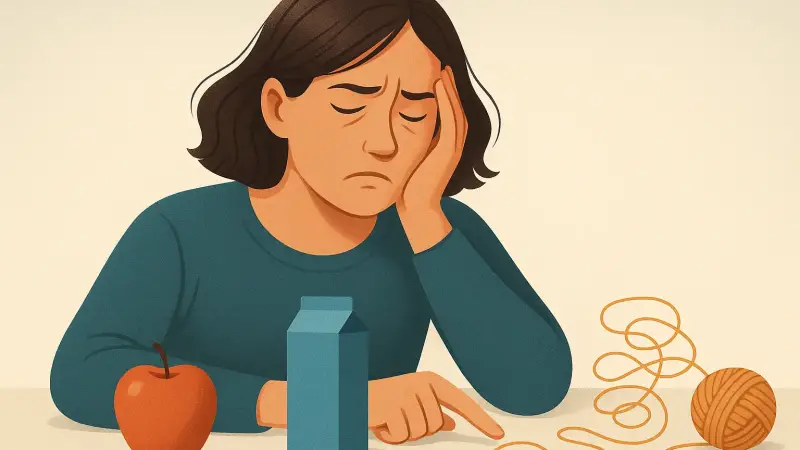
By dinner, tiny choices start feeling heavy
By late afternoon, the smallest decision can suddenly feel annoying. Which line at the grocery store. Whether to answer one more email. What to cook with what’s left in the fridge. This isn’t one single event that happened in one place. It shows up in offices in the U.S., night markets in Singapore, and family kitchens in Italy, because it’s tied to a basic limit: the brain’s ability to keep selecting, inhibiting impulses, and holding goals in mind. Decision fatigue is what people call the drop-off that happens after a day of choosing. The mechanism isn’t mystical. Control gets effortful, and the mind starts looking for shortcuts.
Choosing isn’t just picking, it’s suppressing
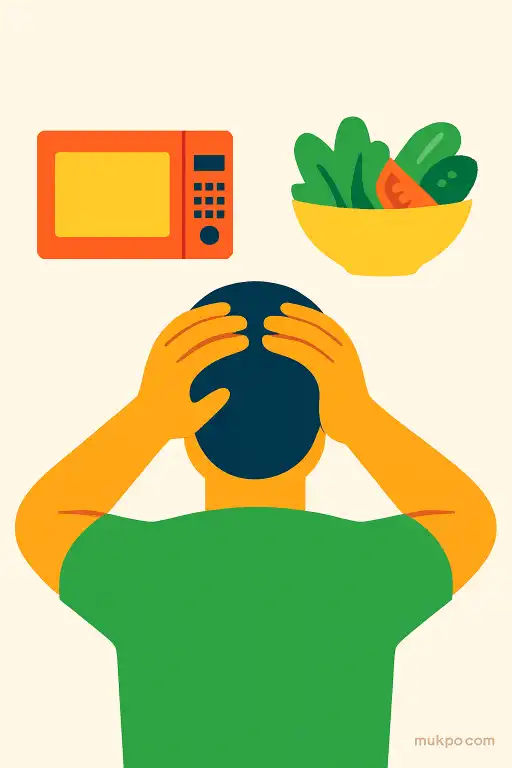
Every decision has a hidden second job. It asks the brain to reject alternatives. That means inhibiting the urge to grab the easiest option, ignoring distractions, and keeping a rule steady (“I’ll wait,” “I’ll stick to the plan,” “I’ll compare a little longer”). Those parts rely on executive control, which is also used for staying polite in a tense meeting or not snapping at a slow driver. By the time dinner comes around, it’s common for that control to feel less available. People don’t lose intelligence. They lose tolerance for friction.
A detail people overlook is how many “micro-decisions” pile up before anything important happens. Not just big choices like signing a lease. It’s things like rewriting a sentence three times, deciding whether a notification matters, choosing which tab to close, or switching between tasks because someone asked “Got a sec?” Each one is small. The total is not.
Why small choices unravel into bigger ones
Once the mind is tired of choosing, it tends to shift into simpler modes. One is defaulting: picking the usual brand, the usual route, the usual dinner, even if it’s not ideal. Another is avoiding: putting off the choice entirely because starting feels irritating. A third is impulsive switching: choosing quickly just to make the feeling stop. All three can look like “I don’t care,” but they’re often “I don’t want to run the comparison engine again.” That’s how a minor question like “What should we eat?” can turn into a bigger conflict than the topic deserves.
This also changes how people handle tradeoffs. Earlier in the day, someone might weigh cost, health, and time. Later, the tradeoff becomes one-dimensional: fastest, easiest, least argument. That narrowing can be hard to notice in the moment, because it feels like clarity. It’s more like the mind refusing to keep multiple variables active.
The dinner-time effect: hunger, stress, and social friction
Decision fatigue rarely arrives alone. By evening, people are often hungry, low on sleep, and carrying whatever stress happened earlier. Those factors make self-control harder and emotions quicker to surface. Add other people, and the decisions multiply. “Do you want pasta?” becomes “Do you care that I’m tired?” if the day already burned through patience. That’s why dinner time is a common flashpoint: it’s a decision that must be made, it affects everyone, and it happens right when resources are low.
A concrete example is the after-work grocery stop. Someone walks in intending to buy a few basics. Inside, there are price comparisons, substitutions, packaging claims, and constant small reversals (“They’re out of chicken,” “This is on sale,” “Wait, we already have rice”). By the time they get home, “What should we cook?” lands on a brain that has already been saying no, not that, choose this, choose now for an hour.
What researchers argue about, and what seems consistent
It’s worth saying plainly: the science has debates. Some studies have found strong decision-fatigue effects. Others have struggled to replicate them in the same way, and researchers argue about what the effect really is. It may not be one single “fuel” that runs out. It may be a shift in motivation, attention, or willingness to spend effort, depending on the setting and the person.
What does seem consistent is the pattern people recognize: after repeated self-control and repeated choosing, the mind leans harder on habits and quick rewards. The threshold for “this is too much” drops. The result is not always bad decisions. It’s often fewer decisions, simpler decisions, and less appetite for explaining them to anyone else.
Related reads
- Shopkeepers who sell human teeth as good luck charms
- Why boredom sometimes triggers sudden bursts of creativity
- How listener nods and murmurs steer the direction of conversations
- A museum that seals strangers’ letters under the floor and forbids opening them
- Why the opening and closing moments of events stick in memory
- The town that renamed itself to win a radio contest