
What people notice when it happens
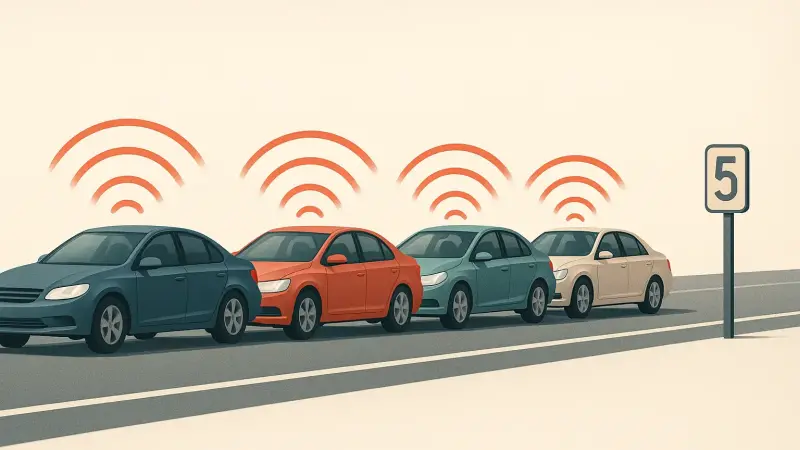
You’re driving a normal stretch, then you hit one exact spot and a car alarm chirps. Sometimes it’s your own. Sometimes it’s two cars at once, one a few seconds behind the other. There isn’t one single famous milepost everyone agrees on. Reports pop up around different roads and facilities. People mention highway segments near big radio and radar sites, like the area around the U.S. Navy’s Jim Creek transmitter in Washington, and roads near large broadcast towers in lots of countries. The pattern is the same. One location seems to “poke” the alarm system, then everything settles down again a few hundred yards later.
How a car alarm decides to scream
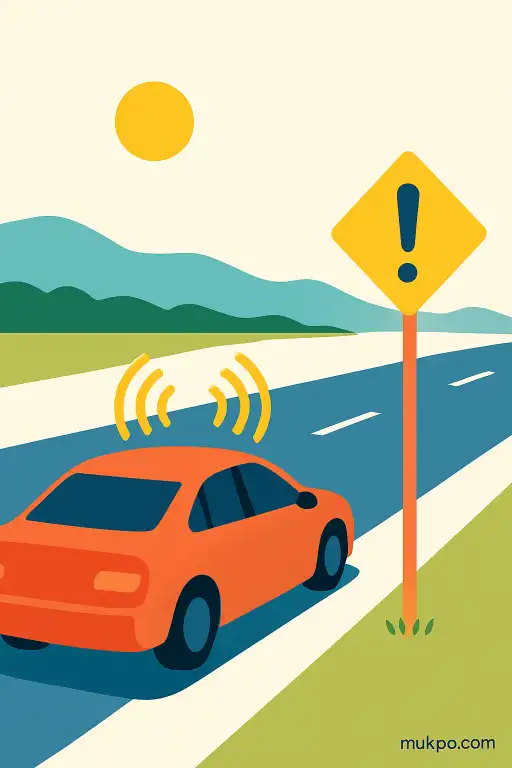
A modern alarm is a small network. There’s a control module, a siren, and a few ways to decide something is wrong. Door and hood switches are the obvious ones. But many systems also watch the car’s electrical state. A quick voltage dip. A sudden change in current draw. A weird signal on a sensor line. Aftermarket alarms often add a “shock” or “tilt” sensor and a glass-break microphone. None of those were designed to live in a perfectly quiet lab. They live in a metal box full of wiring acting like antennas.
The overlooked detail is that the alarm doesn’t need a full “unlock” command to misbehave. A brief glitch on the line that reads a door switch can look like a door popped open and closed. A momentary brownout can trip tamper logic. Even the key fob receiver, which is listening for a very specific coded transmission, can get confused if the front end is overloaded. That confusion usually looks like ignoring the fob, but some modules treat certain corrupted inputs as an intrusion event and go loud.
Why one spot on the road can trigger it
When people describe a single “milepost,” they’re usually describing a consistent radio-frequency environment. Big AM broadcast stations, emergency service transmitters, military VLF sites, and some industrial equipment can create a strong field in a localized area. The car’s wiring harness, especially long runs to doors and the rear hatch, can pick up that energy. If the alarm module has poor filtering or a weak ground, that picked-up energy can turn into a false signal. It’s not magic. It’s basic coupling: the field is stronger, or the geometry of the road lines the car up just right, and the electronics get nudged past a threshold.
Road design can make the “same place” effect feel sharper than it really is. A curve that points cars directly toward a transmitter can change exposure. Passing under high-voltage lines can add bursts of electromagnetic noise, especially during certain weather. Even a metal bridge or a cut through rock can reflect or shadow radio signals so the field changes quickly over a short distance. From the driver’s seat it feels like a tripwire. From the antenna’s point of view, it’s a shifting landscape.
Why it hits some cars and not others
Two cars can drive side by side and only one will start honking. That’s normal for this kind of problem. Alarm designs vary a lot by model year and by whether the system is factory or aftermarket. Aftermarket installs are especially sensitive to small mistakes: a ground screwed into painted metal, a sensor wire routed alongside a noisy power lead, a splice that adds resistance. Even factory systems can differ because the “same” platform may use different modules depending on trim level or region. So one car’s electronics shrug off a burst of RF, while another interprets it as tampering.
Timing matters too. Some alarms arm themselves in stages. Some wake up briefly to check status. If a car happens to be in that wake window at the exact moment it passes a strong signal, it’s more likely to false-trigger. That’s why people sometimes swear the spot “only does it at night” or “only after parking for ten minutes.” The road didn’t change. The car’s internal schedule did.
What else can mimic the pattern
Not every “alarm milepost” is about radio energy. Some are about vibration. A rough expansion joint or a specific pothole can set off overly sensitive shock sensors. Parking garages have their own version: a certain ramp seam that triggers alarms as cars climb it. Temperature can play a role as well. A hood pin switch that’s slightly misaligned can go intermittent when the metal flexes over a bump or when the body twists entering a driveway. Drivers remember the location and forget the conditions that lined up that day.
And sometimes the effect is social, not physical. One alarm going off can set off another if a nearby car has an audio-triggered sensor that “listens” for glass break or sudden noise. A convoy passing the same point can create a chain reaction that looks like a map coordinate with a curse on it. It’s messy in the real world, which is why the same story can be true in one stretch near a transmitter and totally different on another road where the culprit is simply a bad seam in the asphalt.
Related reads
- How decision fatigue makes small choices unravel by dinner time
- Shopkeepers who sell human teeth as good luck charms
- Why boredom sometimes triggers sudden bursts of creativity
- How listener nods and murmurs steer the direction of conversations
- A museum that seals strangers’ letters under the floor and forbids opening them
- Why the opening and closing moments of events stick in memory