
That “who is that?” moment
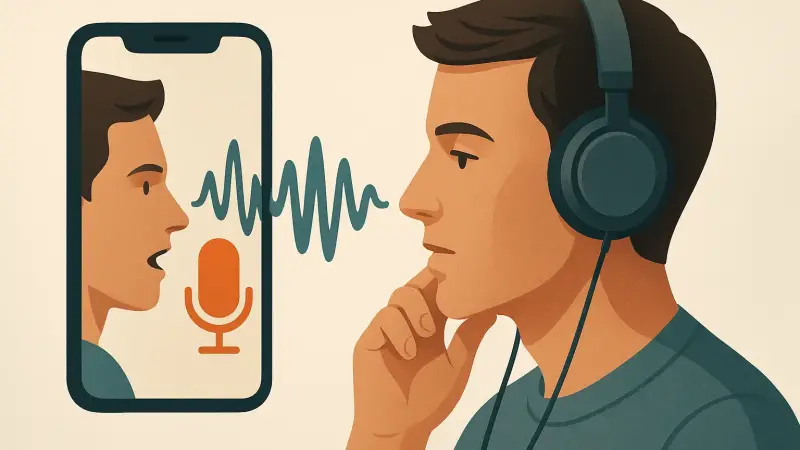
You hear a recording of yourself—maybe a WhatsApp voice note, a Zoom clip, or a voicemail—and your first reaction is that it sounds like someone else. It isn’t one single “place” where this happens. It shows up everywhere people hear playback: on iPhones in the U.S., on Androids in India, on office conference systems in Germany. The core mechanism is simple: you’re used to hearing your voice through your head as well as through the air. A recording mostly gives you the air version. That missing piece changes the tone enough that your brain tags it as unfamiliar.
The two ways you hear yourself
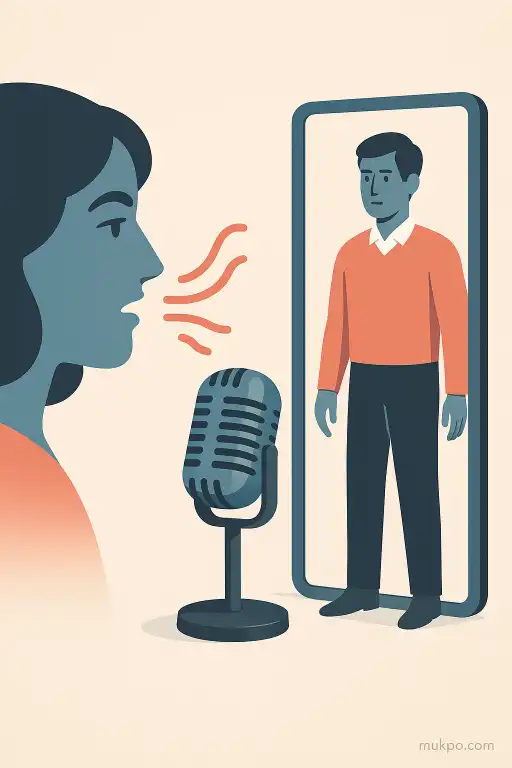
Other people hear you mainly through airborne sound: vibrations travel from your mouth into the room, then into their ears. You also hear that, but you get an extra channel at the same time. Vibrations from your vocal cords travel through your jaw, skull, and soft tissue into the inner ear. That’s bone conduction, and it boosts the lower frequencies more than the higher ones.
That bass boost is a big part of why your live voice feels fuller to you than it does on playback. Your recorded voice can seem thinner or brighter because the recording captures the sound that left your mouth, not the vibration traveling through your bones. The content is the same—words, timing, accent—but the spectral balance is different, and that’s enough to trigger the “stranger” feeling.
What microphones and compression do to it
Recordings aren’t neutral snapshots. A phone mic is tiny, tuned for speech intelligibility, and often sits a short distance from the mouth. That placement emphasizes certain frequencies and de-emphasizes others. It also picks up more room reflections than you notice in real time, especially in hard, echoey spaces like a kitchen or stairwell.
Then there’s processing. Many apps apply automatic gain control, noise suppression, and compression. Compression reduces the difference between loud and soft parts, which can make consonants jump out and vowels feel flatter. A specific detail people overlook is how aggressively voice notes and calls are band-limited. Typical telephony chops off a lot of low bass and very high treble to save bandwidth. Even when the recording is “HD,” it’s often still shaped to prioritize clarity over natural timbre.
Your brain expects a familiar version of you
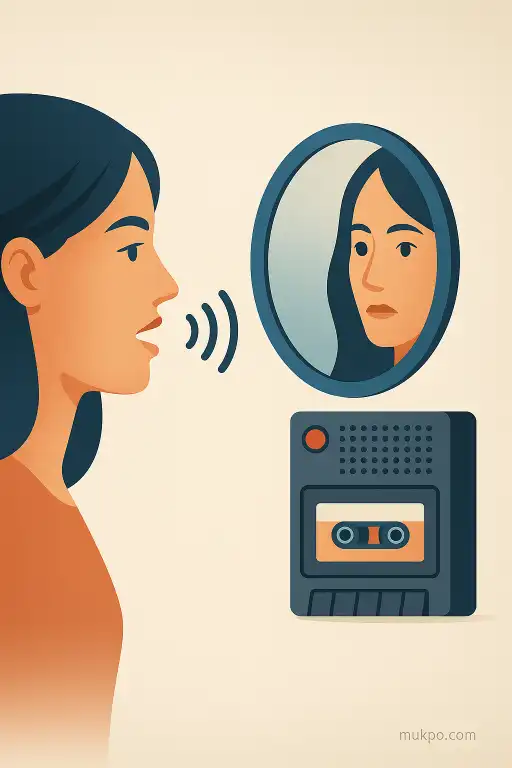
The discomfort isn’t just audio physics. It’s prediction. Your brain has a long history of pairing “my voice” with the version you hear inside your head. When the playback arrives, it matches the timing and phrasing you recognize, but it doesn’t match the tone your brain expects. That mismatch makes it feel like the identity is off, even though it’s objectively you.
There’s also a social angle baked in. For most of life, you rarely hear your own voice as other people do. Everyone else gets that “outside” version every day. You don’t. So the first clear playback can feel like meeting a close relative you somehow never saw before—familiar patterns, unfamiliar surface. The surprise is stronger if the recording captures nervousness, a forced “phone voice,” or a different speaking rhythm than the one you imagine you have.
Why it can sound different from recording to recording
The same person can sound noticeably different across devices and situations. A Zoom recording from a laptop in a carpeted room can sound smoother than a phone recording in a tiled bathroom. Distance matters too. A mic a few inches away captures more breath noise and mouth sounds than one across the room, and those tiny noises can make a voice feel less “like you” than you expect.
Even small physical changes matter. Congestion, dehydration, fatigue, and posture shift how the vocal folds vibrate and how the mouth and throat shape resonances. Playback makes those changes obvious because it freezes one moment in time. Live listening blends into memory, and memory tends to keep the version of your voice that feels consistent.
Related reads
- A bakery that bakes secret birthday messages into loaves that appear only when toasted
- Why pupils widen when someone catches your eye
- Why you cannot tickle yourself
- What happens to memories overnight when sleep seals them in
- A landlord who quietly reunites tenants with umbrellas left years ago
- A stretch of road where every car alarm triggers at the same milepost