

Some nights, sleep doesn’t start when the lights go out. It starts earlier, with tiny repeats that feel almost pointless in the moment. The same mug. The same lamp. The same two pages of a book. This isn’t one single tradition tied to one place; it shows up everywhere, from Tokyo apartments to London flats to bedrooms in the U.S. What those little rituals tend to do is narrow the brain’s range of expectations. They make the next few minutes predictable. That predictability matters because the brain is always scanning for “what’s next,” and it eases up when the answer keeps coming back the same way.
The brain treats repetition like a cue
A ritual is basically a pattern with a stable order. When the order repeats, the brain starts linking the early steps with the later outcome. It’s a low-key kind of learning. Not dramatic. But it builds an association: certain actions tend to be followed by fewer demands, less social input, and less decision-making. Over time, the “meaning” of the ritual becomes less about the objects involved and more about the sequence being familiar.
You can see this in how quickly attention shrinks. A person who was scrolling, thinking, and problem-solving half an hour ago may start focusing on only a few narrow sensations: warm water at the sink, the feel of a toothbrush, the click of a bedside switch. The overlooked detail is that the cue is often the order, not the item. A different toothpaste in the same sequence usually feels less disruptive than doing the same steps in a different order.
Lowering choice-load is part of the effect
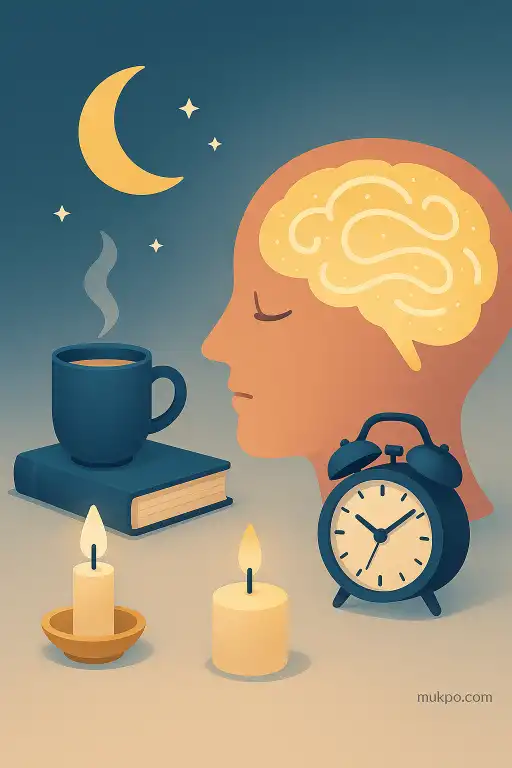
Tiny bedtime routines tend to reduce the number of choices the brain has to keep open. During the day, choices are constant: respond now or later, eat this or that, keep reading or stop. At night, the repeated steps quietly close those loops. Even small decisions can keep the brain in a mode that expects more input, more evaluation, more action. A ritual shrinks the menu without anyone announcing it.
A concrete example is someone who always puts their phone on the same shelf before washing their face. The shelf itself is not magic. The point is that the phone stops being part of the environment that can demand a response. That “no more messages right now” boundary can be created in lots of ways, but rituals make it automatic. It reduces the chance of one last micro-decision that turns into ten minutes of alertness.
The body gets steady signals without noticing
Most bedtime rituals include small changes in light, temperature, and sound, even when people don’t think of them as “sleep hygiene.” A hallway light gets turned off. A bathroom fan stops. A heavier blanket replaces a throw. Those are sensory shifts, and they tend to be consistent night to night. The brain is good at treating consistent sensory patterns as safe and unremarkable. When the environment becomes less changeable, the brain has fewer reasons to stay vigilant.
One specific detail people overlook is how much the eyes are doing. Not just brightness, but where the eyes point. Looking down at a sink, then at a dim lamp, then at a book on a lap is a different visual rhythm than looking across a room at a TV. The shift isn’t only about light levels. It’s about reducing wide, scanning gaze patterns that keep attention outward and alert.
Memory and worry don’t like tidy endings
At night, the brain often tries to keep track of unfinished things. That can show up as rehearsing tomorrow’s tasks or replaying a conversation. Rituals don’t solve those problems, but they change the timing. A stable sequence creates a kind of endpoint that the brain can recognize: now comes the part where nothing new is required. It’s not that thoughts stop. It’s that fewer new triggers keep arriving to refresh them.
This is why the same ritual can feel “off” when one step is missing. Not because the missing step matters practically, but because it breaks the sense of completion. People often notice it most when traveling. A different bathroom layout or an unfamiliar light switch can keep the mind oddly engaged. The brain treats novelty as a small problem to solve, and problem-solving is the opposite of drifting.
Why small rituals can work even when the day was chaotic
Stressful days create noisy inputs: unpredictable messages, shifting plans, strong emotions. A bedtime ritual is one of the few parts of the day that can stay identical anyway. That contrast matters. Predictability is easier to detect when everything else was variable. The brain does not need a long routine to register that things have narrowed; it needs consistency. A two-minute sequence repeated for months can carry more weight than a long routine done inconsistently.
Sometimes people think the ritual “stopped working” when sleep gets harder. It’s unclear in any one person why that happens, because sleep is sensitive to many moving parts—health, schedule, hormones, stress. But even then, the ritual can still be doing its quiet job: reducing new stimuli, reducing choices, and making the last stretch of the day feel more predictable than the hours that came before.
Related reads
- Why your recorded voice sounds like a stranger
- A bakery that bakes secret birthday messages into loaves that appear only when toasted
- Why pupils widen when someone catches your eye
- Why you cannot tickle yourself
- What happens to memories overnight when sleep seals them in
- A landlord who quietly reunites tenants with umbrellas left years ago