
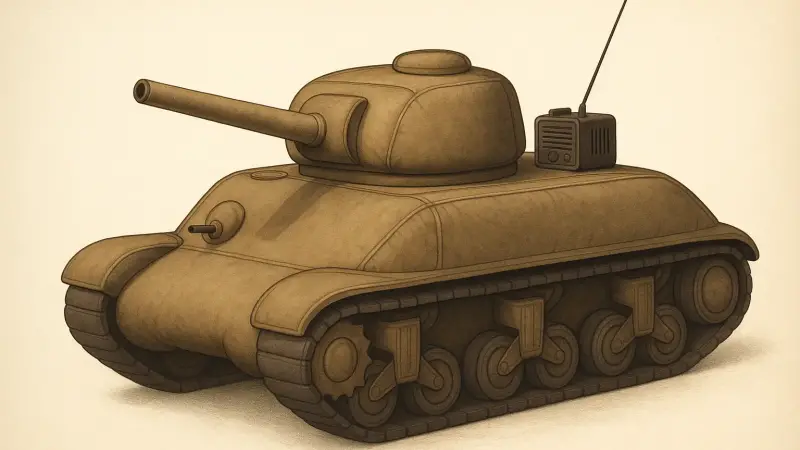
How you can hide an army by showing one
People tend to picture wartime deception as codes and spies. In World War II it was often the opposite. It was stagecraft, done out in the open, aimed at cameras. In 1944, during Operation Fortitude—the deception plan tied to the Normandy landings—Allied forces built a whole false army in southern England and tried to make German reconnaissance “see” it. The trick wasn’t a single perfect fake. It was lots of small, believable signals that pointed to the same story: tanks here, camps there, radio chatter everywhere. If the story was coherent, a photo interpreter was more likely to accept it.
Inflatable tanks and the problem of shadows
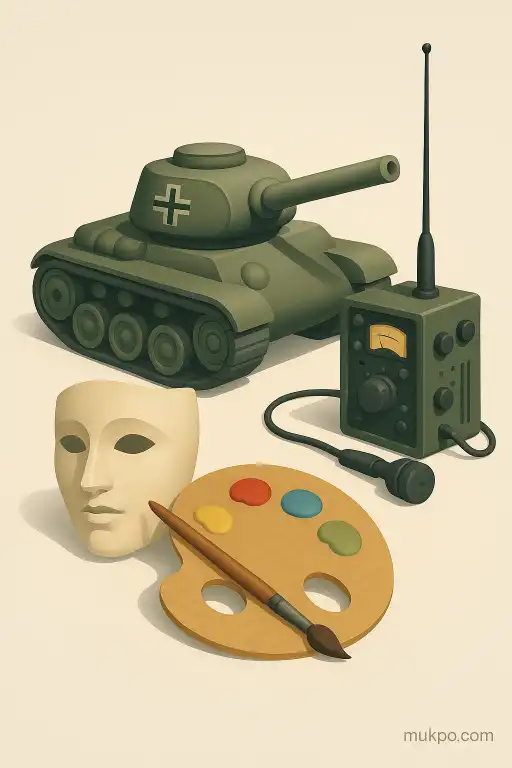
Inflatable decoys sound silly until you remember what an aerial photograph actually captures. Shape, shadow, tracks, spacing, and routine. The British and Americans used dummy vehicles, dummy landing craft, and fake depots to suggest formations that didn’t exist. A common overlooked detail was the shadow. An inflatable tank could read fine from altitude, but a wrong shadow angle or a “tank” that never left tracks could give it away. So decoy sites were arranged with care, with tire marks dragged in, tents placed to look lived-in, and vehicles repositioned to create the sense of normal use instead of a museum display.
The fakes also had to survive a second look. Reconnaissance wasn’t always one flyover. Analysts compared photos over time. That meant a decoy camp needed changes: fresh disturbances in the ground, different parking patterns, new stacks of crates, old ones moved. The goal wasn’t to fool everyone forever. It was to waste attention and tilt probability, so real movements elsewhere got less scrutiny.
Fake radio traffic that still had to “sound right”
Visual decoys worked best when radio also backed them up. Allied operators ran “spoof” networks that imitated the rhythms of real units: call signs, message volume, and the boring repetition that actual military traffic produces. It wasn’t enough to transmit random noise. German signals intelligence looked for patterns. They watched who talked to whom, how often, and at what times. So the deception traffic had to include the dull logistics chatter that nobody writes stories about—requests, acknowledgments, routine check-ins—because those were the fingerprints of a living formation.
There was also a practical limit. Radio deception had to fit the technical realities of the day. Transmitters had ranges and quirks. Operators had recognizable “fists,” their individual styles of sending Morse, which could accidentally betray a fake network if the same people appeared in too many places. That meant the performance needed discipline, not just imagination.
The artists and set builders behind the front line
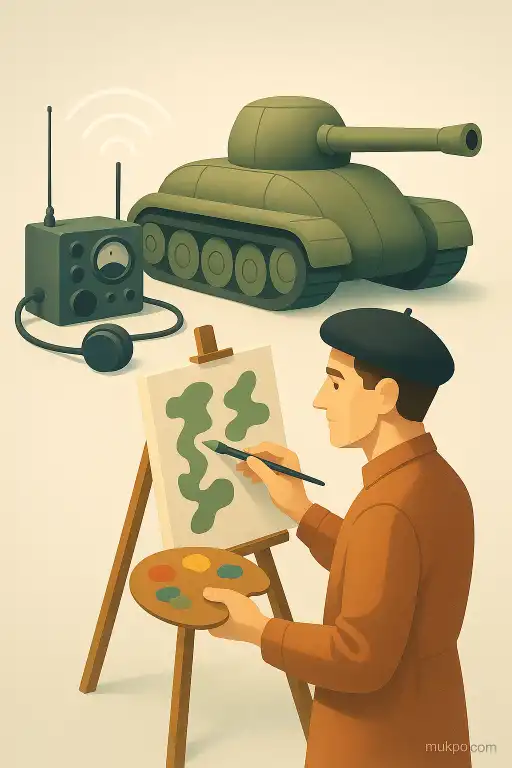
A lot of the work looked less like soldiering and more like building a film set. The British Army’s Camouflage Directorate brought in artists, designers, and people used to manipulating perspective. In the U.S. Army, the 603rd Camouflage Engineers—often called the “Ghost Army”—used inflatable equipment, sound effects, and visual tricks in the European theater. Their job wasn’t to create a masterpiece. It was to create something that worked at the distance and angle the enemy would see. That’s a specific skill. A decoy only has to be convincing from a few thousand feet up, or from a certain road, for a short time.
It also required knowing how German reconnaissance operated. A painter’s eye helped, but so did understanding camera resolution, likely flight paths, and the habits of photo interpreters. A fake tank parked too neatly can be more suspicious than a slightly wrong-looking one that sits in a messy, believable arrangement.
Why the mix worked better than any single trick
No one decoy or radio net carried the whole lie. The strength was the overlap. When a photo showed “armor,” and the radio bands suggested the same unit was active, and human intelligence reports pointed in that direction too, it became easier for German planners to accept the picture. Fortitude leaned hard on that, including the idea of the First U.S. Army Group as a threat to Pas-de-Calais, with signals and visible preparations meant to reinforce it. The exact weight of each ingredient is still argued in details, but the overall mechanism is clear: align multiple imperfect clues so the enemy does the final work of convincing themselves.
One detail that tends to get overlooked is how much maintenance deception needs. A fake army is not a static object. It’s a schedule. Someone has to move things, create fresh traces, keep transmissions believable, and prevent small contradictions from piling up. Deception fails most often in the tiny seams—when the “camp” never produces trash, when the “vehicles” never rotate, when the radio net is too tidy—because reconnaissance is basically a hunt for inconsistencies.
Related reads
- A village that counts pets as official residents to boost its population
- Why your hands tremble before a big moment
- How tiny bedtime rituals quietly prepare your brain for sleep
- Why your recorded voice sounds like a stranger
- A bakery that bakes secret birthday messages into loaves that appear only when toasted
- Why pupils widen when someone catches your eye