
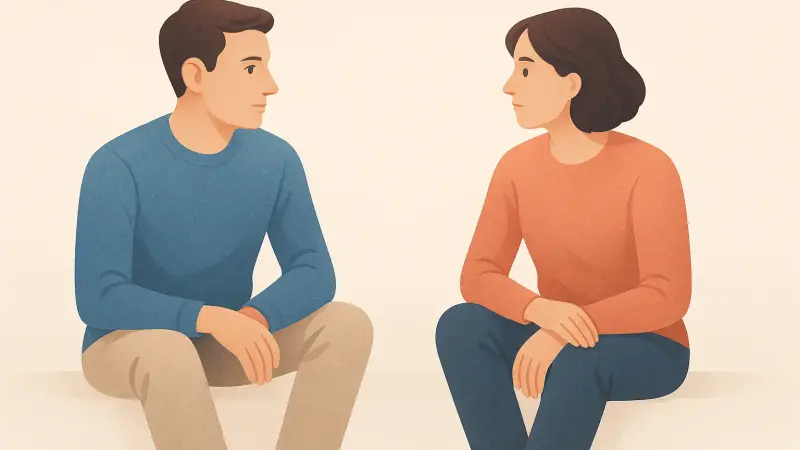
The small copy you notice after it happens
You’re talking with someone at a café and, a few minutes in, you realize you’re both leaning on the same elbow. Or you’re on a Zoom call and you catch yourself tilting your head the same way they do. This isn’t one specific place or event. It shows up in everyday settings across the U.S., Japan, and France, in offices, classrooms, and first dates. The core mechanism is simple: the brain is built to map other people’s movements onto your own body systems. That mapping makes their actions easier to predict. And sometimes it leaks out as your body quietly matching theirs.
Automatic mimicry starts as perception, not a choice
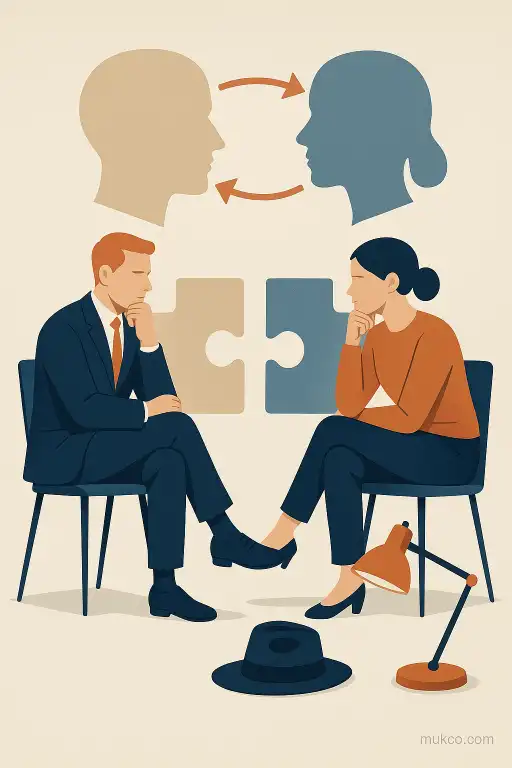
Posture matching often begins before anyone “decides” to do anything. When you watch a person shift in a chair, your visual system doesn’t treat it like a neutral shape moving. It treats it like a body doing an action. The same general motor networks used for your own movements can become active while you observe someone else’s movements. Researchers often describe this with the mirror neuron framework, but the broader point is widely accepted: perception and action are tightly linked.
That link is useful. If your brain can internally simulate another person’s stance and gestures, it can forecast what might happen next, like whether they’re about to stand up or move closer. Copying is not required for that prediction. But when attention is on the interaction, and inhibition is low, small pieces of that simulation can show up as tiny shifts in your own posture.
Matching can function like a social signal without words
People tend to mirror more when the interaction feels smooth, friendly, or cooperative. Observers often notice it most in job interviews, dates, or a first meeting with a new colleague. It can look like rapport, even though neither person planned it. The body is, in effect, keeping time with the other person. The matching can make each person’s movements feel more predictable to the other, which reduces social uncertainty in the moment.
It also tends to be selective. Big, obvious copying can backfire because it reads as mocking. So what shows up more often is low-key alignment: crossing legs in the same direction, leaning forward at similar moments, or matching the pace of nods. A specific detail people overlook is delay. The copy usually comes a few seconds later, not instantly. That lag keeps it from looking like a deliberate imitation.
Context and status change how much it happens
Posture matching isn’t evenly distributed. It varies with power dynamics, anxiety, and how closely someone is monitoring themselves. In many social psychology studies, people with lower status in an interaction often mirror higher-status partners more than the reverse. You can see versions of this in a manager–employee conversation or a student speaking to a professor. It’s not a rule, and it can vary by culture and situation, but the directionality shows up often enough to be noticed.
Self-consciousness can interrupt it. When someone is thinking hard about how they look, they may freeze their posture or over-control gestures, which reduces spontaneous mimicry. Stress can also push behavior in either direction. Some people mirror more when nervous because they’re scanning for cues. Others stiffen and mirror less because their attention is consumed by internal thoughts.
It’s not just posture: it’s timing, breathing, and small constraints
“Posture” makes it sound like a static pose, but the copying is often about micro-movements and rhythm. People can sync their foot taps, shifts of weight, and the moment they reach for a cup. Breathing patterns can loosely align too, especially in quiet rooms. These are not perfect matches. They’re rough coordination, the way two people walking side by side often drift into a similar pace.
The overlooked constraint is the environment. Chairs, table height, camera framing on video calls, and even which side the door is on can steer bodies into similar positions. If both people are angled toward a laptop or a window, matching may be partly architectural. The interaction still matters, but the room can quietly do some of the work.
Related reads
- The forged papal decree that handed power to emperors and fooled medieval Europe
- Why people keep tiny useless mementos for decades
- Why certain gestures instantly make us trust someone
- The inflatable decoys, fake radio traffic and artists who fooled German reconnaissance in WWII
- A village that counts pets as official residents to boost its population
- Why your hands tremble before a big moment