
A small moment that lands in the body
You can sometimes spot it right away. Someone hears a quick, specific compliment and their body changes before they even answer. It isn’t tied to one famous event or one place. You can see it in a school hallway in the U.S., on a crowded train platform in Tokyo, or walking out of a job interview in London. The core mechanism is simple: a compliment is social information. It shifts how a person thinks they’re being seen, and the nervous system updates posture and movement to match that new status. The change can be subtle, but walking is one of the first places it shows up.
Compliments act like a fast status signal
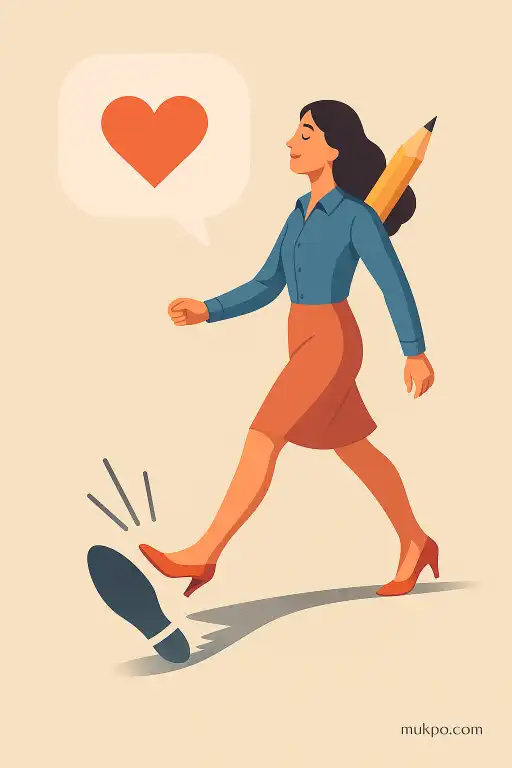
A compliment is rarely just about the words. It’s a cue about position in a group: approval, acceptance, maybe even admiration. Humans track that constantly, even when they don’t feel like they are. When the cue is positive, the brain often loosens protective patterns—less bracing, less shrinking. That can translate into a slightly higher chin, longer stride, or arms swinging a bit more freely. People sometimes call it “confidence,” but it’s closer to a quick recalibration of social threat.
The effect also depends on who says it. Praise from a supervisor, a coach, or someone a person wants to impress tends to hit harder than the same sentence from a stranger. It isn’t always conscious. The body reacts to what the compliment implies about belonging and rank, not only to the content.
Walking changes when attention stops policing the body
Walking looks automatic, but it’s sensitive to self-monitoring. When someone feels judged, they often micromanage small things: where to put their hands, how fast to move, whether they look awkward. That extra monitoring can tighten gait and shorten steps. A compliment can interrupt that loop. If a person suddenly believes they’re coming across well, the need to control every detail drops for a moment, and the movement pattern smooths out.
A specific detail people overlook is breathing. After a warm remark, some people exhale and then take a deeper next breath without noticing. That single breath shift changes ribcage position and shoulder tension. It can make the arms hang differently and the stride feel lighter, even if nothing “mental” feels different.
There’s a muscle-and-joint explanation, not just a mood one
Emotion and biomechanics meet in the same places. When a person feels safer or more valued, the neck and upper back often release a little. That alters head position and where the eyes aim. Since balance uses vision, that tiny change can affect pacing and foot placement. People don’t need to “decide” to walk differently for this to happen. The posture update happens upstream, and gait follows.
The pelvis and hips can be part of it too. Tension around the hip flexors and lower back can shorten stride. If that tension eases even slightly, the legs swing more. It can look like a new swagger, but it can also look like normal walking returning after a few minutes of being held tight.
A concrete example, and why it doesn’t always happen
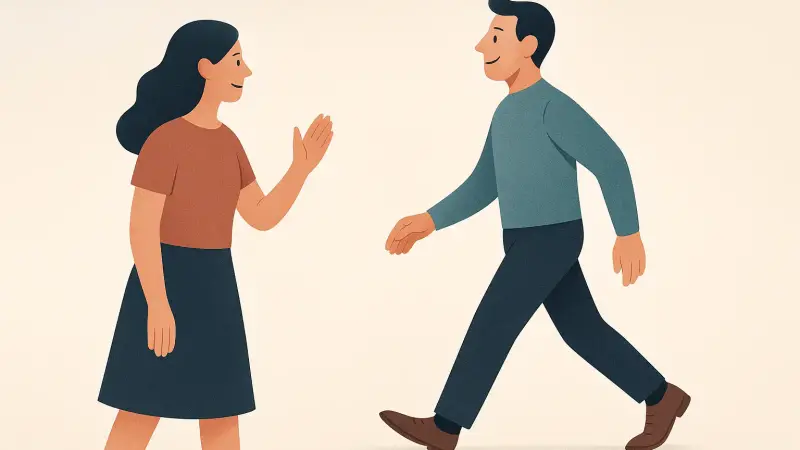
Picture a coworker leaving a meeting, shoulders a bit rounded, walking quickly toward the elevator. Someone catches up and says, “That explanation was really clear. You saved us time.” The coworker’s reply might be casual, but the body often gives it away: a brief pause, shoulders settling down, pace slowing to match the other person, and a more even heel-to-toe step. The compliment wasn’t about walking, yet walking changed because the social context changed.
It doesn’t always work that way. If the compliment feels fake, loaded, or unsafe, the body can do the opposite—stiffen, speed up, or angle away. Some people also distrust praise because of past experiences, so the nervous system treats it as unpredictable rather than calming. And if someone is exhausted, injured, or carrying a bag on one side, biomechanics can override the social effect. Even then, you can sometimes still see a small sign in the upper body: a brief lift in the chest, or a softer jaw, before life pulls them back into whatever pace they needed to keep.
Related reads
- An unused stairwell that opens into a hidden rooftop garden full of mailboxes
- What your blink rate reveals about attention and stress
- Why your taste changes with your mood
- Why we unconsciously copy another person’s posture
- The forged papal decree that handed power to emperors and fooled medieval Europe
- Why people keep tiny useless mementos for decades