
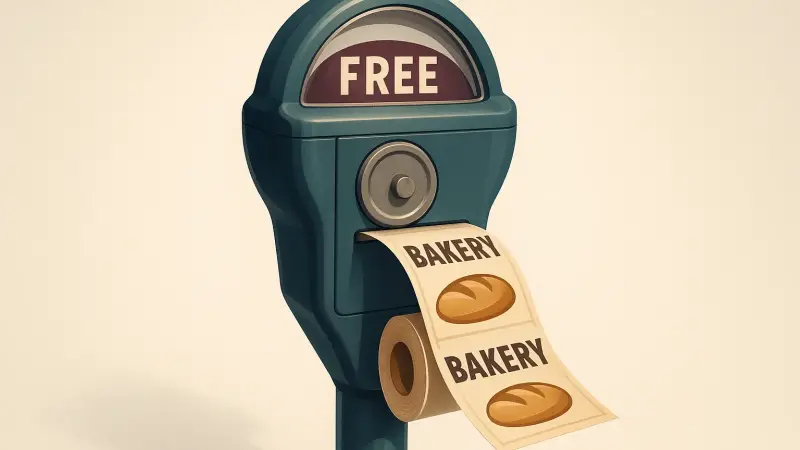
A strange thing for a parking meter to do
A parking meter is supposed to do one job: take a coin (or a card payment) and translate it into minutes on the curb. So when people talk about one that also spit out free bakery coupons during a heatwave, it lands as a little sideways. There isn’t one single, well-documented “the town” story everyone agrees on, and the details vary depending on who’s telling it. The idea fits a broader pattern seen in different places—cities in the United States and Canada have both used street hardware for promotions or public-service messages, and businesses have long tied discounts to weather. The core mechanism is simple: the meter wasn’t improvising. It was loaded with paper and set to print.
The overlooked detail is that older meters and some retrofitted ones already have a slot and a feed path designed for printed tickets. When a city swaps in a different internal module, the housing can stay the same, but the behavior changes. That’s how something shaped like a meter can act like a small kiosk without looking like one.
How a meter can print anything at all
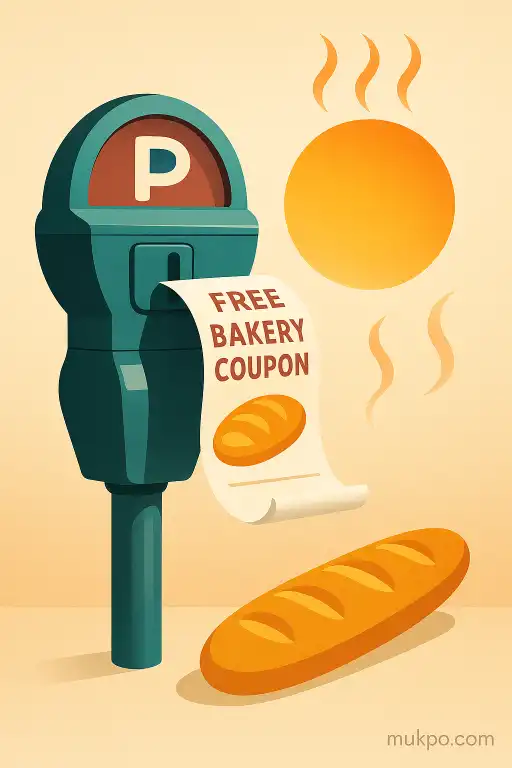
Modern pay stations are basically rugged receipt printers bolted to the sidewalk. Even some single-space units can be upgraded with a thermal printer. That matters because a coupon is just a receipt with different text. If the device can print “Paid until 3:15 PM,” it can print “Bring this in for a free roll,” assuming it has the right paper and firmware. During a promotion, the “payment” trigger doesn’t have to be money. It can be a button press, a sensor reading, or a scheduled time window.
Heatwave tie-ins are straightforward to automate. A city or vendor can define a condition—say, when the local weather feed reports a temperature above a threshold, or when the unit’s internal thermometer hits it—and flip the template the printer uses. Not every meter has that connectivity, and the sources people cite are often fuzzy, which is why the story tends to travel without the technical footnotes.
Why a bakery would want to be involved
A bakery coupon coming out of curbside equipment sounds random until you think about foot traffic. Parking meters sit exactly where people slow down, look around, and handle small transactions. A coupon is a nudge at the moment someone is already holding paper and thinking about “what’s nearby.” During extreme heat, cold treats and iced drinks sell, but so do simple comfort foods when people duck inside for air conditioning. A bakery gets a timed incentive that feels local, and the city gets something that reads as a small relief gesture rather than an ad on a billboard.
There’s also a practical reason promotions use printing instead of QR codes alone. In hot sun, phone screens dim, batteries drain, and data can be spotty in dense downtown areas. A physical slip works even when someone’s phone is dead. That’s the kind of small situational constraint people forget when they retell the story later.
What “free” usually means in these setups
“Free” in street promotions is often reimbursed, capped, or limited to specific items. The bakery might redeem only one per person, only on the same day, or only until a stack of printed codes runs out. The meter can print a unique serial number or a short validation code so staff can mark it as used. That’s basic fraud control, and it’s easier than it sounds because receipt printers already handle numbering for transaction logs.
Sometimes the coupon isn’t fully free. It might be “free with purchase,” or “free small item,” or “free add-on,” which is the kind of fine print that disappears when people tell the story as a clean anecdote. The printed slip can carry those constraints, but the headline version usually doesn’t.
Why these stories show up around heatwaves
Heatwaves change how a street feels. People cluster under awnings. They avoid walking far. They look for somewhere cool. That makes the curbside moment—standing still next to a metal post in full sun—feel especially sharp. If a device turns that unpleasant moment into a small reward, it sticks in memory. Even if only a handful of meters were configured that way, the story spreads because it’s easy to picture and easy to repeat.
The other reason is timing. Heatwaves generate news coverage and city messaging, so any unusual public-facing gadget gets noticed. A parking meter that prints anything other than a parking receipt becomes a tiny spectacle on a day when everyone is already paying attention to the temperature.
Related reads
- Why a single compliment can change the way you walk
- An unused stairwell that opens into a hidden rooftop garden full of mailboxes
- What your blink rate reveals about attention and stress
- Why your taste changes with your mood
- Why we unconsciously copy another person’s posture
- The forged papal decree that handed power to emperors and fooled medieval Europe