
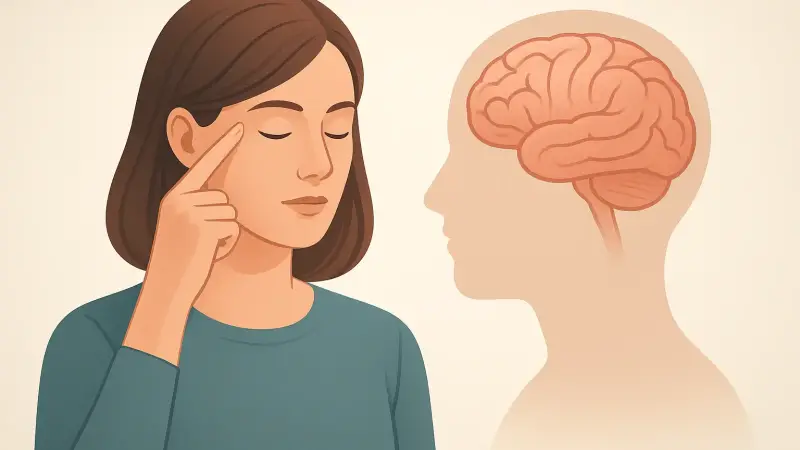
Why tapping feels different from other fidgeting
People tap a finger on a desk, bounce a knee, or drum a pen without planning it. It isn’t one single cultural thing. You can see it in a quiet office in New York, on a train in Tokyo, or in a classroom in London. The common thread is repetition. A steady rhythm gives the brain a stream of predictable sensory input, and predictable input is easier to process than changing input. That frees up attention and can soften the “something might happen” feeling that comes with uncertainty.
A concrete example: someone waiting on hold while listening to tinny music taps two fingers against their thigh at the same speed as the looping melody. What’s easy to miss is that the tap isn’t just movement. It’s sound, touch, timing, and tiny corrections every second to keep the pattern going. The brain treats that as a manageable job.
Predictable rhythm reduces surprise signals
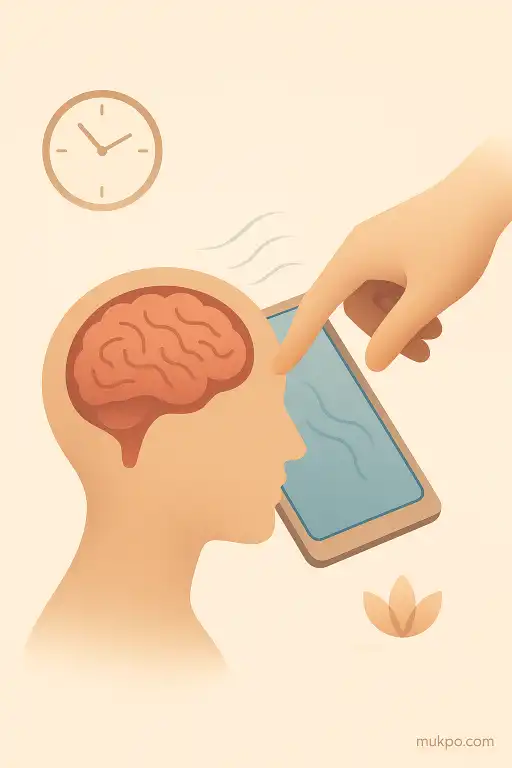
The nervous system constantly predicts what will happen next. When the world is unpredictable—notifications, voices nearby, an awkward silence—prediction errors spike. Those errors can feel like alertness or tension. Repetitive tapping shrinks the number of surprises because the next moment is obvious. The next tap is scheduled. That lowers the demand on systems that scan for change.
This is one reason tapping can feel calming even when it’s a little noisy. The sensation is self-generated and timed. Self-generated sensations tend to be experienced as less threatening than external ones, because the brain can prepare for them. Even a small, regular impact on a fingertip is “known” in advance, and that matters.
What your brain is doing while you keep the beat
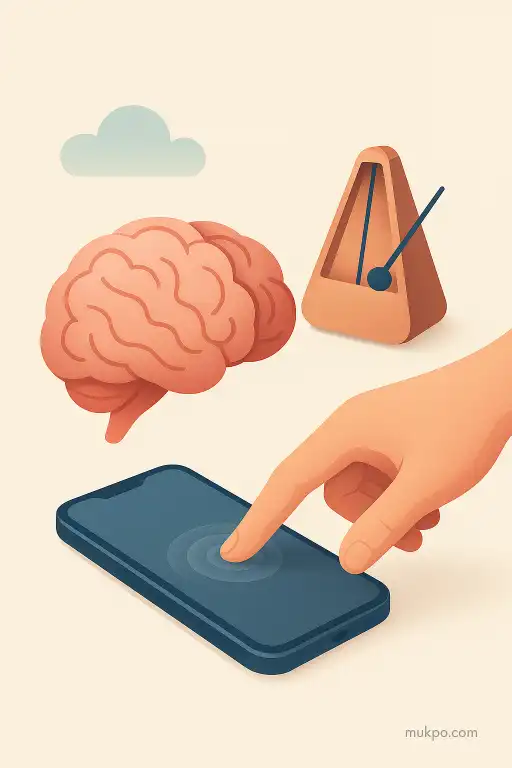
Keeping a rhythm uses a network that links movement planning, timing, and attention. The basal ganglia and cerebellum are often involved in timing and smooth repetition, while motor areas handle the actual tapping. None of this requires deep thought once it’s running, which is the point. A repeating action becomes partly automatic, and automatic actions can act like a scaffold when the rest of the moment feels messy.
At the same time, tapping is a form of active sensing. The brain isn’t only receiving information; it’s generating a signal and checking it. That loop can compete with other loops like worry, rumination, or scanning a room for social cues. The tapping doesn’t have to “win.” It just has to take up enough bandwidth to reduce how loud the other loops feel.
The body side: breathing, heart rate, and muscle tone
A steady, low-effort rhythm can nudge the body toward regularity. People often sync micro-movements with breathing without noticing. If a tap pattern stabilizes breathing even slightly, heart rate and muscle tone can follow. The direction and size of the change varies by person and situation, and it isn’t guaranteed. But the mechanism is straightforward: predictable movement supports predictable internal timing.
One overlooked detail is pressure. Many people don’t tap hard; they tap just hard enough to feel contact. That light pressure creates clear tactile feedback without recruiting big muscles. Big muscle recruitment can increase arousal, while small repetitive movements can stay under the threshold that would otherwise feel like gearing up for action.
When it calms you, and when it bothers other people
The same tapping that soothes the tapper can irritate someone nearby. That’s partly because the listener doesn’t control the rhythm. For the listener, it’s an external, unpredictable interruption if the tempo changes or the sound is irregular. For the tapper, it’s a controlled stream. This mismatch explains why tapping can feel “grounding” internally while feeling intrusive externally.
Context also changes the effect. In a loud stadium, tapping disappears into the background. In a silent exam room, it becomes a dominant sound. The brain’s response depends on what else is competing for attention and whether the tapping stays consistent. A steady beat is easier to filter. A stop-start pattern keeps re-triggering attention, which is the opposite of calming.
Related reads
- How loose clothing alters risk taking and mood
- A library that lends power tools, seeds, and sewing machines
- A post office that delivers mail by kayak to floating neighborhoods
- The Victorian spectacle of Barnum’s mermaid hoax that fooled museumgoers and ministers
- A vending machine that gives mystery books instead of snacks
- A hidden room behind wallpaper stuffed with decades of lost letters