
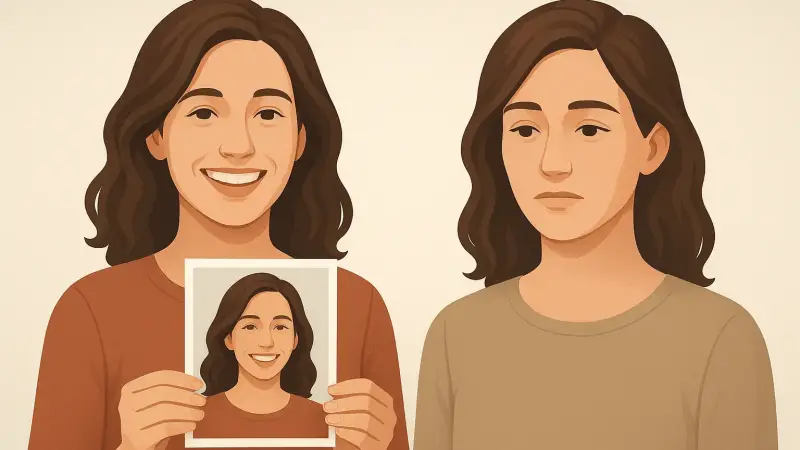
You can see it at a wedding in Chicago, on a school picture day in Tokyo, or in a quick selfie in Paris: faces snap into bigger smiles the moment a camera comes up. In regular conversation, those same people often look calmer, more neutral, even a little tired. There isn’t one single place or moment where this started. It’s more like a shared habit that travels well. Part of it is simple timing. A photo is a short, posed performance. Everyday life is a long, moving stream. The camera asks for a clean, readable signal, and a big smile is the easiest one.
The camera creates a “now” that everyday life doesn’t
Most in-person smiles happen as a reaction. Something lands. A joke. Recognition. Relief. They rise and fall on their own schedule. Photos reverse that. They demand the expression first, before the feeling has even had a chance to show up.
That’s why so many photo smiles look identical across different situations. People hold them, waiting for the shutter. And the longer the waiting, the more exaggerated the smile tends to get, because the face is trying to stay “on” without the natural changes that make a real smile look effortless.
Smiles are a safe signal when you don’t know how you’ll be read
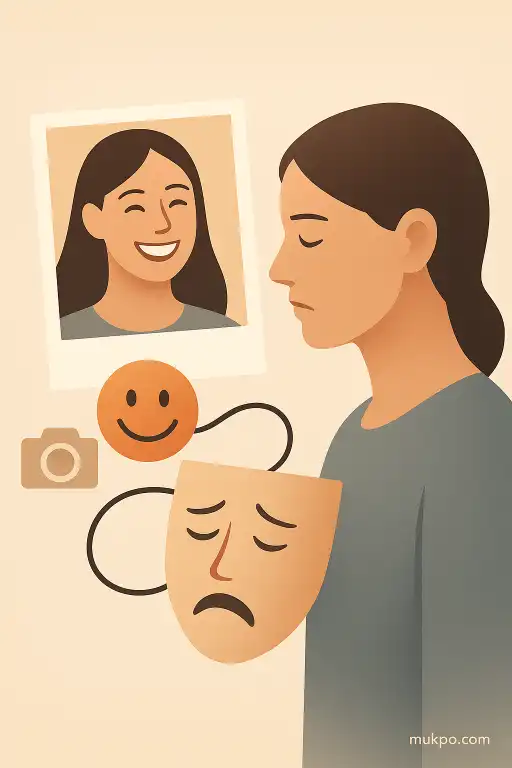
A photo is usually made for an audience that isn’t present. Even if it’s “just for us,” it might end up in a group chat, an album, a profile, or a work slide later. So people lean toward expressions that reduce risk. Neutral can be misread as annoyed. Concentration can look stern. A mild smile can disappear once the image is compressed or viewed small.
The specific detail people overlook is how small faces become in most uses. On a phone screen, in a grid of thumbnails, subtle expressions vanish. A bigger smile survives the shrink. It’s not always about happiness. It’s about legibility.
Posing changes the face more than people expect
In person, the body helps the face. Eye contact, voice, and timing carry meaning. In a still image, the face has to do more work. So people recruit extra muscles. Corners of the mouth lift higher. Cheeks push up. Eyes widen a bit. It’s a compensation for everything the photo can’t show.
There’s also the practical strain of holding still. A photographer says, “Hold it,” and people freeze their posture. That tension spreads. A stronger smile becomes a way to mask the stiffness, because stiffness reads as discomfort in photos even when the person feels fine.
Social rules around photos are stricter than normal conversation
In a conversation, it’s acceptable to drift. To listen quietly. To look away. To have a resting face between moments. In a photo, that same neutrality can feel like you’re “not participating,” especially in group shots. The person who doesn’t smile can pull attention, not because they did something wrong, but because the group is trying to present a unified mood.
This is why the biggest smiles often show up in the most formal situations. Think of a company team photo or a family reunion portrait. Everyone knows the image might be seen by people outside the moment. The safest shared expression is cheerful and clear, even if nobody feels particularly cheerful right then.
The preview makes people edit themselves in real time
Photos used to be taken and discovered later. Now, people often see a preview instantly. That feedback loop changes behavior. If someone sees a neutral face and thinks it looks “bad,” they adjust on the spot. Usually that means more smile, less ambiguity.
It also changes memory of what’s normal. After enough rounds of retakes, the exaggerated photo smile becomes the familiar version of one’s own face on camera. In person, there’s no instant mirror held up by a screen. The face can relax back into whatever expression fits the moment.
Related reads
- Why brief eye contact can feel thrilling or threatening
- A neighborhood that silences car horns by installing rooftop chimes
- The cafe where every receipt prints a stranger’s advice
- The calming effect of repetitive tapping and what it does to your brain
- How loose clothing alters risk taking and mood
- A library that lends power tools, seeds, and sewing machines