
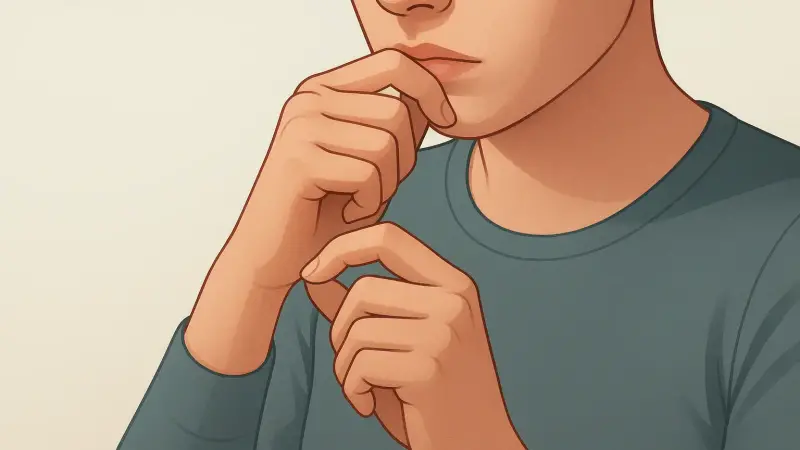
It’s not one single “place” where this happens
Watch someone in a university library, a courtroom gallery, or a busy office meeting. When they’re trying to land on the right word or solve a problem, hands often start moving. A pen gets clicked. A sleeve gets tugged. Fingers drum in a pattern the person doesn’t seem to notice. It’s not tied to one specific culture or setting, and the exact habits vary a lot between people.
The core reason is pretty plain: thinking is not just “in the head.” It pulls on attention, arousal, and muscle control at the same time. Small movements are one of the easiest places for the nervous system to “spend” extra energy while the mind is working, especially when staying still is part of the social expectation.
Thinking changes your body’s settings
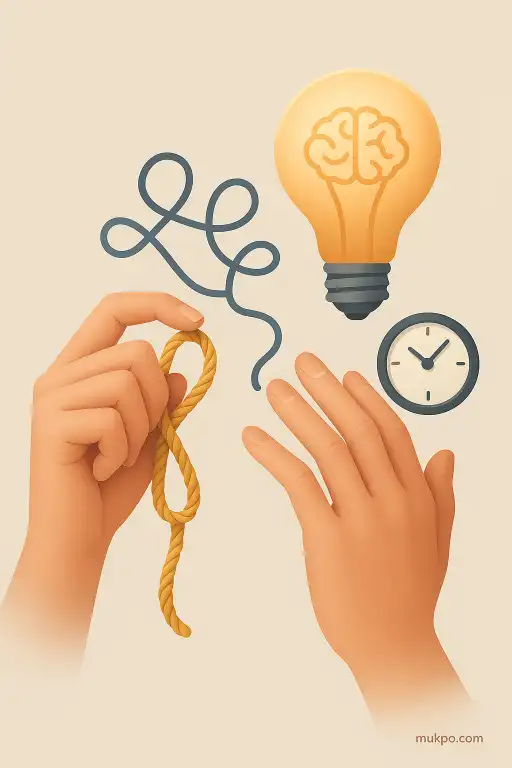
When a task gets mentally demanding, the brain tends to shift the body toward a higher-readiness state. Heart rate and breathing can change slightly. Muscle tone can rise without anyone choosing it. That increased readiness has to go somewhere, and hands are a frequent outlet because they’re already built for fine, quick motion and they’re easy to move without standing up or changing location.
One overlooked detail is how often fidgeting clusters at “decision points.” You see it when someone pauses mid-sentence, or right before they answer a question. The movement isn’t random in time. It often shows up when the brain is holding competing options in mind and delaying commitment for a beat.
Hands are part of how the brain holds information
A lot of thinking is physical bookkeeping. People gesture when they explain ideas, but they also gesture when they’re alone. Tiny finger movements can act like a low-stakes way of “marking” rhythm, sequence, or emphasis, even if no one is watching. Hands are strongly represented in the brain’s motor and sensory maps, so moving them provides a rich stream of feedback that can help stabilize attention.
This is why fidgeting isn’t limited to nervous situations. Someone doing mental math might tap a thumb across fingertips. Someone searching memory might trace a shape on the table. Those motions can line up with the structure of the thought: counting, ordering, switching between pieces of information.
Self-control and fidgeting compete for the same resources
Staying still is work. It uses inhibitory control—the same general ability used to ignore distractions and keep a goal in mind. When a person is concentrating hard, there’s less capacity left to police every small motor impulse. So the hands slip into movement not because the person “lost control,” but because control is being spent elsewhere.
This is also why the fidget can get more obvious when someone is trying to look composed. If the setting demands stillness, the brain has to run an extra layer of monitoring. That monitoring can make the urge to move feel stronger, and the movements that leak out tend to be the quietest ones available: fingers, nails, cuffs, a pen under the table.
Why it shows up as repetitive little loops
A common pattern is repetition: tapping, rubbing, clicking, twisting. Repetitive motions are “cheap” for the motor system. They can run with minimal planning once started. That matters when the person’s planning systems are busy with the thought problem. A looped movement also creates predictable sensation, which can feel oddly stabilizing when attention is stretched.
Context shapes the exact form. In a lecture hall, it might be bouncing a leg because hands are occupied taking notes. In an interview, it might be thumb-flicking a ring because the hands are visible and the person is trying to keep the movement small. What stays consistent is the trade: cognition ramps up, the body ramps up with it, and the smallest available movements carry the overflow.

Related reads
- A museum that displays thousands of anonymous lost keys
- When London went blind: the January 1952 smog that stopped Parliament and remade urban life
- The forgotten subway station turned secret mushroom garden
- Why people smile more in photos than in person
- Why brief eye contact can feel thrilling or threatening
- A neighborhood that silences car horns by installing rooftop chimes