

A small contradiction people notice in meetings
You can sit in a long talk and feel your mind slide away, even if you care about the topic. Yet some people stay steadier when their pen is moving. This isn’t about one specific event or place. You see it in university lectures, in corporate meetings, and in settings like courtrooms where listening matters but the pace can drag. The basic mechanism is simple: a low-effort action can soak up just enough restless attention to keep the rest of the mind from wandering. The odd part is that it looks like distraction from the outside, even when it’s doing the opposite.
Attention doesn’t fail politely
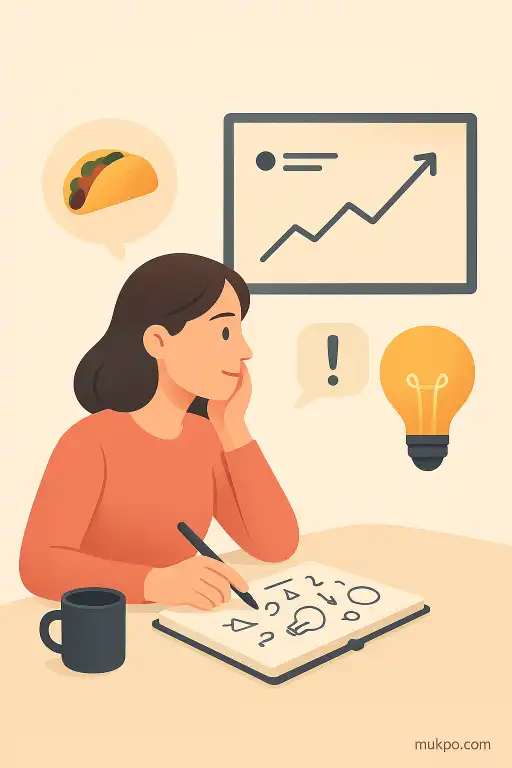
During a long stretch of listening, attention often slips into a different mode. People start predicting the next sentence, scanning the room, replaying a worry, or planning what to say later. That shift is normal, and it can happen without any obvious trigger. Doodling can act like a tiny “task anchor.” It adds a bit of structure to the moment, so the brain has fewer open loops to fill with unrelated thoughts.
One overlooked detail is that the doodle usually isn’t random in the way people imagine. A lot of it is repetitive motion: shading, crosshatching, filling boxes, tracing a border. That kind of small pattern is steady and predictable. It tends to demand very little language, which matters because language is what the talk is using.
Why a little extra load can help
When the brain is under-stimulated, it often creates its own stimulation. That can look like daydreaming, checking a phone, or mentally leaving the room while still facing forward. A simple motor activity can raise the baseline engagement without competing much with listening. It’s a narrow kind of load. The hand moves. The eyes flick down and back. The main channel stays open.
There’s also a pacing effect. Long talks often have uneven rhythm: a burst of detail, then a slow explanation, then a tangent. Doodling adds a consistent tempo. That steadiness can make the listener less dependent on the speaker’s pacing to stay mentally “on.” It won’t work the same for everyone, and it varies with fatigue, interest, and how fast the speaker is moving.
Doodling competes less when it stays nonverbal
Not all pen-to-paper activity behaves the same way. Writing words, making lists, or drafting a message pulls in language and sequencing. Those are the same tools needed to follow a spoken argument. Simple shapes, repeated marks, and loose sketches tend to compete less because they don’t require selecting precise words or building sentences.
A concrete example shows the difference. Picture a project update meeting where someone reads timeline changes aloud. A listener who starts composing a detailed email in the margin will miss dependencies and dates. A listener who shades a small grid while tracking the speaker’s key terms is less likely to lose the thread, because the hand movement stays predictable and doesn’t demand verbal planning.
What it looks like from the outside
Doodling has a social cost because it can be misread. In many workplaces and classrooms, visible note-taking is interpreted as respect, while visible drawing is interpreted as boredom. That judgment often ignores a practical fact: listening is hard to observe. A face can look attentive while the mind is elsewhere. A person can look distracted while still tracking the argument closely.
The context matters. If the talk is highly visual, like a dense slide deck, looking down may reduce comprehension. If the talk is mostly spoken and slow, the same behavior may support it. Doodling sits in that narrow zone where a small, quiet action can either help attention hold or pull it apart, depending on how much it starts asking the brain to think in words.
Related reads
- The 1976 Korean DMZ tree-cutting standoff that escalated into a military spectacle
- Why your pulse jumps for a heartbeat after an unexpected sound
- The tiny automatic acts people do before a stressful phone call
- Why some alarms leave you groggy while others snap you awake
- Matchstick miniatures an abandoned loft hiding a tiny carved town
- How your eyes pick one face to follow in a crowded scene