
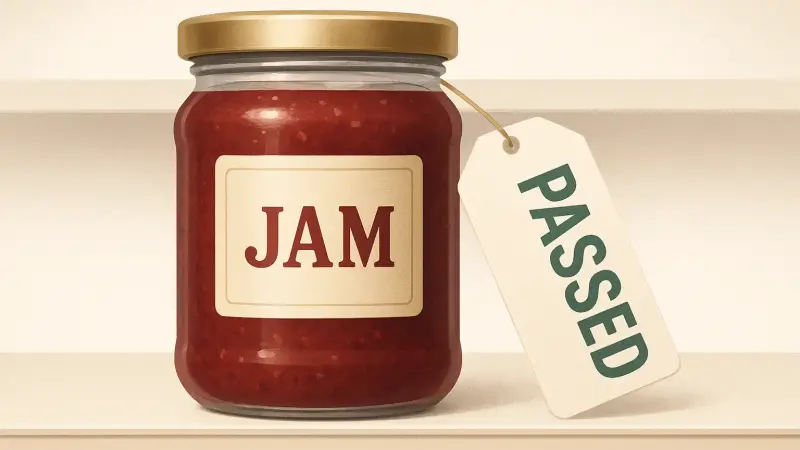
A jar that looks too old to be real
People expect a supermarket shelf to be the most boring place on earth. So the idea of a century‑old jar of jam sitting there, quietly “passing safety tests,” feels like a glitch. There isn’t one single confirmed incident that every retelling points to, and the details tend to shift depending on who’s telling it. But the basic mechanism is consistent: jam is a high‑sugar, high‑acid food, sealed in a way that keeps new microbes out. If nothing gets in, and the chemistry stays unfriendly, “safe” can stretch a lot farther than anyone’s instincts. The surprising part is that safety and quality aren’t the same question.
What “passed safety tests” usually means
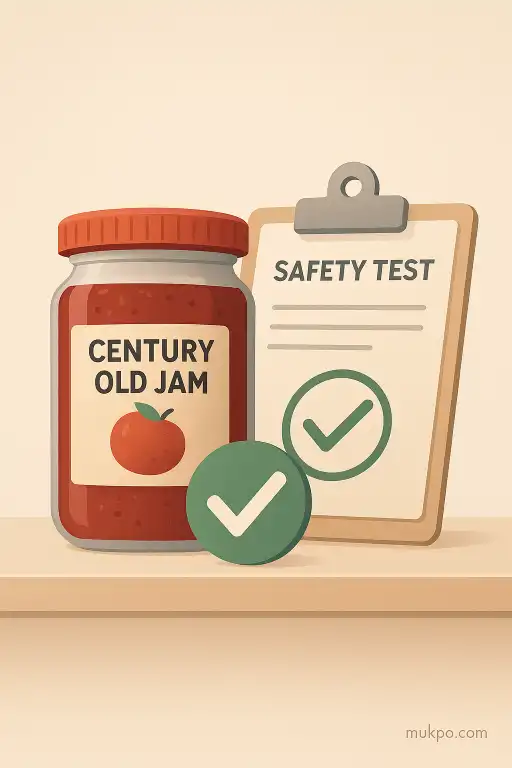
When people say an old jar “passed,” they usually mean microbiology didn’t find dangerous growth. That can be as simple as culturing a sample and seeing no pathogens multiply, or using methods that look for indicators of contamination. It doesn’t mean the jam would taste normal, smell normal, or have the vitamin content it once had. Those are different measurements, and they fail long before the strict safety ones do.
One detail most people overlook is what the lab actually samples. Testing typically checks the contents, not the lid seam, the label glue, or the outside of the jar. A jar can be filthy on the outside and still be microbiologically “clean” inside, as long as the seal stayed intact the whole time.
Why jam is hard for microbes to live in
Jam fights microbes in three ways at once. Sugar ties up water, lowering water activity so bacteria can’t use it. Fruit brings acidity, and most pathogens struggle when the pH is low. Then there’s heat processing and a tight seal, which removes or kills most organisms and blocks re‑entry.
That combination is why preserved fruit has a long track record as a “shelf-stable” food. It’s also why the scary failures people picture—like botulism—are less associated with properly made jam than with low‑acid foods that are sealed without enough heat. With jam, the more common problem isn’t a lethal microbe. It’s spoilage from yeasts or molds, which usually needs oxygen and often shows itself when the seal has been compromised.
The seal is the real time capsule
For a jar to stay test‑clean for decades, the lid seal has to do nearly all the work. Even tiny failures matter. A pinhole leak, a hairline crack, or a seal that relaxed during temperature swings can let in oxygen and mold spores slowly, without an obvious “pop” moment. If the container stayed truly sealed, the inside is basically an isolated environment with no new microbes arriving.
Temperature and light still change the food, though. Color pigments break down. Fruit aromas fade or turn. Sugar can crystallize. Pectin can loosen so the set goes runny. Those changes can make something unpleasant while it remains microbiologically boring. That’s the uncomfortable middle ground where an object can be “safe” in a narrow sense and still not resemble food you’d recognize.
Why stories put it on a supermarket shelf
“Supermarket shelf” is the detail that makes the story stick, because it mixes modern trust with something that shouldn’t belong there. In real life, a genuinely century‑old jar is more likely to show up as a display piece, a mislabeled collectible, or a prop than as ordinary stock with a barcode and price tag. The supply chain for packaged food tracks dates aggressively, even if those dates are about quality and rotation more than immediate danger.
When the claim appears, it often rides on a blurred distinction: an old jar can be found somewhere public, get tested, and come back “no pathogens detected,” and the retelling compresses that into “it was for sale and safe.” The part that stays plausible is the chemistry. Sugar, acid, and a stubborn seal can preserve a jar’s safety far longer than anyone expects, even while everything else about it quietly drifts away from what “jam” is supposed to be.

Related reads
- Why doodling can help you pay attention during long talks
- The 1976 Korean DMZ tree-cutting standoff that escalated into a military spectacle
- Why your pulse jumps for a heartbeat after an unexpected sound
- The tiny automatic acts people do before a stressful phone call
- Why some alarms leave you groggy while others snap you awake
- Matchstick miniatures an abandoned loft hiding a tiny carved town