

That sudden rush in their voice
This isn’t tied to one place or one famous moment. You hear it in job interviews in New York, in startup demo days in San Francisco, and in oral exams at universities in the UK. Someone starts talking and the words come out a little faster than normal. Not because they’re late, but because they want to land well. The core mechanism is simple: when people feel evaluated, their body shifts into a higher-arousal state, and speech timing is one of the first things to drift. They often don’t notice it until they run out of breath or get interrupted.
Evaluation pressure pushes the body’s tempo
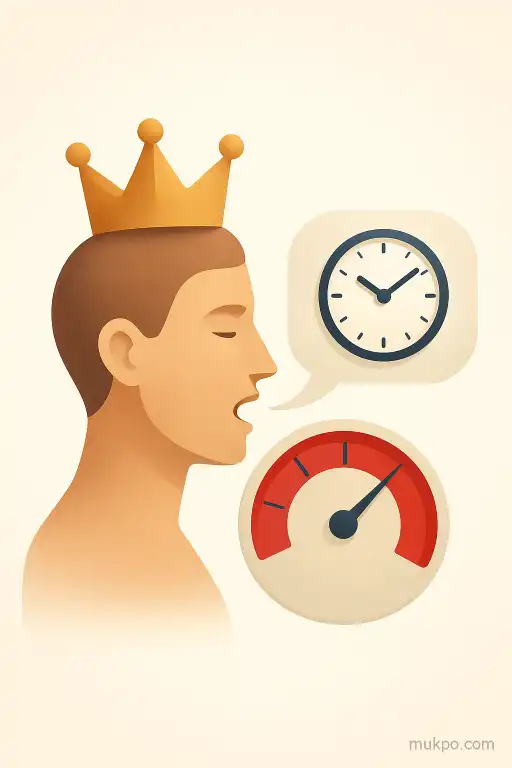
Trying to impress is a mild stressor. Even when someone feels confident, there’s a social threat in the background: being judged as slow, unprepared, or unoriginal. That threat can raise physiological arousal. Heart rate nudges up. Breathing gets shallower. When breathing changes, the “spacing” available for speech changes too. People squeeze more words into each breath without realizing they’re doing it, and that reads as speed.
There’s also a timing effect. Under pressure, pauses start to feel expensive. A half-second silence can feel like losing the room. So speakers shorten gaps between phrases, cut off the little resets where they’d normally plan the next sentence, and momentum builds.
Fast talk is a shortcut for sounding smart
Listeners often associate fluent, rapid delivery with competence, at least at first. People learn that early. Watch a polished sales pitch or a competitive debate round and you’ll hear a brisk pace, fewer hesitations, and quick transitions. That style signals, “I have a lot to say, and I know where I’m going.” When someone wants to impress, they may copy that signal even if their natural speaking rate is slower.
Speed also helps hide uncertainty. If a speaker is still deciding how to phrase something, staying fast can prevent the “uh” moments that reveal the search. It’s not always deliberate. Sometimes it’s just the mouth trying to stay ahead of doubt.
Cognitive load makes pacing harder to control
Impressing someone usually means doing two jobs at once. You’re explaining the content and monitoring the other person’s reaction. Are they bored? Skeptical? Taking notes? That extra monitoring uses working memory, which is also what helps regulate pacing, pause length, and sentence shape. When that system is busy, speech can become more automatic and less controlled, and “automatic” often means faster.
A concrete situation: a candidate in a panel interview answers a technical question while watching three faces for signs of approval. They start with a normal pace, then accelerate when one interviewer looks down to write. The speaker treats the note-taking as a cue to “get it all out,” and the speed-up happens mid-sentence.
The overlooked detail: breath and turn-taking
One thing people miss is how much speech rate is shaped by turn-taking. In competitive conversations, speakers feel they might be cut off. So they reduce pause time, talk through small planning moments, and keep the floor by not giving openings. That can be strongest in group settings, where the social cost of losing a turn feels higher.
Breath is part of that floor-keeping. People often inhale less deeply when they’re eager to continue, which forces tighter phrasing and can create a slightly strained sound at the ends of sentences. You can sometimes hear the moment they finally take a full breath: the pace drops for a beat, their shoulders reset, and the next sentence comes out clearer.
Related reads
- Villages where residents race souped-up lawnmowers for a day of chaotic fun
- Tiny houses carved inside walnut shells that collectors pay a surprising sum for
- How a stolen bucket set two medieval Italian city-states on a year-long bloody feud
- Why your stomach knots before speaking and what that sensation signals
- How your brain recognizes a familiar face in under a blink
- A startup that bottles Himalayan mountain air and sells it by the can