
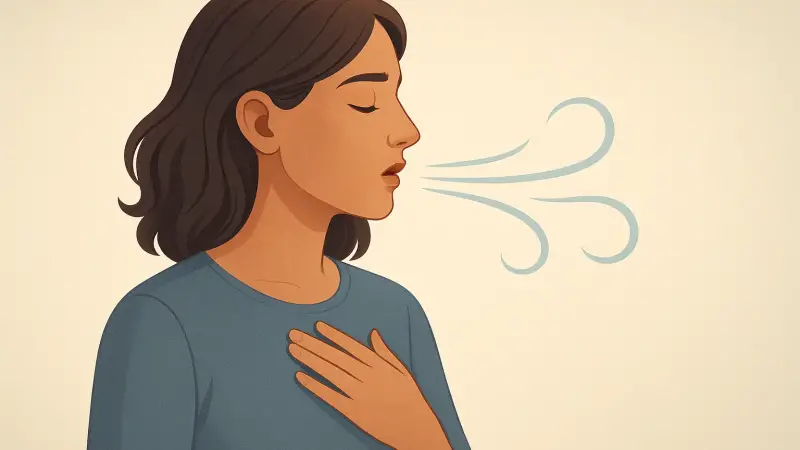
A small rhythm people notice only after it works
A panic spell can start in a completely ordinary place. A subway platform in New York. A checkout line in London. A meeting room in Mumbai. There isn’t one famous incident behind this. It’s a body pattern that shows up across settings, and it often changes within seconds. One tiny thing that sometimes shifts the whole episode is a breathing rhythm that’s almost too small to feel at first: a slightly longer exhale than inhale, repeated steadily. The core mechanism is boring but real. A longer exhale tends to nudge the autonomic nervous system away from the “mobilize” state and toward the “settle” state, even while the mind is still alarmed.
Why a longer exhale can change the body’s math
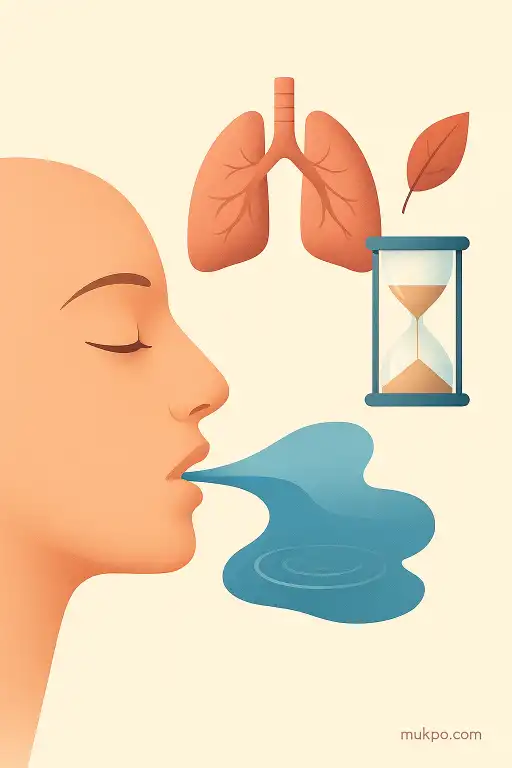
Breathing is unusual because it sits between automatic and controllable. That gives it leverage during sudden panic, when so much else feels locked. A slightly longer exhale is linked to a tilt toward parasympathetic activity, the branch associated with slowing. One reason is mechanical: exhaling increases pressure in the chest in a way that can influence venous return and baroreceptor signaling, which feeds into heart-rate regulation. Another reason is timing: heart rate naturally rises a bit on inhale and falls on exhale (respiratory sinus arrhythmia). When exhale takes up more of the cycle, the “down” portion gets more time.
People often assume the main problem in panic is “not enough air.” But the pattern frequently goes the other way. Fast breaths can wash out carbon dioxide, and that shift can create lightheadedness, tingling, and chest tightness that feel like proof something is medically wrong. The overlooked detail is that the scary sensations can be driven by chemistry and nerve signaling, not by a true oxygen shortage. That’s why a small change in rhythm, not a big gulp of air, can be the part that matters.
The “tiny” part is about effort, not seconds
When people picture calming breath, they often picture deep, dramatic breaths. During panic, that can backfire. Large breaths recruit chest and shoulder muscles, which are already tense, and they can increase the feeling of air hunger. The “tiny” rhythm is tiny because it can be subtle: a normal-sized inhale, then letting the exhale last a beat longer without forcing it. It doesn’t have to be slow in an impressive way. It just has to be consistent enough that the body notices the change in timing.
This is also why the rhythm can be hard to detect from the outside. Someone can look like they’re breathing “normally” and still be changing the balance. A detail people overlook is the pause. Many anxious breaths have a clipped inhale followed by a tight pause as the throat and diaphragm hold. When the exhale is allowed to complete, that holding pattern often softens, and the next breath comes without the same jolt.
What tends to happen inside a sudden panic spell
A common sequence is fast appraisal, then body surge. The brain flags danger, adrenaline rises, and attention narrows. The heart pounds, the stomach drops, and the mind starts scanning for an explanation that matches the intensity. The breathing change is usually not the first symptom people notice. They notice the heart, the dizziness, the feeling of unreality. But breathing is often changing in the background, becoming upper-chest, quick, and uneven, which then feeds back into the alarm signals.
A concrete example: someone is standing on a crowded train, doors closed, and the car is warmer than expected. The person feels trapped. Their breathing shifts higher in the chest. They start swallowing air. The throat feels tight, which makes them focus on it more. If the exhale becomes slightly longer and less interrupted, the heart rate can stop climbing as quickly, and the dizziness can ease. The thoughts may still be loud, but the body can stop escalating, which changes what the thoughts have to work with.
Why it’s not a cure-all, and why it can still matter
This rhythm doesn’t “solve” every panic spell. Some episodes are tied to trauma cues, stimulant use, sleep deprivation, hormonal shifts, or medical conditions that mimic panic. The exact timing that feels tolerable also varies. For some people, any focus on breathing can initially increase anxiety, because monitoring the breath feels like checking for danger. And if someone is actually in respiratory distress, breath techniques are not the issue at all. That uncertainty is part of why the experience is confusing.
Still, the small exhale bias is one of the few levers that can operate while the alarm is still running. It’s not about perfect control. It’s about giving the nervous system a steady input that says “we are not sprinting.” When it helps, it tends to look unremarkable from the outside. The person is still in the same place. The same noise is happening. The change is that the body stops adding new fuel every two or three seconds.
Related reads
- Why people speed up their speech when they’re trying to impress
- Villages where residents race souped-up lawnmowers for a day of chaotic fun
- Tiny houses carved inside walnut shells that collectors pay a surprising sum for
- How a stolen bucket set two medieval Italian city-states on a year-long bloody feud
- Why your stomach knots before speaking and what that sensation signals
- How your brain recognizes a familiar face in under a blink