
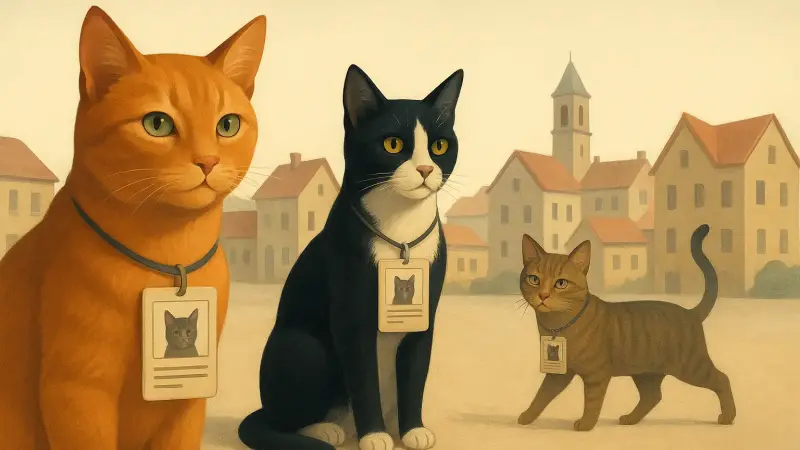
A town tried to put paperwork on a street cat
A stray cat is easy to recognize, but hard to describe in a way a city office can use. That’s the odd gap some places have tried to close by treating street cats like registered residents. This isn’t one single famous “cat-ID town” with one settled story. Versions have shown up in different places, especially where local governments already run big trap‑neuter‑return programs. In Turkey, for example, several municipalities have experimented with recording community cats through e‑municipality portals, tags, or local databases. The basic mechanism is simple: the cat gets a number, and that number gets a card or record that follows it around.
What the identity card actually represents
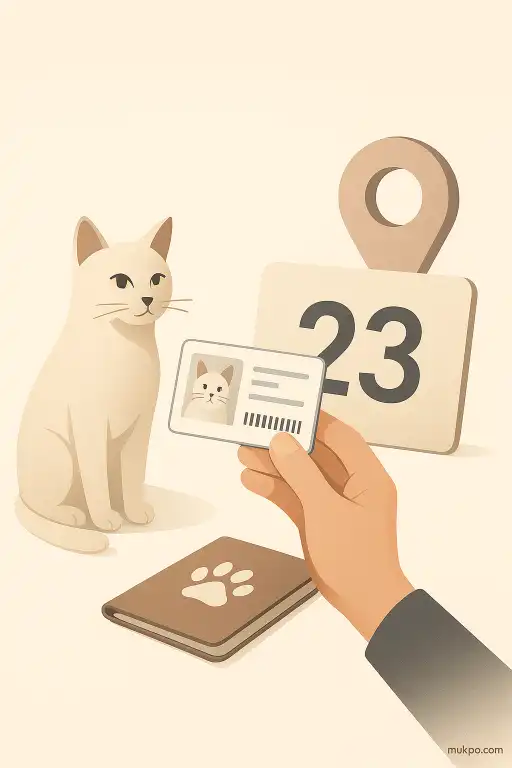
The “identity card” part can be surprisingly literal. Sometimes it’s a small paper or plastic card held by a caretaker, not something the cat carries. It usually lists a number, a photo, a rough location, and notes like sex, approximate age, sterilization status, and the date a veterinarian intervened. When a program is more formal, the number also ties to a microchip record, but many street-cat schemes stop short of microchipping because catching the same cat again is not guaranteed. The card is less about proving ownership and more about making the cat legible to a system built for owned pets.
The overlooked detail is how imprecise the “address” can be. It may be a park name, a block, or a landmark like a market entrance. That matters because the card is often used to avoid duplicate work. If a volunteer brings in a cat that’s already been sterilized or treated, the record can prevent another anesthesia cycle. But it only works if the cat’s identity is stable enough to match later.
Why numbering strays appeals to city hall
Numbering turns a moving animal into a countable unit. That sounds cold, but it solves bureaucratic problems. Budgets, tenders for veterinary services, and public complaints are easier to manage when each intervention is attached to a record. A city can say how many cats were sterilized, vaccinated, treated for parasites, or returned to which area. When there’s political pressure—either from residents who want fewer cats or from residents who feed them—the database becomes a way to show “we’re doing something” without defaulting to mass removal.
It also changes liability and enforcement. If a cat has a record that indicates it’s part of a managed colony, some cities can treat it differently from an abandoned pet. That can affect whether an animal control unit picks it up, leaves it, or contacts a listed caretaker. Even when the caretaker role is informal, the presence of a number can shift the response from “unknown animal” to “known case.”
How a street cat gets a number in practice
The clean version is: trap, vet visit, sterilize, vaccinate, mark, release, record. The messy version is what most towns face. Cats aren’t always trapped by officials. Sometimes it’s a neighborhood feeder, sometimes a rescue group, sometimes a contracted team working fast. A concrete example you can picture is a volunteer bringing a trapped cat to a municipal clinic, where the staff check for an ear tip (a common sign of prior sterilization) before doing anything else. If there’s no mark, the cat gets treated, the ear is tipped, and a new entry is created with a simple ID number.
The ID can be applied a few ways. An ear tip is the most durable “label,” but it’s not unique by itself. Some programs add a collar briefly, or a tag, but collars on street cats are often unsafe and don’t last. Microchipping can make the ID genuinely unique, yet it costs more and requires a scanner later. That’s why some “identity cards” end up being a binder page or a phone app entry rather than something physically tied to the animal.
Where the system breaks, and what people argue about
The biggest weak point is continuity. Street cats roam, disappear, get adopted, or get replaced by new arrivals. A number assumes the animal you see today will be the same one you see next month. Even with photos, look‑alike cats are common, and lighting changes everything. That’s why staff often rely on small physical cues—an ear tip, a scar from surgery, a distinctive notch—more than the card itself. Without a reliable match, the database becomes a rough log of activity rather than a true registry of individuals.
The debate is rarely about the card. It’s about what the card implies. To some residents, a registered street cat feels “official,” like the town has endorsed feeding and permanence. To others, it feels like control and surveillance applied to an animal that lives outside human rules. Meanwhile, the caretakers tend to treat the record as a shield: proof that this cat has been sterilized, vaccinated, and is not just another untracked problem someone can remove without notice.
Related reads
- The statue swallowed by a sinkhole that reappeared intact days later
- The coastal town where hundreds of lost dentures wash ashore every year
- Why your face flushes before you realize you’re embarrassed
- The Georgian scandal where doctors believed a woman gave birth to rabbits
- Why elevator silence twists into awkwardness as a crowd grows
- The invisible muscle memory behind sloppy versus neat handwriting