
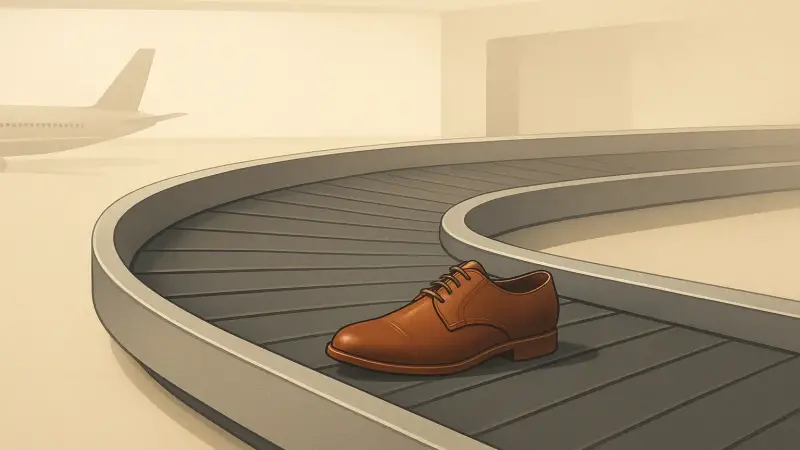
Noticing the missing shoe
People notice fast when luggage arrives but something feels off. A suitcase is there, a coat is there, and then a single sneaker slides down the belt on its own like it has its own reservation. This isn’t one fixed, documented incident with one famous airport; the stories pop up in different places and years, and the details vary. You’ll hear versions from big U.S. hubs like Atlanta’s Hartsfield–Jackson and Los Angeles International, and also from smaller regional airports where the baggage room is closer to the public carousel. The core mechanism is simple: the belt and its hidden machinery don’t “eat” whole bags very often, but they can grab and release loose items constantly.
How a carousel can grab one thing and not the bag
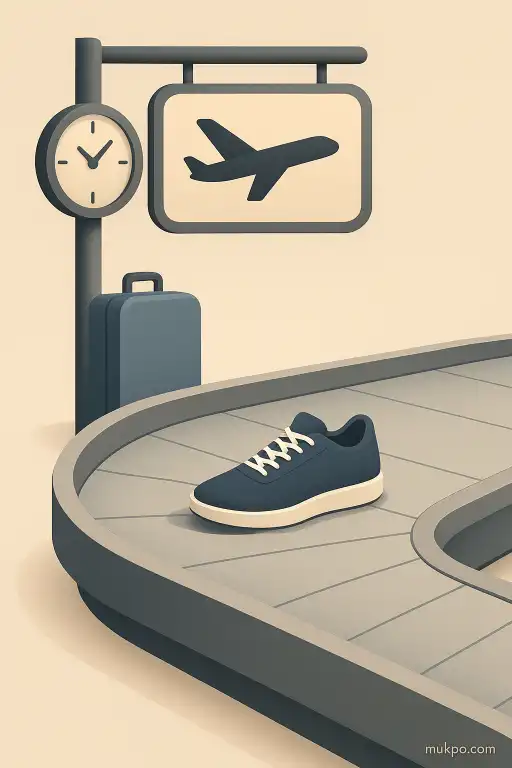
A public carousel is only the visible part. Behind the wall, bags move along narrower conveyor runs, merge points, and transition plates. Those transitions are where weird, small failures happen. A lace, a strap, or the edge of a soft shoe can dip into a gap and get pulled just enough to separate it from whatever it was attached to. A rigid suitcase usually rides over those same gaps without drama because it spans them. A lone shoe doesn’t. It’s flexible, it can twist, and it can wedge.
The overlooked detail is how many “pinch points” are built into a system that looks smooth from the outside. The belt is typically made of slats or a continuous loop running over rollers. The places where the belt turns under, where it meets a metal comb plate, or where two conveyors meet are designed to be safe for fingers but not necessarily kind to dangling shoelaces. If a shoe is tied to the outside of a backpack, it can get tugged free without the backpack ever slowing down.
Why it’s so often a shoe
Shoes are common “external cargo.” People clip them to backpacks, stuff them under stretchy straps, or shove them into side pockets that don’t fully close. In checked luggage, shoes also migrate. They end up near zippers, seams, and corners where a bag is most likely to open slightly under pressure. A hard-shell case rarely gives up a shoe unless it’s already cracked or not latched. A soft duffel with an overloaded zipper can.
A single shoe is also the right size to survive the trip through the system. Phones and wallets tend to drop in places that trigger a stop and a retrieval. A shoe can tumble through a chute, bounce off rubber curtains, and still make it to the carousel without causing an alarm. It’s light enough to be flung and heavy enough not to get stuck in every bend. That combination makes it show up where passengers can see it, which makes the whole phenomenon feel more “reliable” than it really is.
The human part that makes it feel like a pattern
Most flights don’t produce a lone shoe. But carousels run for hours, and hundreds of bags pass through the same few choke points. When one odd item appears, everyone around the belt notices it at once. People point. Someone laughs. Someone takes a photo. That attention makes the event feel frequent, even if it’s actually rare per bag. It also makes shoes seem like the “signature” item, because a shoe is instantly recognizable as personal and out of place.
There’s also a quieter reason the story spreads: the owner is usually not standing there waiting for the shoe. They’re waiting for a bag. If the shoe came from the outside of a backpack, the owner may only realize it’s gone much later. That means the shoe sits on the belt for multiple rotations. Lots of people see it. A stray T-shirt might get ignored or tossed to the side by staff quickly. A shoe keeps circling.
Where that shoe likely came from, moment by moment
A typical chain looks like this: a bag is loaded with something loose or externally attached; it gets compressed under other bags in a cart or container; something starts to slip out; the bag hits a transition from one conveyor to another; the loose item catches; the bag keeps going; the loose item gets redirected down a different chute. Once it’s separated, it can be treated like any other “odd-shaped” item and still end up on the public belt because the system is designed to keep moving, not to identify what each object is.
When baggage rooms are busy, staff are watching for jams and damage first. A single shoe usually isn’t a jam. It’s just an object riding the belt. If it doesn’t block a sensor or wedge under a guard, it will get delivered like a bag. It arrives alone not because the machine targeted it, but because the machine is good at one thing: taking whatever is on the line and putting it where the line ends.
Related reads
- Why memories from a morning often feel sharper than those from late night
- A pedestrian crossing that erupted into spontaneous disco lights after midnight
- When kings shaved silver from coins and markets exploded: medieval coin debasement
- How splitting attention makes ordinary tasks feel strangely harder
- How Victorian salons turned arsenic into beauty and scandal
- The museum plaque that rewrote itself every morning