

A sound you don’t expect from a bridge
Stand on the Humber Bridge in England on a cold, windy day and you might hear it: a steady hum or a thin, rising whine that seems to come from the cables. It isn’t one single “humming bridge,” though. Similar sounds have been reported from big suspension bridges in different places, including the Golden Gate Bridge in San Francisco and the Øresund Bridge between Denmark and Sweden. The basic mechanism is simple. Wind pushes air past a long, tense piece of structure, and the structure responds by vibrating. As the temperature drops, the pitch can shift, because the bridge’s parts and the air around them change in small but real ways.
Where the hum comes from
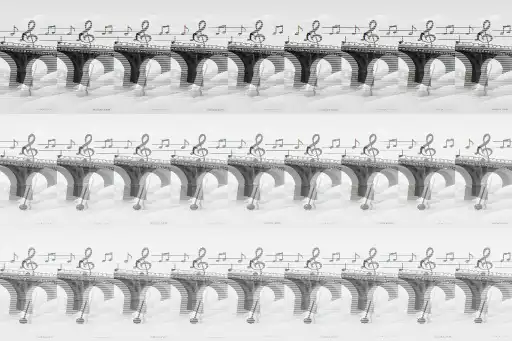
The sound usually isn’t the whole bridge “singing” at once. It’s more often a particular component acting like an instrument string or a reed. The classic suspects are suspension cables, hangers, and anything with a long, uniform shape that wind can flow around. When airflow becomes organized—forming repeating swirls called vortices—it can push in a rhythmic way. If that rhythm lines up with one of the structure’s natural vibration frequencies, the motion can build, and that motion can radiate as sound.
Another source is smaller and easier to miss: attachments. Cable bands, clamps, maintenance rails, and even helical “fillets” designed to control rain and wind can create their own tones. You’ll sometimes hear about a bridge “whistling,” and it can be because air is being forced through a narrow gap around hardware. That kind of tone can be surprisingly pure. It also means two bridges of the same general design can sound different if their surface details differ.
Why colder air can change the note
Colder temperatures change the air itself. Sound travels more slowly in cold air than warm air, and air density and viscosity shift too. Those changes affect how vortices form and how sound carries. A hum that is faint in summer can seem sharper in winter simply because the atmosphere transmits it differently. Wind profiles also change with weather. Stable, cold conditions can produce smoother, more consistent airflow over long spans, which can make a tone more steady instead of noisy.
There’s also the structure. Steel and concrete expand and contract with temperature. A small contraction can increase tension in some members, or slightly change boundary conditions at joints and anchorages. Natural frequencies depend on stiffness, mass, and tension. Shift any of those and the “preferred” vibration rate moves. The change may be modest, but ears are good at noticing pitch changes, especially when a tone is already narrow-band and persistent.
The overlooked detail: the bridge isn’t equally “tuned” everywhere
People often picture a bridge like one continuous string, but a long span is more like a collection of coupled pieces. Different segments of a main cable can have slightly different tension. Hanger cables can vary in length and stiffness. Deck sections can be stiffer near towers and more flexible toward midspan. That means the bridge has many possible vibration modes, and wind doesn’t excite them uniformly. The hum can come and go as gusts shift direction, or as wind speed crosses a narrow window where one mode gets strongly excited.
That uneven “tuning” also explains why the sound sometimes seems localized. Someone on the pedestrian walkway might hear a strong tone while someone a short distance away hears mostly wind noise. The structure can be vibrating in a way that puts a node (almost no motion) in one spot and an antinode (maximum motion) in another. Small changes in temperature can move those patterns enough to make the bridge feel like it has changed its mind about where it wants to sing.
When engineers take the sound seriously
A humming bridge isn’t automatically a dangerous bridge. Audible vibration can be well below levels that threaten fatigue or comfort. But sound can be a useful clue, because it means the wind is finding an efficient way to pump energy into a component. That’s why designers use aerodynamic shapes for decks, add dampers to cables, and sometimes fit cables with surface treatments that break up organized vortex shedding. After the 1940 collapse of the Tacoma Narrows Bridge in Washington, wind–structure interaction became a central part of long-span bridge engineering, even though that event was a dramatic flutter instability rather than a simple “hum.”
What people notice as temperature drops is often the combination of slightly different structural frequencies, slightly different airflow behavior, and the way cold air carries sound. The bridge didn’t suddenly become musical. It just moved into a set of conditions where one small part of a very large structure is being driven cleanly enough for human ears to pick it out.

Related reads
- A bakery where discarded dough sprouted into tiny crusty faces
- Why silent pauses make conversations feel deeper
- The airport carousel that reliably ejected one lone shoe from every flight
- Why memories from a morning often feel sharper than those from late night
- A pedestrian crossing that erupted into spontaneous disco lights after midnight
- When kings shaved silver from coins and markets exploded: medieval coin debasement