
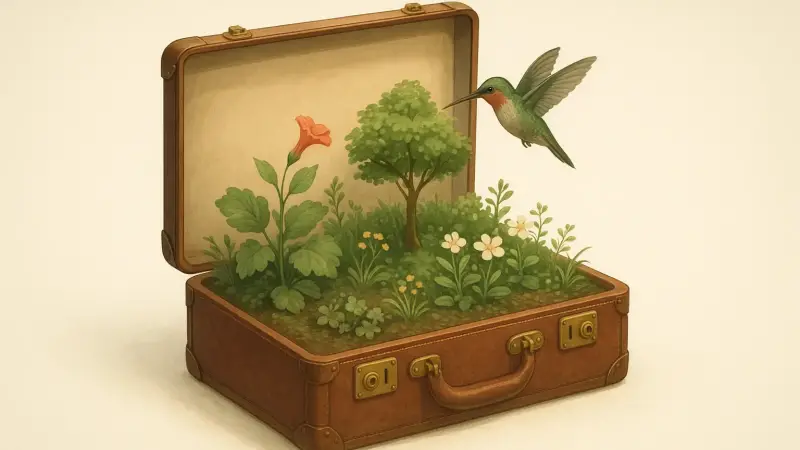
A suitcase shouldn’t be able to do that
A closed suitcase feels like the opposite of a garden. No rain. No fresh air. No room to stretch. And yet the core trick of a “garden in a case” is simple: seal in moisture, give light a way in, and let plants and microbes recycle what they have. People have built versions of this in lots of places, not just one famous town or one named inventor. You see it in Victorian-era fern cases in Britain, in the later American houseplant craze, and in modern bottle terrariums everywhere. The century-long part varies and is hard to verify, but the mechanism can genuinely keep a tiny ecosystem running for very long stretches.
How a tiny garden survives without being watered
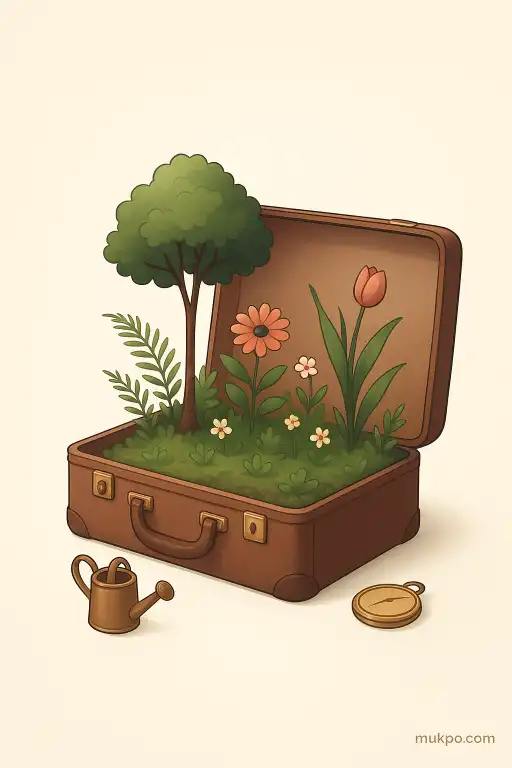
In a sealed container, water mostly stops “leaving.” It evaporates from soil and leaves, condenses on cooler surfaces, and drips back down. That sounds like a neat loop, but it only works if the container is tight enough that moisture loss is tiny. Light powers the rest. Plants use it to make sugars. They also release oxygen in the day and take in oxygen at night, while microbes break down dead bits and return nutrients to the soil. Nothing is perfectly balanced, so these systems usually drift. But if the plant growth stays slow, and the soil community stays stable, the drift can be slow enough to look like stasis.
The overlooked detail is that “sealed” isn’t just about the lid. It’s the hinge line, the seam, and any little gaps where a clasp meets leather or wood. In many old containers, the limiting factor isn’t light or soil. It’s a tiny leak that lets humidity escape over months and years. That’s why the most successful long-lived examples tend to have glass-to-frame seals, waxed joints, or later, rubber gaskets—features people barely notice when they’re staring at the greenery.
Why Victorian design made this plausible
The Victorians were already primed to build small, transportable plant worlds. The Wardian case—named for Nathaniel Bagshaw Ward in the 19th century—was a sealed glass box used to move live plants long distances by ship. That’s not a suitcase, but it’s the same idea: stop the salt air, trap humidity, and let light through. Once that concept exists, putting a miniature version into a portable container is an easy mental step, even if the execution varies a lot from object to object.
Another Victorian ingredient is the material culture. Good joinery. Thick glass. Metal latches that pull tight. A modern fabric suitcase breathes too much. Many older cases were rigid, lined, and built to close firmly. Some had internal trays or compartments that could hold a soil pan without the whole case turning into mud. None of that guarantees a century of growth, but it makes “weeks or months of survival while being carried around” plausible, which is the first stepping stone to “years if it’s left alone in steady conditions.”
What “a century” usually means in practice
When people talk about a tiny garden lasting a century, it’s often a story about a container that wasn’t opened much, not a plant that stayed unchanged for 100 years. The plant mix can shift. One species slowly wins. Another fades out. Mold blooms and then disappears. A moss layer creeps over bare soil. The system can still look “the same” at a glance, especially if the dominant plant stays green and low. But internally it’s changing all the time, just at a slow pace.
It also depends on what “growing” means. Some terrariums don’t show dramatic new leaves for long periods. They’re alive, but constrained by limited nutrients, limited space, and low light. That’s one reason small-leaved plants and mosses are common in long-running sealed setups. They tolerate low airflow and don’t demand constant fresh mineral input the way fast growers do.
A concrete scene that makes it work
Picture a rigid Victorian-style case sitting for decades on an indoor shelf, away from radiators and direct sun. Bright window light, but not the harsh kind that cooks a sealed box. Inside, a shallow soil tray holds moss, maybe a small fern or a cutting that stays compact. The glass paneling (or inner glass lid, if there is one) fogs slightly in the morning and clears by afternoon. That daily pulse is a good sign. It means there’s enough moisture to cycle, but not so much that everything stays soaked.
The easiest part to miss is temperature stability. A sealed garden hates sudden swings. Overheating is especially brutal because the container can’t shed heat quickly, and the humidity spikes. Victorian interiors could be drafty, but many rooms also had steady, indirect light and long stretches of similar conditions. When a long-lived suitcase garden story is true, it’s usually because the container spent most of its life not traveling at all, quietly behaving more like a window display than luggage.
Related reads
- The frontier uprising against whiskey taxes that tested the early American republic
- Why your name grabs attention in a crowded room
- How brief goodbye routines steady anxious minds
- The beach that sings when you walk on it
- The 1835 newspaper hoax that convinced readers the moon teemed with strange creatures
- The hill where cars mysteriously roll uphill