

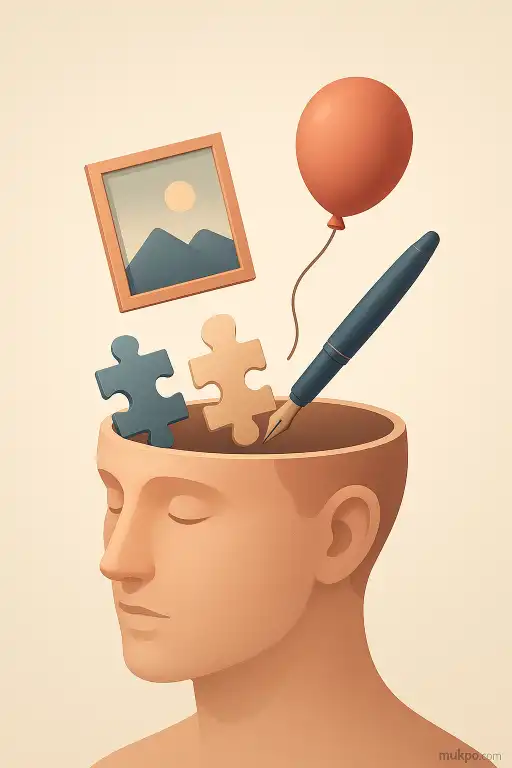
Someone tells a story from a holiday, and you can see it. The restaurant table. The song playing. The joke that landed. Then you find the photo, or the receipt, or the text thread, and one of those “clear” details isn’t there. This isn’t about one famous incident. It shows up everywhere, from courtroom eyewitness errors in the United States to family stories passed down in the UK and Australia. The core mechanism is simple: memory is not a recording. It’s a reconstruction that gets rebuilt each time it’s recalled, using fragments of what happened plus whatever the brain thinks should fit.
Memory is rebuilt, not replayed
When people remember, they pull up pieces: a face, a place, a feeling, a sequence. Then the mind knits them into something that feels like a single clip. That knitting happens fast and usually smoothly, so it feels like “retrieval.” But it’s closer to re-creating a scene with whatever materials are available at the moment.
A small overlooked detail is that confidence tracks coherence more than accuracy. A memory with a clean timeline and vivid sensory bits often feels truer than a messy one, even when the messy one matches the evidence better. The mind prefers a story that hangs together.
Details slide in from expectations

People don’t just remember events. They remember “the kind of thing this was.” A birthday party, a first day of work, a drive to the airport. Those categories come with defaults, and the defaults can fill gaps. If someone remembers being at a wedding reception, the brain may supply the clink of glasses or a certain type of toast even if it never happened at that reception.
This is why two people can agree on the main event and still disagree on the furniture, the weather, or who stood where. Those are the easy spots for expectation to sneak in. The mind isn’t trying to lie. It’s trying to make the scene usable.
Questions and retellings change the memory
The act of describing a memory edits it. Each retelling is another rebuild, and the wording used during that rebuild can become part of what gets stored. Even a small shift—“Was the car speeding?” versus “Was the car going fast?”—can steer what details are later “remembered,” because the brain starts searching for information that matches the frame.
A specific detail people often overlook is how quickly this can happen. It doesn’t require years of storytelling. A single conversation right after an event can introduce a new element that later feels original. Once it’s woven in, it can be recalled with the same certainty as the parts that were actually perceived.
Outside artifacts can overwrite the inside story
Photos, videos, and other people’s accounts can stabilize memory, but they can also reshape it. A picture is a powerful anchor, and it can pull surrounding details toward itself. Someone might “remember” what happened immediately before a photographed moment, even if the photo was the only exposure they ever had to that scene.
This shows up in families all the time. One person has a photo album. Another doesn’t. Years later, the person with the album often has sharper “memories,” but they line up suspiciously well with what was photographed. The overlooked part is that cameras don’t just capture; they curate. The unphotographed parts can fade faster, leaving space for filler.
Emotion sharpens some parts and blurs others
High emotion can make certain elements stick—like the look on someone’s face or a sudden sound—while other elements get lost. The brain prioritizes what seems important for meaning or safety. Later, the missing pieces can get filled with whatever seems consistent with the emotion that remains.
That’s why people can be accurate about the central punch of a moment and still be wrong about plain facts, like the order of events, what time it was, or who said the first line. The emotional imprint stays. The timeline is negotiable.
Related reads
- The supermarket scanner that rang up free produce for random shoppers
- A vivisection in Edwardian London that ignited the Brown Dog riots
- A parking meter that started dispensing coins instead of taking them
- The city that repainted a highway overnight to look like a giant zebra
- A laundromat that returned a wedding ring after two decades in a dryer
- The cafe that charged customers by the length of their conversations