
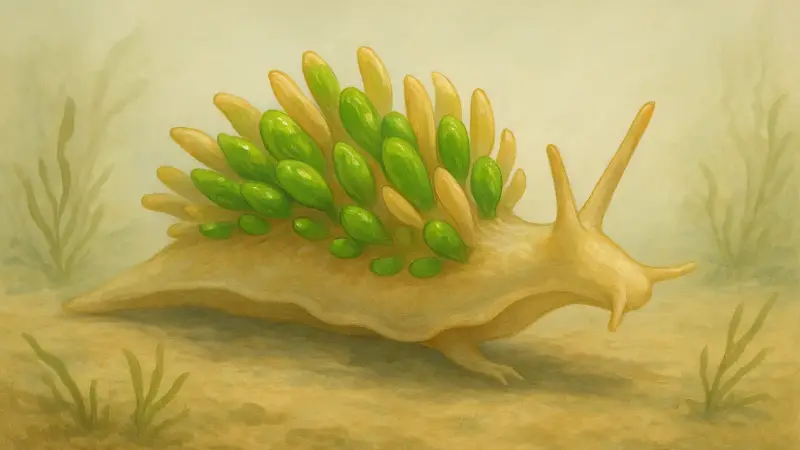
A slug that behaves like a leaf
Some animals eat plants and stay animals. A few do something stranger: they keep part of the plant’s machinery and keep using it. This isn’t one single “local legend” kind of story. It shows up in coastal places where certain sea slugs live and algae are common, like along the Atlantic coast of North America, parts of the Mediterranean, and shallow waters around Japan. The best-known example is Elysia chlorotica, a bright green sea slug that can steal chloroplasts from the algae it eats and then use those chloroplasts to capture light and make sugars. The slug isn’t turning into a plant. It’s running on borrowed equipment.
How chloroplast theft actually happens
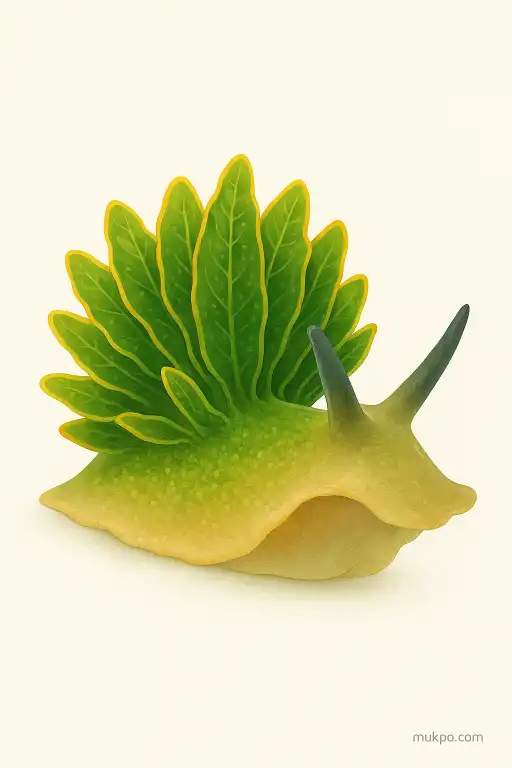
Chloroplasts are the tiny compartments in plant and algal cells where photosynthesis happens. When a sacoglossan sea slug feeds, it punctures an algal cell and sucks out the contents. With some algae, the slug digests most of the material but spares the chloroplasts. Those chloroplasts end up packed into the cells of the slug’s digestive gland, which branches through the body. That placement matters. It puts the chloroplasts close to the surface, where light can reach them.
A specific detail people miss is that the slug’s “green” isn’t a decorative pigment. It’s often the chlorophyll inside the stolen chloroplasts, sitting inside the slug’s tissues. That’s why the green can fade when the chloroplasts break down, even if the slug is otherwise healthy.
Borrowed sunlight, limited time
The chloroplasts keep working for a while, but not forever. In most animals that attempt this trick, the stolen chloroplasts lose function quickly because they normally rely on many proteins that are encoded in the algae’s nucleus, not in the chloroplast itself. Without regular replacement parts, photosynthesis stalls. Different slug species keep chloroplasts functional for different lengths of time, and the exact duration can vary with conditions like light, temperature, and the slug’s access to food. Some species manage days or weeks. A few, including Elysia chlorotica, are reported to last much longer under the right conditions, though the details and mechanisms are still debated.
Even when photosynthesis is working, it doesn’t replace eating in the way people imagine. The chloroplasts can contribute energy and carbon when food is scarce, but the slug still needs other nutrients that light can’t provide. It’s more like a supplemental power source that can stretch a fast, not a complete lifestyle swap.
The hidden problem: keeping chloroplasts alive inside an animal
A chloroplast inside an animal cell is in a risky situation. Photosynthesis produces reactive oxygen compounds, especially under bright light or stress. Those molecules can damage membranes and proteins. So the slug has to tolerate and manage oxidative stress in tissues that now contain photosynthetic machinery. Researchers have looked at antioxidant defenses and other protective responses as part of the explanation for why some slugs can keep chloroplasts going longer than expected.
There’s also an immune question hiding in plain sight. An animal’s cells usually treat foreign organelles as something to digest. These slugs somehow avoid destroying the chloroplasts they’ve captured, at least for a while. Exactly how they recognize “keep this” versus “digest that” is still not fully nailed down, and it may differ by species and by which algae they feed on.
What scientists argue about when they argue about this slug
The big argument isn’t whether chloroplasts get stolen. That part is well observed. The argument is about what the slug contributes at the genetic and cellular level to keep those chloroplasts functional. Years ago, there was serious interest in the idea that the slug might have acquired algal genes through horizontal gene transfer, giving it the ability to make chloroplast-support proteins itself. Some later studies challenged how strong that evidence was and whether those genes are truly integrated and active in the slug in a way that explains long-term photosynthesis. The current picture is messier: some combination of chloroplast robustness, the slug’s cell biology, and the specific algae involved may matter more than a single dramatic genetic explanation.
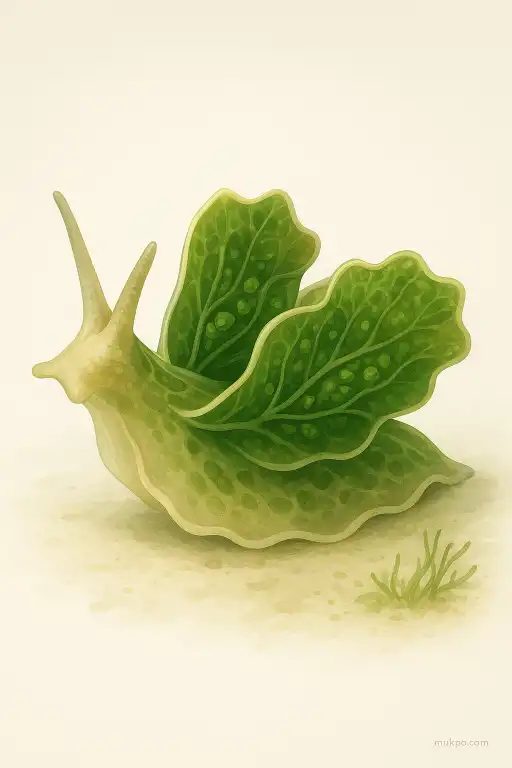
A concrete scene that captures it is a juvenile Elysia chlorotica feeding on the alga Vaucheria litorea. After that first successful meal, the slug’s color shifts toward green as chloroplasts accumulate, and it can spend long stretches relatively still in lit, shallow water. It’s not posing for the sun. It’s simply a soft-bodied animal that, for a while, has functioning chloroplasts embedded in its own tissues.
Related reads
- The village that still pays some workers with fresh fish hauled each morning
- The petrifying well that turns lost toys to stone
- How Mongol catapults allegedly hurled plague corpses into besieged cities
- A garage sale that turned up a trunk of handwritten novels no one claimed
- The colonial standoff over the Ashanti Golden Stool and the symbol no one would hand over
- When Ottoman succession customs let new sultans quietly eliminate brothers to secure the throne