
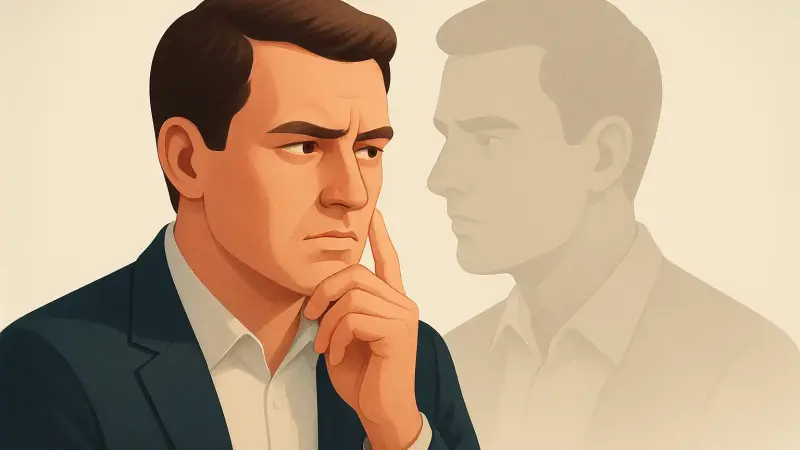
You’re walking out of a supermarket and a stranger turns the corner, and for half a second your body acts like you’ve met. Your face warms. Your attention locks on. Then the feeling drops out, leaving you slightly wrong-footed. This isn’t one single event tied to one place or year. People describe it on packed sidewalks in New York, in airport queues at Heathrow, and in quiet cafés where there’s no reason to be scanning faces at all. The core trick is fast pattern-matching. The brain grabs a few cues, declares “known,” and only afterward checks the details.
How the brain decides “I know that face” so fast
Face recognition runs on shortcuts because it has to. You rarely see anyone in perfect conditions. Lighting changes. Hair changes. People age. So the brain leans hard on a quick, global impression: spacing of features, head shape, a familiar “type,” and the way a face moves. That first impression arrives before careful identification, which needs more time and more input.
A lot of the work happens outside awareness. By the time conscious thought shows up—“Do I know them?”—your attention has already shifted. That’s why the feeling can be so physical. It’s not a thought first. It’s a rapid internal flag that says this person matters, at least long enough to double-check.
What usually creates the false match
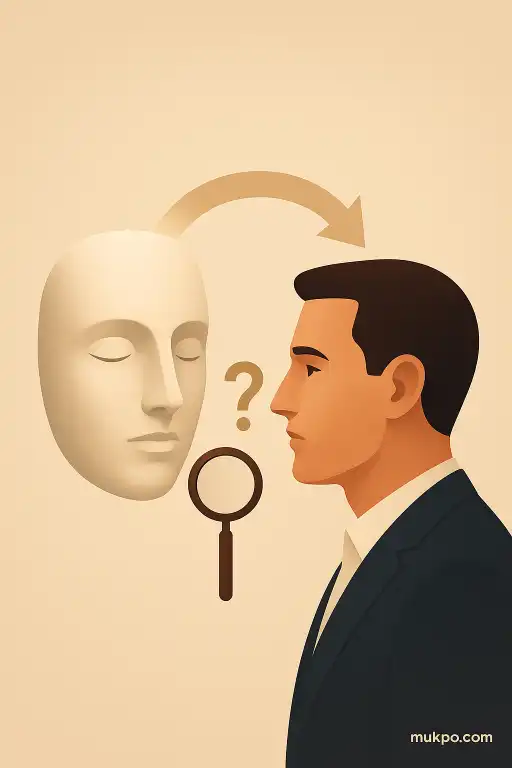
The most common setup is partial information. You catch someone in peripheral vision. You see them from an odd angle. They’re mid-step, mid-expression, or half-covered by a scarf. The brain doesn’t wait for a clean view. It uses whatever is available. Then it fills in the rest with the nearest stored template that fits.
One overlooked detail is gait. People focus on faces, but the way someone carries their shoulders, swings an arm, or tilts their head can trigger familiarity on its own. That’s why it happens from behind, or across a room before you can even describe the person’s features. If the movement signature matches someone you know, the rest of the mind tries to make the face match too.
Why it hits harder in certain places
Environments that force quick scanning make these glitches more likely. Airports, train stations, busy streets, conferences, and supermarkets are full of near-misses. You’re processing lots of bodies at once. You’re also switching tasks—ticket, bag, phone, directions—so the careful “who is that?” step gets less time.
There’s also a simple math problem: the more faces you see, the more chances you have to see a close-enough lookalike. Even if no two people are truly alike, small overlaps add up. Add uniform lighting, similar clothing, and repeated posture cues—like people all looking down at a boarding pass—and the brain’s quick classification system starts firing “known” more often than it should.
Familiarity doesn’t always mean recognition
That split-second warmth can come from something other than the person’s identity. A face can feel familiar because it matches a category your brain has seen a lot: a coworker “type,” a frequent-customer “type,” someone who resembles an actor you’ve watched for years, or a person whose expressions echo a sibling’s. The mind tags the pattern as known even when it can’t attach a name, a place, or a story.
Sometimes the feeling is carried by emotion rather than appearance. If a stranger’s expression briefly mirrors a look you’ve seen in a partner or a parent—impatience, amusement, concern—the emotional memory can light up first. That can create a moment of certainty without any real source you could point to afterward.
What happens in the seconds after the mistake
After the initial flag, the brain runs a rapid audit. It checks context: would this person plausibly be here? It checks detail: eye color, voice, the exact shape of the jaw, the presence or absence of a scar. If the match fails, the mind often doesn’t replace it with a clear alternative. It just withdraws the feeling, which can leave that odd blankness—like you lost a thought mid-sentence.
That’s also why the moment can feel socially risky. A half-formed greeting can start to rise before the correction lands. The body prepares for recognition faster than it can prepare an explanation. Most of the time, the correction happens quietly, and the moment passes with nothing visible except a tiny pause in the way you look at someone you’ve never met.
Related reads
- Why a new password can vanish from memory by bedtime
- The museum that celebrates the worst paintings ever made
- The postman who delivers mail by zipline in a mountain village
- The pocket watch found fused inside an old oak’s heartwood
- The tiny hesitations that make someone come across as more trustworthy
- Why the face in the mirror can look like a different person after a haircut