
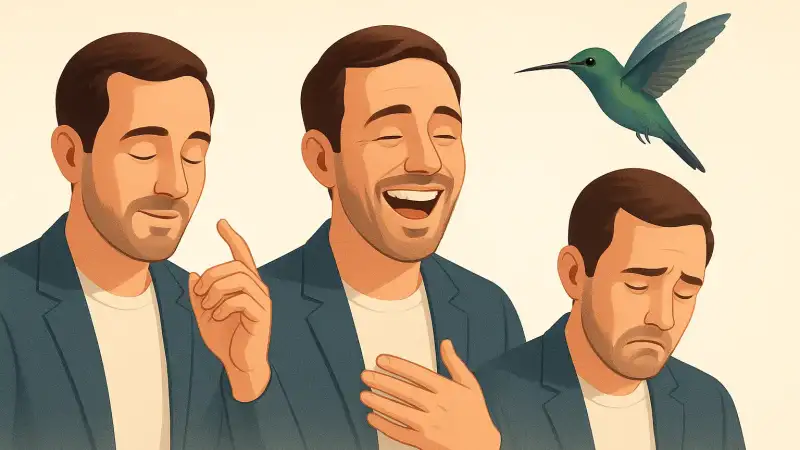
Two people can tell the same joke with the same words and get opposite reactions. It isn’t one famous incident or one “correct” way to do it. You can see it in a stand-up clip at The Comedy Store in Los Angeles, in a sitcom like The Office, or in a group chat where the punchline lands as silence. The core mechanism is timing, but not the dramatic kind people imagine. It’s often tiny: a breath held too long, a pause that steals momentum, a reply that comes before the listener has finished building the picture in their head.
What the pause is actually doing
A pause isn’t just “waiting.” It shapes what the listener expects next. If the setup ends and nothing happens, the brain keeps predicting. That prediction window is where tension builds, and comedy borrows that tension without letting it turn into discomfort. If the pause is too short, the punchline arrives before the setup has finished “rendering.” If it’s too long, the listener starts filling the gap with their own endings, or they decide the speaker is unsure.
One overlooked detail is inhalation. People often breathe in right before the punchline without noticing they’re doing it. That tiny sound and chest movement signals “something is coming,” which can sharpen attention. It can also ruin surprise if it’s exaggerated, especially in quiet rooms where a microphone catches it.
Rhythm matters more than speed
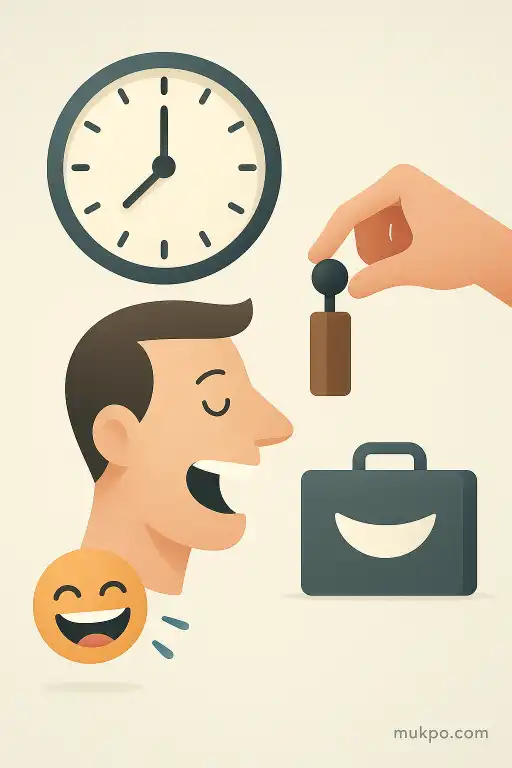
Timing isn’t the same as talking fast. A joke can be slow and still feel tight if the rhythm is consistent. Listeners track patterns quickly. If the setup has a steady cadence and the punchline arrives on an expected beat, it can feel satisfying. If the speaker speeds up on the last few words, it can sound like they’re apologizing for the joke or trying to outrun doubt.
That’s why the same line can work in one person’s mouth and not another’s. The words are the same, but the listener is responding to a pattern: where the emphasis lands, which syllables get clipped, whether the final word drops cleanly or trails off. Those are timing decisions even when nobody is “counting seconds.”
Shared knowledge changes the timing window
How long a pause can be before it breaks depends on what the audience already knows. If the reference is familiar, the listener reaches the expected endpoint sooner, so the pause has to be shorter to avoid feeling like dead air. In a workplace where everyone has watched The Office, a quote can land instantly. In a room where it’s unfamiliar, the same quote creates a processing delay, and the speaker’s timing can feel “off” even if it’s identical.
Group size changes it too. In a small conversation, people give micro-signals—eye contact, a half-smile, a tiny nod—that tell the speaker the setup has landed. In a bigger room, those signals smear into a general hum. The speaker is timing against a slower, blurrier feedback loop.
Interruptions and overlaps can erase the punchline
In real conversation, jokes rarely get a clean runway. Someone laughs early. Someone asks a clarifying question. Someone jumps in with their own related story. Those interruptions don’t just cut off words. They reset the listener’s prediction, which is where the joke was “living.” When the speaker returns to the punchline, it can feel like a non sequitur because the mental scaffolding has been replaced.
Even friendly overlap can do this. If two people speak at once during the final beat, the listener spends effort decoding audio instead of tracking the turn. The punchline might be heard, but it isn’t processed as a punchline. It becomes information arriving late.
A concrete example: the extra beat that changes the meaning
Imagine someone at dinner telling a simple line: “I tried cooking to impress my date. The smoke alarm gave me a standing ovation.” If they leave a small beat after “date,” people picture the scene: effort, nerves, the kitchen. If they rush straight into “The smoke alarm,” the image doesn’t form and the punchline feels like a random tag. If they pause too long after “date,” the listener starts expecting a more serious turn, and “standing ovation” can sound childish instead of surprising.
The usually-missed detail here is where the speaker looks during that beat. If their eyes drop to the table right after “date,” it reads like embarrassment and can tilt the room toward sympathy. If they look up as if checking whether people followed, it reads like confidence and keeps the comedic frame intact. Nothing about the joke’s text changes, but the timing and the tiny nonverbal cue decide what the audience thinks the speaker is doing.
Related reads
- The split-second familiarity that tricks you into thinking you know someone
- Why a new password can vanish from memory by bedtime
- The museum that celebrates the worst paintings ever made
- The postman who delivers mail by zipline in a mountain village
- The pocket watch found fused inside an old oak’s heartwood
- The tiny hesitations that make someone come across as more trustworthy