
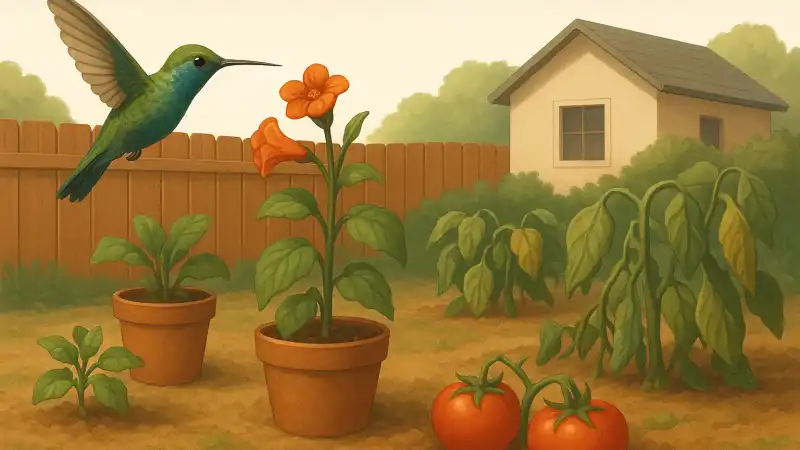
You can have healthy-looking tomato vines, lots of cucumber flowers, and still end up with a strangely small bowl at harvest. This isn’t one single place or one single event. It plays out differently in places like California’s Central Valley, suburban gardens around London, or backyard plots across the U.S. The basic mechanism is simple: some vegetables don’t just need flowers. They need flowers that get visited the right way, at the right time, by the right insects. When backyard pollinators drop off, the plants may still bloom. They just set fewer fruits, or they set fruits that never fill out.
Which vegetables get hit first
Not every crop depends on insects. Lettuce and spinach are harvested as leaves, so a “pollination problem” usually shows up only if someone is saving seed. But many common backyard vegetables are fruiting crops, and fruit depends on successful pollination. Squash, zucchini, pumpkins, cucumbers, melons, and many beans are in that category. Tomatoes and peppers can self-pollinate, yet they still often benefit from vibration and repeated visits that move pollen efficiently.
The first sign tends to be not “no harvest,” but uneven harvest. One cucumber looks normal, the next is stubby. A zucchini swells on one side and stays thin on the other. A pumpkin starts and then yellows and drops. Those are usually not nutrient problems. They’re often pollen-delivery problems, because each ovule in the fruit needs fertilization to develop, and partial pollination makes partial fruit.
What “less pollinator” means in a backyard
A backyard can lose pollination without losing every bee. The change can be in who shows up. Bumblebees, squash bees, mason bees, hoverflies, and small solitary bees don’t all work the same hours or handle flowers the same way. Some are active in cool mornings. Some prefer certain flower shapes. Some carry more pollen per visit. When the mix shifts, the garden can look busy and still underperform for specific crops.
One overlooked detail is timing. Squash and pumpkin flowers are open for a short window, often early in the day, and they can be done by late morning depending on heat and variety. If the insects that reliably fly at dawn disappear, and only later flyers remain, the plant can miss its best chance even if insects are present by lunchtime. People notice “lots of flowers” and assume the job is getting done, but the clock matters.
How losses translate into smaller, weirder harvests
Pollination isn’t an on/off switch. It’s more like a scaling factor on how many fruits a plant can mature and how well each fruit forms. A cucumber plant can make plenty of female flowers, but if only a few get enough pollen grains, only a few become market-sized cucumbers. That’s a direct yield drop. The plant may redirect energy into more flowers, which looks like productivity while the harvest stays thin.
Quality changes too. In strawberries, poor pollination can mean misshapen berries because not all seeds get fertilized. In melons, incomplete pollination can mean smaller fruit with more hollow space or uneven sweetness because development is irregular. Even in crops that can self-pollinate, like tomatoes, fewer buzzing visitors can mean fewer seeds per fruit, and that can affect size and how evenly the fruit fills out.
Why backyard pollinators disappear without anyone noticing
One reason is that many “backyard pollinators” don’t live in hives. A lot of solitary bees nest in bare soil, small tunnels, or hollow stems. If a yard shifts from mixed ground cover to thick mulch and landscape fabric, or if every dead stem gets cut down and removed, nesting opportunities can drop sharply while the flowers still look abundant. The insects aren’t just visiting the garden. Some need to complete their whole life cycle there.
Another reason is that losses can be crop-specific even when the yard seems lively. A garden full of blooms can attract generalists, while a crop like squash may rely heavily on early-morning specialists in some areas. Weather swings add to it. A cold snap during a brief bloom period can keep insects grounded. A heat wave can shorten the hours flowers stay receptive. It varies by region and year, which makes it easy to misread as “just a bad season.”
What a single missed visit looks like in real life
Picture a small garden bed with two zucchini plants and one cucumber trellis. The plants can produce a burst of flowers over a few days. If pollinator activity is low during that burst, the gardener might see lots of tiny fruits start, then stall. The zucchini that does develop may have a narrow end, because pollen didn’t reach all the ovules. The cucumber may curve or stay short. The flowers themselves were never the limiting factor.
The frustrating part is how subtle the trigger can be. One morning of rain during peak bloom can matter more than a week of sunshine later. A yard can have plenty of insects in general, but if the main visitors are ants, beetles, or tiny flies that don’t move much pollen between male and female flowers, fruit set can still be weak. The harvest ends up looking like poor luck, when it’s often a very specific bottleneck that happened in a very specific hour.
Related reads
- Why a color can suddenly trigger a craving
- Why your hands pick up complex skills before you can explain how
- The lake that turns bright pink for just a few days each year
- Why coral polyps expel algae during warming
- How subtle timing makes or breaks a joke
- The split-second familiarity that tricks you into thinking you know someone