
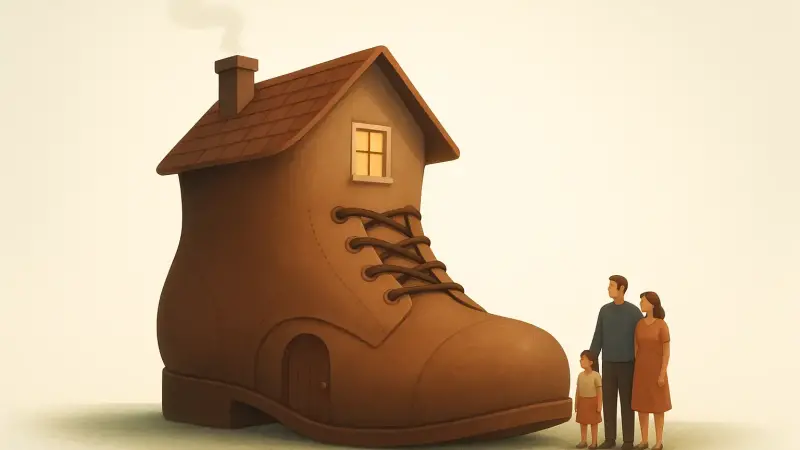
People pass odd buildings all the time and assume they’re just props. But some of the strangest-looking houses are plain, lived-in homes. Shoe-shaped houses are a good example. There isn’t only one. There’s the Haines Shoe House in York, Pennsylvania, which is famous as a roadside attraction. There’s also the Old Woman Who Lived in a Shoe building in Mahwah, New Jersey, which has been used as a daycare and other businesses. And then there are smaller, private “shoe” homes that aren’t widely publicized because the family inside is still just… a family. The basic trick is simple: the outer shell is sculpture, while the inside is laid out like a normal house.
Why a shoe can be a house at all
A shoe shape sounds impossible until you think about it as a wrapper. Builders start with a standard frame or a reinforced shell. Then they push the walls and roof into curves. A “toe” can hold a bedroom. The “heel” can hold a stairwell. Windows get placed wherever they can fit, which is why they often look slightly off compared to a normal façade.
The inside usually gives the game away. Floors want to be level. Plumbing wants to run in straight lines. So the strange outline tends to hide a fairly ordinary floor plan, with closets and utility runs tucked into the tightest parts. The outer shape is the headline. The interior has to work on a Tuesday morning.
What it’s like when someone actually lives there
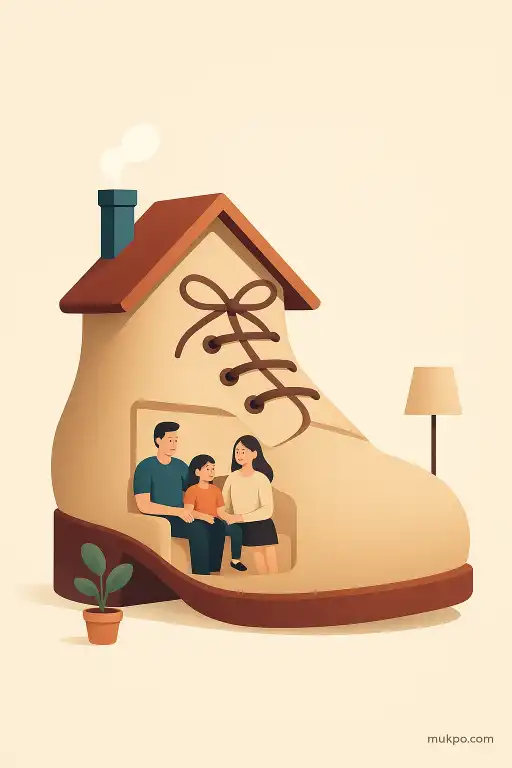
The biggest difference is how the house behaves day to day. Curved walls don’t accept standard furniture easily. Square bookcases and long couches collide with the “toe” curve. People often overlook how much time is spent solving that problem. Not during construction. After move-in, when normal life brings normal objects that assume right angles.
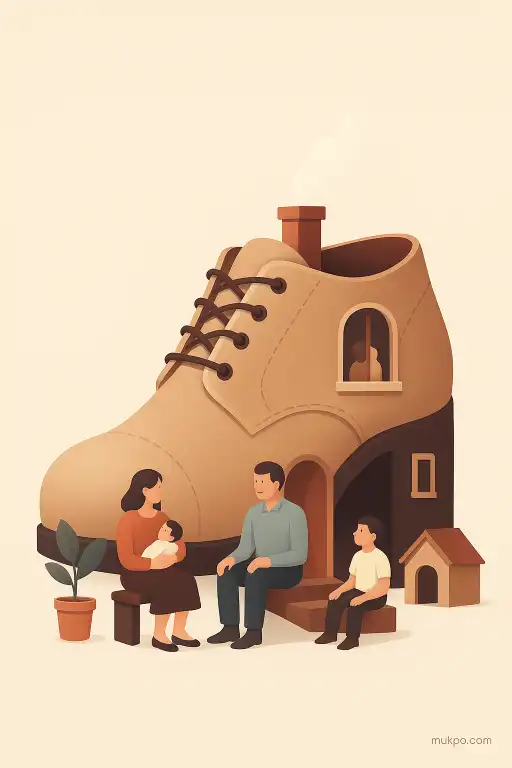
Privacy also changes. A house that looks like a storybook object attracts stopping cars, photos from the sidewalk, and the occasional person who tries the door as if it’s a shop. Families who live in these places end up with extra layers of routine: blinds that stay closed in certain rooms, landscaping that blocks sightlines, and a mental map of which windows are “safe” at night because passersby can see straight in.
The practical engineering nobody notices
The overlooked detail is drainage. A shoe shape creates strange valleys where rain wants to sit. Standard gutters aren’t designed for a roofline that curves like a boot. Water finds seams. Seams lead to rot. The owners of lived-in novelty houses often become experts in flashing, caulk, and the boring reality of keeping water out.
Heating and cooling can be odd too. High, rounded ceilings trap warm air. Tight “heel” corners become cold pockets in winter. If the design includes small windows for the sake of the silhouette, the place can feel dim in the daytime. The solutions are the same ones any homeowner deals with—insulation, airflow, storm windows—but they’re harder to do neatly when the structure refuses to be flat.
How these places end up on real streets
Some shoe buildings started as marketing. The Haines Shoe House in York, Pennsylvania is the best-known example in the U.S., built to get attention and pull people off the road. That origin story matters because it explains the layout choices. Roadside attractions are designed to be seen at a glance. The silhouette wins over the details that make daily living comfortable.
But not every shoe-shaped home began as advertising. Some come out of folk art, local whim, or a builder proving they can do it. When a family is still living inside, it’s often because the place never fully transitioned into a public attraction. Or it tried and failed, and the easiest next step was to treat it like any other house again, just with a more complicated exterior.
What daily life forces the design to become
Living in a sculptural house pushes the weirdness into specific zones. Kitchens and bathrooms tend to end up in the most “normal” part of the footprint, because cabinets and tile work don’t like curves. The more dramatic shoe features—rounded toe, raised heel, exaggerated tongue—often become bedrooms, nooks, or storage, because those rooms can tolerate awkward corners.
Over time, the house usually picks up quiet compromises that aren’t obvious from the street. A door gets squared off. A window gets replaced with something that fits standard glass. A handrail goes where the code requires, not where it looks cute. From outside it stays a giant shoe, because repainting the exterior keeps the illusion alive. Inside it turns into a place where someone can drop their keys, do laundry, and go to bed without thinking about the gimmick every minute.
Related reads
- Why you can still ride a bike years later even if you haven’t tried
- How backyard pollinator losses shrink vegetable harvests
- Why a color can suddenly trigger a craving
- Why your hands pick up complex skills before you can explain how
- The lake that turns bright pink for just a few days each year
- Why coral polyps expel algae during warming