
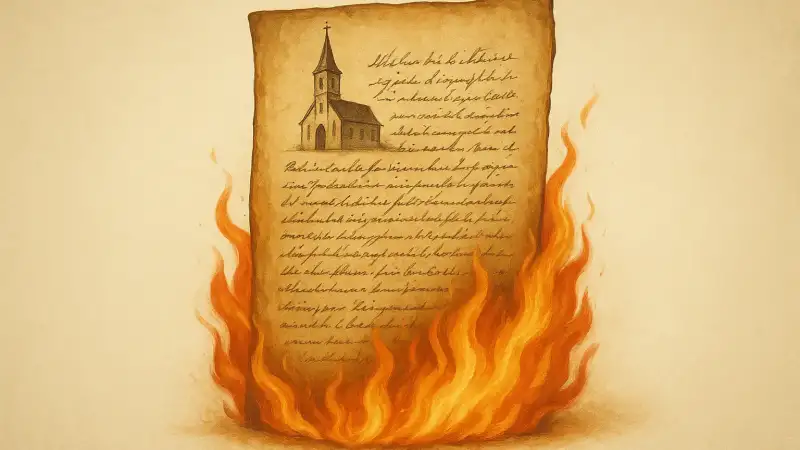
It’s easy to imagine a witch trial as a slow, formal thing. In some places it was. But there were outbreaks that moved like a fire through one parish and then were “over” before anyone outside the region understood what had happened. The clearest example is Würzburg in the 1620s, where dozens of people from the city and surrounding parishes were executed during a frantic wave of accusations and interrogations. The mechanism was not one charismatic accuser. It was paperwork, local fear, and a court that treated confession as proof, even when it was forced.
What “one parish” meant in practice
A parish was not just a church on a hill. It was a social map. It marked who baptized your children, who buried your dead, and who was expected to know your business. That closeness mattered when accusations depended on everyday contact: borrowing a pot, sharing a fence line, refusing alms, arguing over livestock. A witch panic inside parish boundaries could feel like a single, sealed room. The same names appeared again and again because the same families and neighbors appeared again and again.
One detail people overlook is how much of this ran through ordinary record-keeping. Parish registers listed marriages, godparents, and quarrels that had already been formalized in church discipline. Those networks could be pulled into an investigation fast. When a court wanted “associates,” it didn’t have to guess where the connections were. They were already written down in the routines of parish life.
How a fast-burning trial becomes possible
The speed comes from procedure. Early modern witch courts often worked with a template: suspicion, arrest, interrogation, confession, naming of accomplices, new arrests. Once the wheel turned, each confession generated more names. That’s how a single parish could produce dozens of condemned people in a short span. The system rewarded expansion. A confession that didn’t include a network looked incomplete.
In places like Würzburg in the 1620s, officials pursued witchcraft as a serious criminal and religious threat at the same time. The result was an investigation that didn’t wait for slow consensus. It treated doubt as negligence. That mattered because the ordinary brakes on rumor—family resistance, neighbors defending neighbors, local leaders hesitating—could be reframed as sympathy for the Devil, or obstruction of justice.
Why “frenzy” often looks organized on paper
From the outside, it can read like chaos. From the inside, it could be chillingly methodical. Courts recorded interrogations, inventories of the accused’s property, and lists of witnesses. The language often stayed calm even when the violence escalated. That disconnect is part of why these episodes spread. The documents made extreme actions look routine. A clerk writing neat lines can make a mass event feel like a normal week at the office.
The “frenzy” also didn’t require the whole parish to be emotionally whipped up every day. It only required a narrow set of decision-makers to keep signing orders. Once arrests started, fear changed behavior quickly. People became careful about what they said in public. Private grudges became potentially lethal if repeated at the wrong moment. Silence and cooperation were often survival instincts, not agreement.
Who gets caught when accusations multiply
The stereotype is the isolated older woman. Sometimes that happened. But the big bursts are notable for pulling in people who don’t fit the cliché. In several major German prince-bishoprics during the early 1600s, records show that children, clergy, officials, and prosperous townspeople could be swept in alongside the poor. When the court demanded accomplices, status stopped being a shield. It could even become a liability, because an accusation against a prominent person made the threat seem more real.
Another overlooked feature is the way households became targets rather than individuals. Servants knew intimate details. Employers had authority over them. If one person confessed under pressure and named people in the same house or extended family, the case could turn into a chain reaction. A parish is built out of clustered households. That structure made “dozens” logistically possible.
Why burning was the endpoint in some places
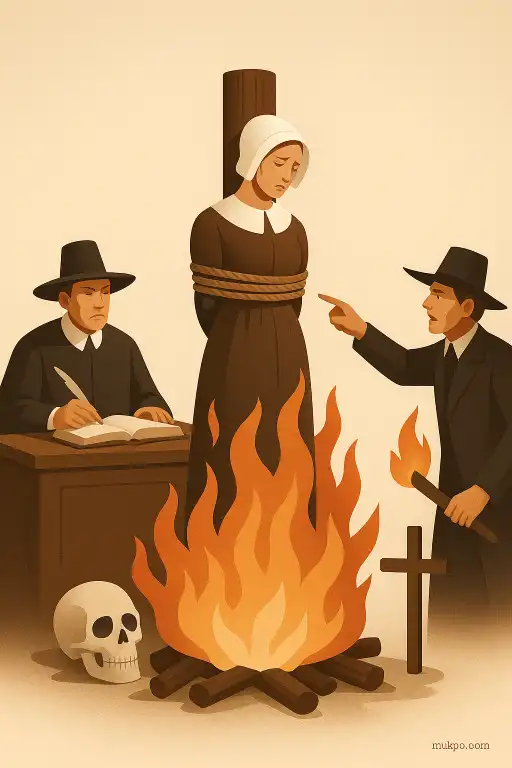
Execution methods varied by region and by legal tradition. Burning is strongly associated with witchcraft in parts of the Holy Roman Empire, including areas around Würzburg and Bamberg in the seventeenth century, because witchcraft was treated as a form of heresy or diabolical crime that merited a demonstrative punishment. Elsewhere, hanging was more typical. The parish experience could still be the same—rapid accusations and communal terror—even when the final method differed.
It’s also worth noticing how public the endpoint could be. The execution wasn’t only about removing a person. It was a performance aimed at restoring order. When dozens are executed from one parish region, the crowd is not just “the town.” It can include relatives, former friends, and the people who shared a church bench with the condemned. That’s part of what makes these episodes feel so unnaturally intense when you read the surviving lists of names.
Related reads
- Why strangers sometimes seem familiar even when you haven’t met them
- The town that hires goats to mow its parks and roundabouts
- What organic molecules in a meteorite reveal about early solar chemistry
- How early balloon ascents revealed temperature layers in the atmosphere
- The spider that cartwheels to flee danger
- The house shaped like a giant shoe where a family still lives