
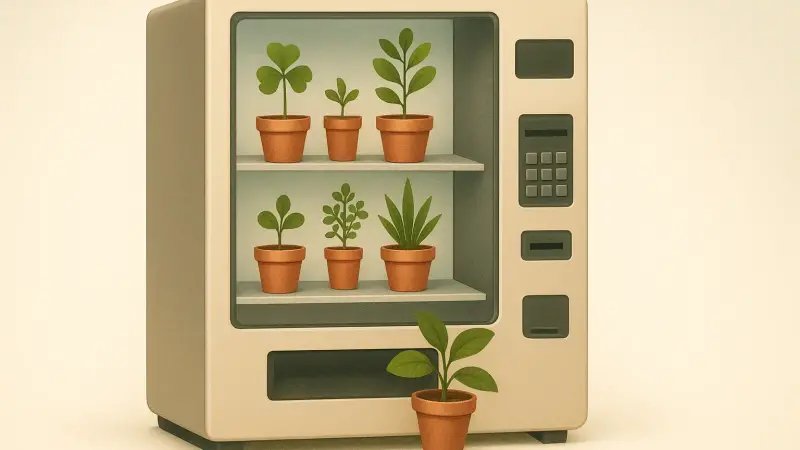
You’re walking through a lobby or a transit station and there’s a vending machine where you expect soda. Instead, the slots hold small live plants. You tap a screen, pay, and a little door drops open with a pothos or succulent inside a box. Some versions add tiny “adoption” cards, like a mini bio for the plant and a space to name it. This isn’t one single installation. Similar plant vending machines have shown up in different places, including Plantbox vending machines in Canada and plant-and-flower vending machines in Japan. The details vary by operator, which is why the cards and packaging don’t look the same everywhere.
What the machine is actually selling
Most of these machines don’t dispense “freshly potted” plants in real time. They’re stocked like any other vending machine, just with living inventory. The plants are usually common, hardy varieties that tolerate a few days of imperfect light and temperature, like pothos, snake plant, or small succulents. The machine’s job is access and consistency: a predictable price, a predictable size, and the ability to buy one when a florist or garden store is closed.
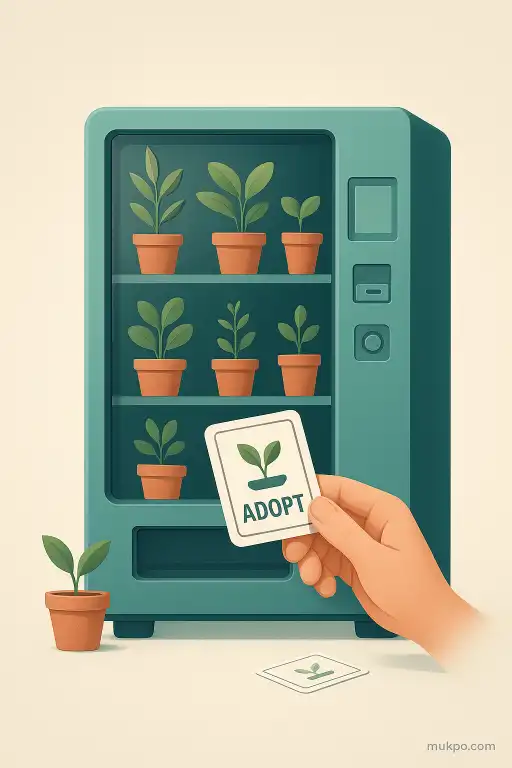
The adoption card is a framing device. It turns a purchase into a tiny ritual. Some cards include the plant type, basic care notes, and an ID number that matches the slot. Others are more playful and light on information. It depends on whether the machine is aimed at commuters, office lobbies, hospitals, or campuses.
How live plants survive inside a vending machine
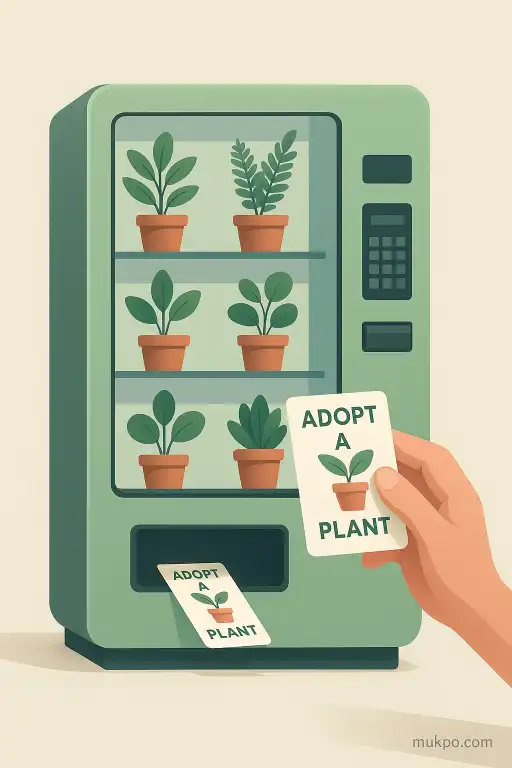
The engineering challenge isn’t dramatic, but it is specific. Plants need to avoid heat spikes, freezing drafts, and being shaken hard. Many machines are basically refrigerated vending cabinets running in a gentler range, with fans to keep air moving and LEDs for visibility. The light isn’t there to “grow” the plants long-term. It’s mostly to keep them presentable and reduce the sad, pale look that comes from sitting in darkness.
A detail people usually overlook is the pot and soil choice. Operators tend to use light plastic pots and tight-fitting trays so nothing tips during dispensing. The soil is often on the dry side. Not because the plants prefer it, but because wet soil leaks, grows mold faster in a closed cabinet, and can gum up the mechanism. A plant that looks slightly thirsty is less likely to make the machine messy.
Where these machines show up, and why that matters
Placement does a lot of the work. A plant vending machine in a busy indoor mall has stable temperatures and long foot traffic hours. One set in a semi-outdoor transit corridor has to deal with bigger swings and quicker spoilage. That’s why you often see these in controlled environments like office buildings, hospitals, airports, and university halls, where the operator can count on a baseline of climate control.
A concrete example looks like this: a machine placed near a building’s main elevator bank. People stop because they’re waiting anyway. They can read the card, scan the price, and decide quickly. The machine becomes less like “shopping” and more like an impulse pick-up, similar to grabbing a bottle of water. The card helps slow that moment down just enough to feel intentional.
What the adoption cards are doing to people’s expectations
The word “adopt” borrows from pet adoption language, but it’s mostly about shifting responsibility into the story of the object. A plant with a card feels less disposable than a plant in plain shrink wrap. It also sets expectations about care. If the card says “low light” or “water weekly,” it becomes a promise, even though the exact needs depend on the species, the pot size, and the room it ends up in.
There’s a practical reason for the card, too. Plants in machines are standardized, and people still confuse them. A small rosette succulent and a small peperomia can look similar at a glance behind plastic. A printed name, even a simple one, reduces returns and complaints. It also gives the operator a way to manage stock and track what sells without relying on a shopper’s memory of “the little green one.”
The hidden logistics: rotation, damage, and what gets rejected
Keeping plants alive in a vending format is less about technology and more about turnover. Plants that sit too long stretch toward whatever light they can get. Leaves bruise against packaging. Pots crack if a slot is misaligned. Operators have to rotate inventory frequently, and that often means the machine is only stocked with plants that can handle a short retail life without looking rough.
That’s why you don’t usually see fragile herbs, thin-stemmed seedlings, or anything that drops leaves easily. The machine rejects them, even if they’d thrive on someone’s windowsill. The adoption card can make the plant feel personal, but the selection is shaped by a very impersonal constraint: what still looks healthy after being boxed, slid into a spiral or elevator mechanism, and handled by a stranger who may be carrying it one-handed on the way out.
Related reads
- How tardigrade proteins stop cells from drying out
- The bridge that plays a melody when cars drive over it
- The fungus that turns ants into trail-building automatons
- The parish that burned dozens in a single, frenzied 17th-century witch trial
- Why strangers sometimes seem familiar even when you haven’t met them
- The town that hires goats to mow its parks and roundabouts