
A question people rarely ask about that winter
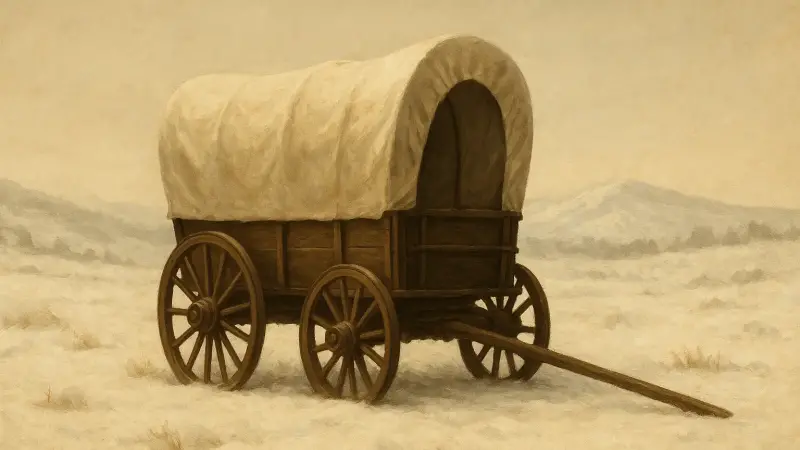
How does a wagon train get “stranded” in the first place, when the whole point is to keep moving? In 1846, the Donner Party reached the Sierra Nevada too late in the season and ran into early, heavy snow near Truckee Lake (now Donner Lake) in what is now California. Once the passes filled, the route behind them vanished too. Ahead was worse. The core mechanism was simple and brutal: timing plus terrain plus weather. When the mountain crossings shut down, a slow-moving group with animals and wagons could become stuck for months, even with food nearby on a map.
Why the timing went wrong
The group didn’t set out expecting to be trapped. Westward travel had a narrow calendar. You wanted to reach the Sierra before snow. Delays stacked up across the trail: river crossings, broken wagons, illness, lost animals, and disagreements over pacing. Then came a choice that mattered more than it looked at the time: taking the Hastings Cutoff, a touted shortcut that turned into a slower, rougher detour. It cost weeks. It also wore down teams and people before the mountains even began.
A detail people overlook is how compounding delays change decision-making long before disaster hits. When you’re behind schedule, every choice feels like it has to “win back” time. That pressure can make risky options seem reasonable. It also makes groups less patient with each other. The train wasn’t one mind. It was several families and smaller parties trying to stay aligned while managing their own resources.
What the Sierra does to wagons and animals
The Sierra Nevada isn’t just high. It’s a system of steep grades, narrow valleys, and passes that can flip from passable to sealed quickly. Wagons needed clearance, traction, and space to turn. Oxen and horses needed forage. Snow takes away all three at once. Once snow got deep enough, the wagons effectively became anchors. You couldn’t drag them forward. You couldn’t haul them back over terrain that was already hard without snow. Even walking becomes slow, and a slow party burns food faster than it can be replaced.
Winter also changes what “nearby” means. A distance that feels short on a dry trail can become days of exhausting travel in snowshoes, with cold nights and little fuel. Cutting firewood is work. Melting snow for water is work. Keeping a shelter from collapsing under accumulation is work. Those jobs eat calories, and calories were the one thing the party could not earn back once the landscape stopped producing grass and game.
How survival turned into a resource math problem
When the snow closed in, the Donner Party built makeshift cabins and shelters and tried to wait it out. Waiting sounds passive, but it forces constant choices: stay together or split, ration strictly or eat now and hope later, send a small group for help or keep everyone under one roof. Food stores weren’t evenly distributed, and neither was strength. Some people could hunt or chop. Others were children, elderly, or sick. That unevenness matters because a group under stress starts tracking fairness with new intensity.
As supplies ran down, the choices narrowed into things most people don’t think of as “decisions” at all. You can’t negotiate with hunger for long. Animals were eaten. Hides and bones could be boiled for scraps of nutrition. Starvation changes the body and the mind. It makes cold feel sharper. It slows thinking. It makes conflict more likely, even among relatives. In that state, “unimaginable choices” weren’t philosophical. They were tied to whether someone could stand, walk, or keep a fire going another night.
Rescue was possible, but it wasn’t a single event
Help didn’t arrive as one clean moment where everyone was saved. Rescue efforts came in waves, and each wave faced the same obstacle the emigrants faced: the Sierra in winter. A party might reach one camp and find people too weak to travel. Or find snow conditions that made moving children nearly impossible. Decisions continued even when rescuers were present, because extracting people from deep snow is slow and dangerous. Someone who could walk might be taken first. Someone who couldn’t might have to wait for the next attempt, if one could be mounted.
The story often gets flattened into a single horror detail. But the more unsettling reality is how ordinary the trap was at the beginning: a late season, a slower route than promised, and mountains that don’t care about plans. Once the passes closed, the situation kept forcing smaller, uglier choices, day after day, with no clean line between “before” and “after.”
Related reads
- How some fungi collapse their caps to launch spores like tiny cannons
- A cafe that serves drinks in jars mailed from other countries
- How a small favor can quickly change someone’s impression of you
- The town where every street sign is painted by a stranger overnight
- How microplastics hitch rides inside sea salt crystals
- How 17th-century Ottoman tulip mania turned gardens into a speculative market