
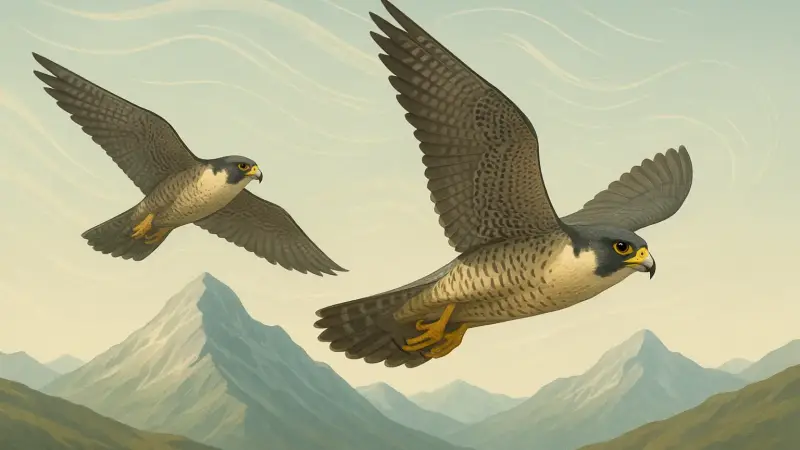
Watching a cliff and realizing the air isn’t still
People talk about peregrine falcons as if the speed is all muscle. But if you stand near a big drop-off, you notice something else first: the wind has shape. It pours over ridgelines, slides along faces of rock, and sometimes kicks up in sudden bands. This isn’t one single place or one famous “event.” You can see the same setup on sea cliffs in Wales, in the Rockies, and along Norway’s fjords. The core trick is simple. A peregrine uses mountain winds to position itself high, then turns that stored height into a steep, controlled dive while the airflow helps keep the body stable and the wings effective.
Ridge lift is an elevator the bird doesn’t have to flap for
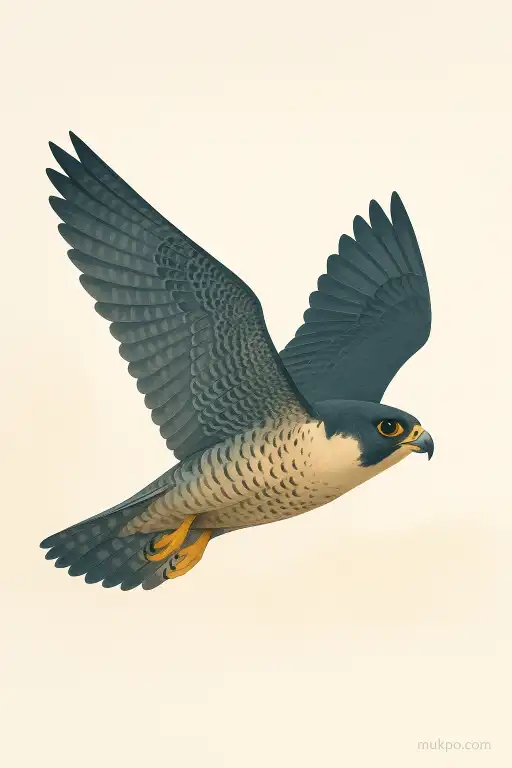
When wind hits a ridge or a cliff, part of it gets forced upward. That rising air is called orographic lift, and it can be strong enough to hold a bird in place or carry it higher with very little effort. A peregrine doesn’t need a thermal like a soaring hawk does. It can work these cleaner, faster “sheets” of lift that form right where the terrain makes the air climb. From an observer’s point of view, the bird can look like it’s hanging on an invisible rail, making small adjustments rather than flapping hard.
This is where the landscape matters. A rounded hill gives softer lift. A sharp ridge and a sheer face can produce a steep, narrow band of rising air. Wind speed and direction vary minute to minute, so the best “elevator” isn’t always in the same spot. Peregrines tend to quarter back and forth until they find the line where the updraft is smooth enough to climb without burning much energy.
They don’t just dive from high up, they dive from the right upwind spot
The dive that gets clocked at extreme speeds starts with positioning, not falling. After using lift to gain altitude, the falcon often shifts to the upwind side and waits for a clean run. Starting upwind matters because the air is usually less broken there, and the bird can choose a line that keeps it in the faster, more consistent flow spilling over the ridge. If the wind is crosswise, the falcon can also set up so the wind helps it correct drift without big wing movements.
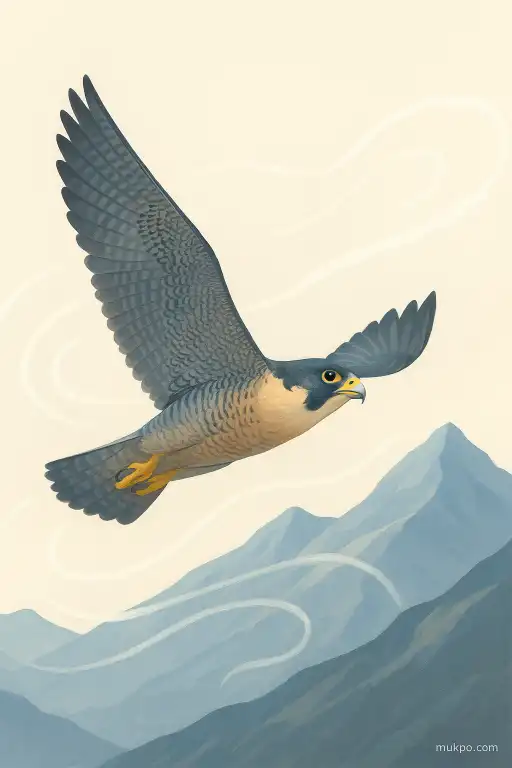
A concrete situation you can picture: a peregrine hunting along a mountain valley at the edge of a cliff band. The wind is coming straight up the slope. The bird climbs in that lift, then arcs out and pitches into a stoop that runs along the face rather than straight down the middle of the valley. It’s not only about gravity. It’s also about using terrain-shaped air so the dive stays stable and the approach angle to the prey stays predictable.
At high speed, stability is the hard part
People focus on the headline number for speed, but the overlooked detail is control. At those speeds, tiny disturbances matter. Mountain winds can be turbulent near rock, with rotor eddies and sudden shear where fast air slides over slower air. A peregrine reduces how much it has to “fight” the air by streamlining: wings partly tucked, tail acting like a small rudder, head kept steady so vision stays usable. It’s trying to keep the airflow attached and predictable over the body.
The bird also uses small, quick changes in wing and tail angle to manage compressibility effects and buffeting that get more noticeable as speed rises. That doesn’t mean the wind is always helping. If the air is too broken, the falcon may abandon the line, climb again, and reset. From the ground, that can look like hesitation, but it’s more like the bird is waiting for a workable “lane” of air.
Wind adds and subtracts speed depending on direction, and the falcon plans for that
A tailwind can make ground speed look spectacular, because the bird and the air mass are moving the same way. A headwind can do the opposite for ground speed while still giving the bird high airspeed, which is what matters for lift and control. When researchers and birders talk about record dives, it’s often unclear exactly how much wind contributed at that moment, because wind varies with height and along the face of the mountain. A falcon doesn’t need the wind to “push” it to go fast. It needs the wind to help it get high efficiently and to give it a clean, controllable path down.
That’s why the same species can hunt very differently in different places. On a calm day over flat ground, the setup may rely more on flapping climbs and shorter dives. Near a windy ridge, the bird can turn the landscape into part of the system: lift to climb, smooth flow to aim, and a steep drop to cash in altitude quickly. Then it’s all micro-adjustments—tiny shifts of wing and tail—while the air hisses past rock that looks solid but is shaping every second of the chase.
Related reads
- Why your handwriting shifts when you write in a hurry
- Why a sudden noise can still make your heart jump long after the danger is gone
- Why car tires squeal on hot asphalt from rubber chemistry
- How the Donner Party’s 1846 winter stranded a wagon train and forced unimaginable choices
- How some fungi collapse their caps to launch spores like tiny cannons
- A cafe that serves drinks in jars mailed from other countries