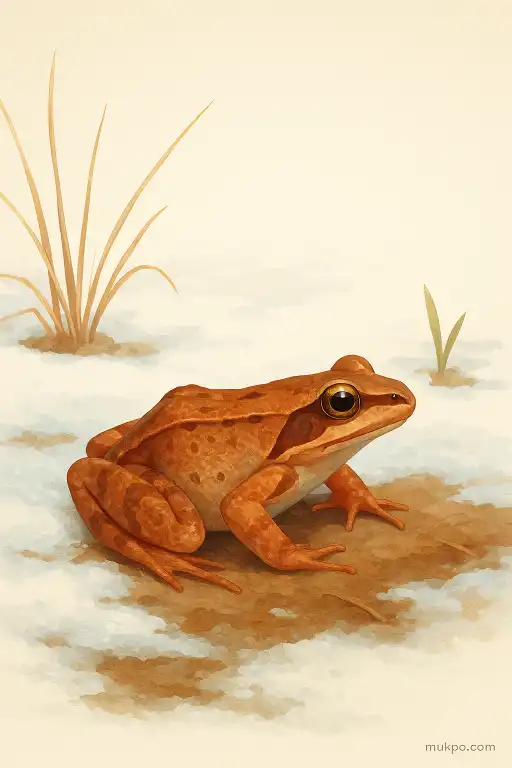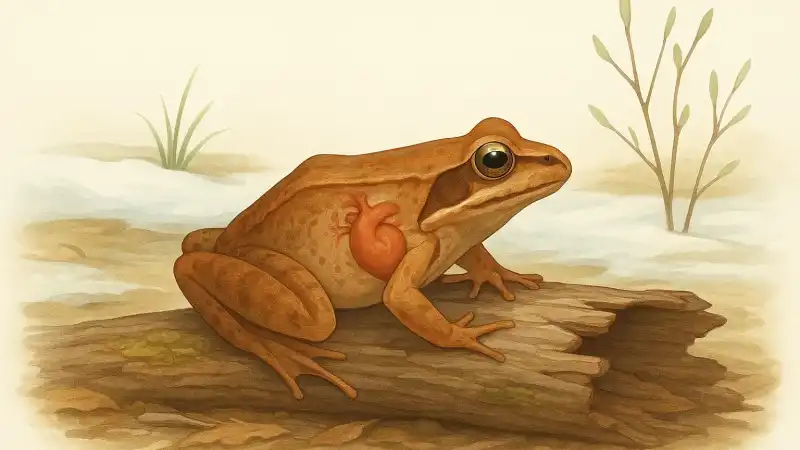
It sounds like a mistake when you first hear it. A frog can freeze solid over winter, stop breathing, and have no heartbeat, then start up again when the snow melts. This isn’t one single place or one famous incident. It’s a trait seen in wood frogs across cold parts of North America, including Alaska, northern Minnesota, and much of Canada. The core trick is controlled freezing. Ice forms in parts of the body where it won’t kill cells, while the frog floods its tissues with natural “antifreeze” chemicals that protect them until spring thaw brings everything back online.
Where it happens and when it starts
Wood frogs don’t ride out winter at the bottom of ponds like some other frogs. They often shelter in leaf litter, under logs, or in shallow soil where temperatures swing hard. That matters because they can’t avoid freezing. The process usually begins when temperatures drop below freezing and ice nucleates on the skin. It starts outside the cells and spreads inward, which is safer than ice forming inside cells.
There’s a situational detail people overlook here. The frog’s “hibernation” spot can be surprisingly exposed. A thin layer of leaves may be all that separates it from air temperatures that hit well below 0°C, especially in places like interior Alaska. That exposure is part of why their freeze-tolerance had to evolve into something so extreme.
How a heartbeat can stop without killing the frog
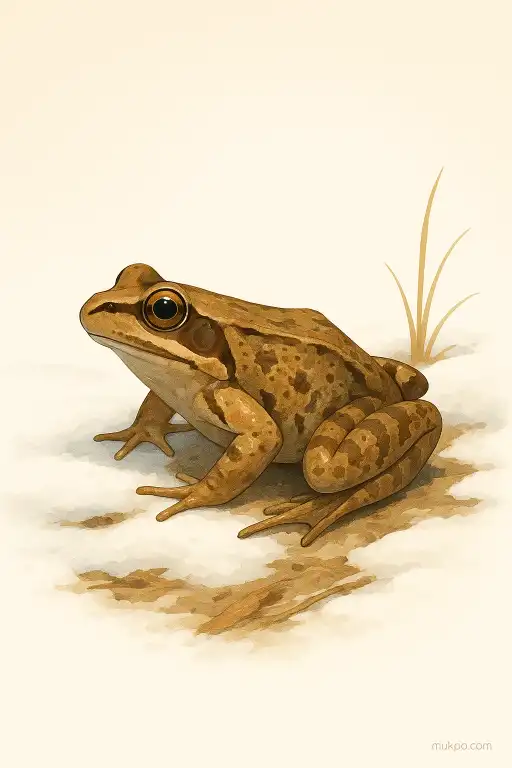
As the body freezes, circulation can’t keep going normally. The heart slows and then stops. Breathing stops too. The frog’s brain activity drops to extremely low levels. At that point the animal is running on stored energy and chemistry, not active oxygen delivery. It’s a controlled shutdown, not a sudden collapse.
What makes it survivable is that the freezing is managed in a specific way. Most of the ice forms in body cavities and spaces between cells. That pulls water out of cells by osmosis, which would normally shrink and damage them. Wood frogs counter this by rapidly loading cells with protective molecules so the cells don’t dehydrate beyond what they can handle.
The frog’s built-in “antifreeze” chemistry
When freezing starts, the wood frog’s liver breaks down glycogen and releases a surge of glucose into the blood. That glucose spreads through the body and enters cells, where it helps stabilize proteins and membranes and reduces the damage caused by dehydration and ice-related stress. Some populations also rely heavily on urea as a cryoprotectant. The mix can vary by region and conditions, so it isn’t identical in every wood frog.
This response is fast. It’s not a slow seasonal change over weeks. The frog can mobilize large amounts of glucose in a short window as temperatures drop. That speed is one reason the animal can survive sudden cold snaps in early fall or late spring, when freezing can catch it near the surface rather than safely buried.
What freezing does to tissues, and why thawing is risky
Freezing creates two big problems at once: lack of oxygen and physical stress on cells. During the frozen period, the frog’s tissues are essentially in a low-oxygen state, and waste products can build up. Then thawing brings a different hazard. As blood flow returns, tissues can face oxidative stress, similar in principle to what happens when oxygen rushes back after a period of low circulation.
Wood frogs handle this with a suite of protective adjustments that include changes in metabolism and defenses against cellular damage. The timing matters. A gradual thaw can be easier to survive than a rapid freeze-thaw cycle that repeats, which is one reason mid-winter warm spells followed by sharp refreezing can be especially challenging in some years.
How spring actually “restarts” a frozen animal
As temperatures rise, ice in the body melts and liquid water returns to tissues. The heart begins beating again, blood starts moving, and breathing resumes. This doesn’t mean the frog immediately hops away at full power. Warming and rehydration take time, and the body has to restore normal chemistry after weeks or months of suspended function.
One of the first things wood frogs often do after thawing is head for temporary pools to breed, sometimes while there’s still snow on the ground. That early timing is part of their life strategy. The same cold-hardiness that lets them survive winter also lets them take advantage of brief spring water that might dry up later.