
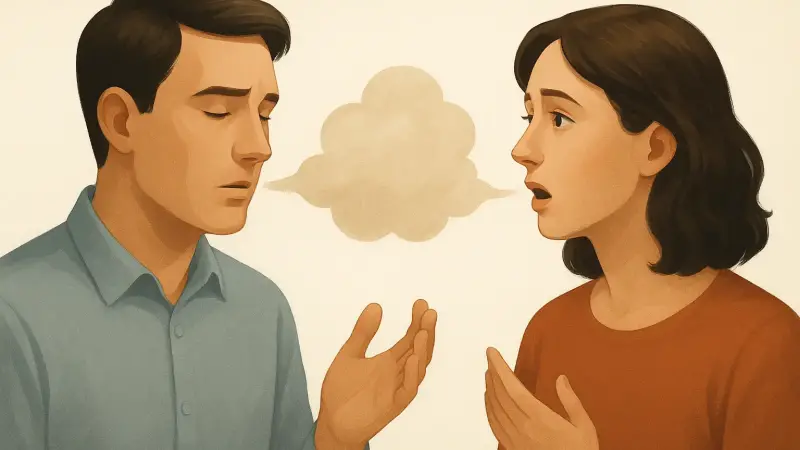
You’re talking to someone you’ve met a few times, and their name is right there—until it isn’t. It can happen at work, at a party, on a Zoom call, or even with a well-known name like “Keanu Reeves.” There isn’t one single place or event tied to it. People report it everywhere, from offices in the U.S. to classrooms in the U.K. to family gatherings in India. The core mechanism is ordinary: the brain has to pull a specific label out of memory on demand, and sometimes the retrieval system stalls even though the person and everything about them feels familiar.
Familiarity without the label
When a name disappears, recognition usually stays. Someone can still picture where they met the person, what project they worked on, even what the person’s voice sounds like. That’s because names are a special kind of information. They’re arbitrary tags, not descriptions. “Tall guy with glasses from accounting” connects to meaning. A name often doesn’t. So the brain can keep the person-file active while the tag fails to show up.
This is why the feeling is so specific. It’s not general forgetting. It’s a very narrow retrieval failure. People often notice they can list details around the person faster than they can say the name, which feels backwards because names are supposed to be the simplest part.
Why the search gets stuck
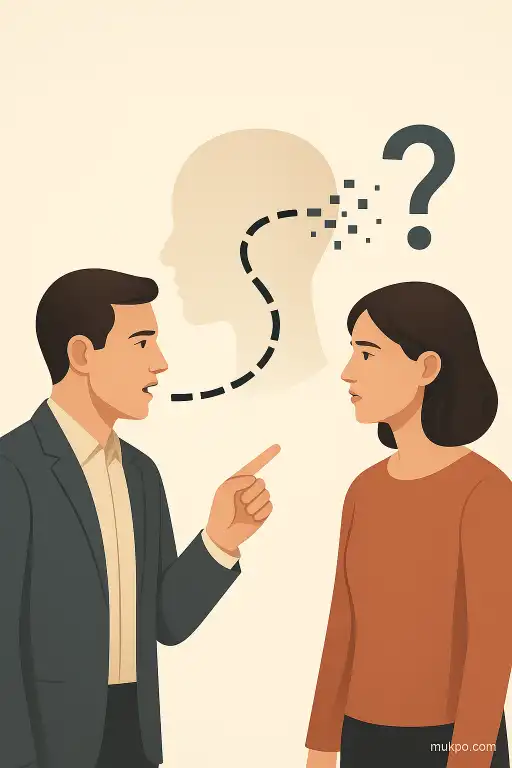
A name is usually stored as a sound pattern more than a meaning. To produce it, the brain has to move from the person you’re looking at to the correct word form, then to the exact sequence of sounds. If that chain breaks near the end, the result looks like a stall: the first letter might feel close, or the number of syllables, or a similar-sounding wrong name keeps popping up.
A small, overlooked detail is that the “wrong name” is often not random. It tends to be a strong competitor from the same category: another coworker, another neighbor, another actor from a similar era. The brain is searching by association, and the strongest nearby items keep winning the race, blocking the weaker one even when it’s the right answer.
Conversation makes it harder
Mid-conversation is the worst time to retrieve anything fragile. The brain is tracking the other person’s words, planning a reply, watching social cues, and timing turn-taking. Names often get requested at the exact moment attention is already split. Even a short pause can add pressure, and pressure reliably reduces access to things that require precise retrieval.
A concrete example shows how little it takes. Someone walks up at a conference and says hello. The face is familiar. The brain also has to decide whether this is “person from last year’s panel” or “person from the vendor booth,” and that split second of sorting can knock the name search off track. The information is there, but it’s competing with the need to stay socially smooth.
Why it pops back later
Names often return at the most annoying time: walking away, stepping into the car, loading the dishwasher. That delay fits how retrieval can work when the conscious search stops. When someone is forcing the answer, the same competitors keep cycling. When attention relaxes, the blocking eases and the correct sound pattern can surface.
This delayed return also happens because the brain keeps partial activation alive. Even if the name doesn’t arrive, the attempt warms up related pathways. Later, a small cue—seeing an email signature, hearing a similar name on a podcast, noticing the person’s badge—can be enough to complete the chain without effort.
Why some names vanish more than others
Not all names have the same footing in memory. Rare names, similar names, and names learned only once are easy to lose. So are names attached to people seen in a single context, like “gym-only acquaintances.” Repetition matters, but so does variety. A person encountered in multiple settings—email, meetings, a hallway chat—gets more retrieval routes than someone only seen in one narrow frame.
Small social details can also tip it. If someone was introduced while a drink order was being placed, or while the room was loud, the initial encoding can be thin. People tend to overlook how often name introductions happen during interruptions. Later, the brain is asked to produce a label that was never fully pinned down in the first place, and the gap only shows itself when the conversation suddenly demands it.
Related reads
- Why you sometimes freeze when a joke lands on you
- An old radio that plays broadcasts from distant towns at random
- What happens in your body in the seconds before you speak up
- Why scrolling social feeds makes you feel worn out
- How lichens turn bare rock into the first soil
- The shop window that arranges itself to tell a story at dusk