
A simple question people rarely ask
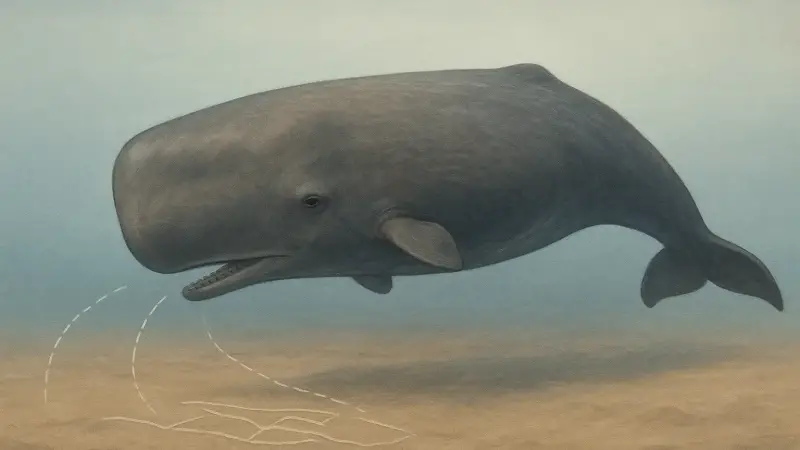
People know sperm whales make loud clicks to hunt squid in the dark. The odd part is that those same clicks can also outline the seafloor they’re swimming over. This isn’t tied to one single place, and it’s been explored in different oceans where sperm whales live, including the Azores in the North Atlantic and the Ligurian Sea in the Mediterranean. The basic mechanism is plain echolocation: a click goes out, bounces off something solid, and returns. But with sperm whales the “something” can be a slope, a canyon wall, or a flat seabed far below, and the timing pattern in the returning echoes can carry the shape.
What a click looks like to an instrument
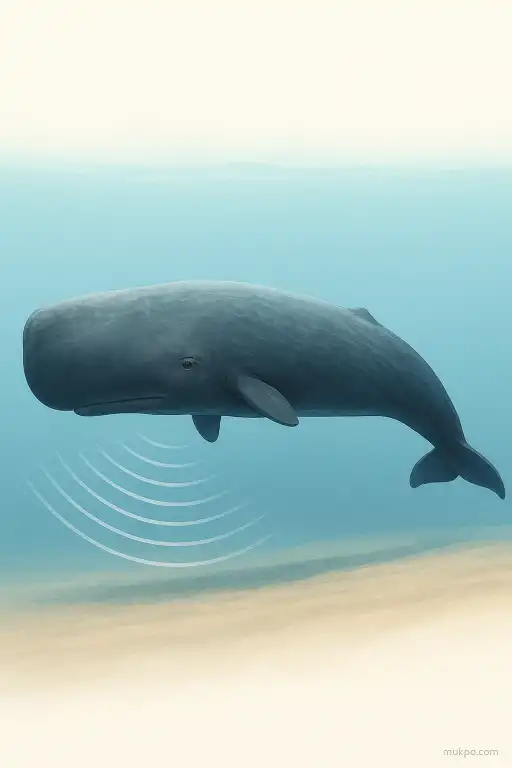
A sperm whale click is not one neat ping. It’s a sharp pulse with internal structure. Recordings often show multiple closely spaced arrivals because the sound reflects around inside the whale’s head before it even leaves the body. That matters because researchers and listening devices have to separate “parts of the click” from “echoes of the click.” It’s easy to mix them up if you only look at a simple waveform.
The overlooked detail is that the strongest energy is very directional. A sperm whale is like a moving spotlight of sound. If the whale is angled slightly away, a hydrophone might hear a weaker, smeared version of the click. That changes which echoes are detectable later, and it can make a smooth seafloor look “patchy” in the data when it isn’t.
How the seafloor gets into the recording
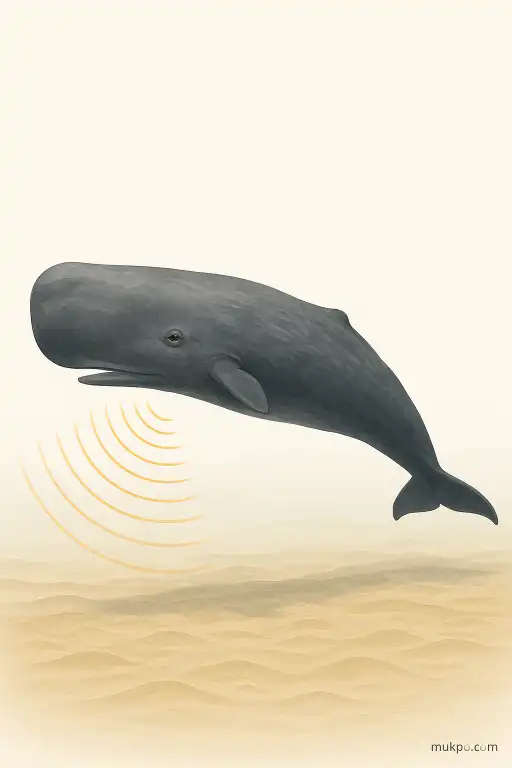
When a whale is clicking regularly, each click can produce a chain of returns. First come echoes from nearby targets, like prey or midwater layers. Later, if the depth and geometry line up, a faint echo arrives from the bottom. The key quantity is delay time: the longer the delay, the farther the reflecting surface is. If a whale dives and the delay shortens in a smooth way, that’s consistent with the whale approaching the seabed or a rising slope.
Topography enters when the bottom is not flat. A canyon wall off to one side can send back a return sooner than the deeper floor straight below. If a whale’s beam sweeps as it changes heading, the timing and strength of these late echoes can shift from click to click. Over many clicks, that creates a sketch of relative distances in different directions, even though the whale is not “trying” to map anything.
Turning click-and-echo into a map
To translate echoes into a seafloor outline, scientists need more than one recording point or more than one moment in time. A single hydrophone can measure arrival times, but it struggles with direction. Arrays help because they can estimate where the click came from and the angle the sound likely traveled. Tags attached to whales add another piece: depth, body orientation, and sometimes acceleration. With that, a late echo can be interpreted as “the bottom was probably this far away along this path,” not just “something reflected.”
One situational example that shows why this gets tricky: a whale clicks while descending along a slope. The bottom echo arrives sooner and sooner. At the same time, surface reflections can also show up as late arrivals, especially if the whale is not very deep yet. Sorting bottom from surface often comes down to timing consistency and geometry. Surface echoes tend to track the whale’s depth in a different way than bottom echoes do, but it’s not always clean, and it can vary with sea state and noise.
Limits that make the “sketch” imperfect
This kind of mapping is opportunistic. The whale is moving, the sound beam is narrow, and the ocean is loud. Ships add broadband noise. So do storms. Even the whale’s own behavior matters: during intense hunting, click timing can change, and the pattern of echoes becomes harder to line up across many clicks.
Another constraint is that seafloor type changes the return. Soft sediments can absorb sound and give a weak echo. Rock and steep walls can give sharp, strong returns. That means an “absent” bottom echo does not always mean deep water. It can also mean the whale’s beam missed the bottom, or the bottom was acoustically dull from that angle. The result is less like a finished chart and more like partial outlines that become clearer only when enough clicks, angles, and positions happen to line up.
Related reads
- How hammerhead sharks use a wide head to scan for prey
- How comet ice turns sunlight into streaming jets
- The morning mind fog that caffeine can’t shake
- Why crowded silence can feel louder than noise
- Why lunar dust clings to boots and instruments
- The island that outlawed high heels to protect marble floors