
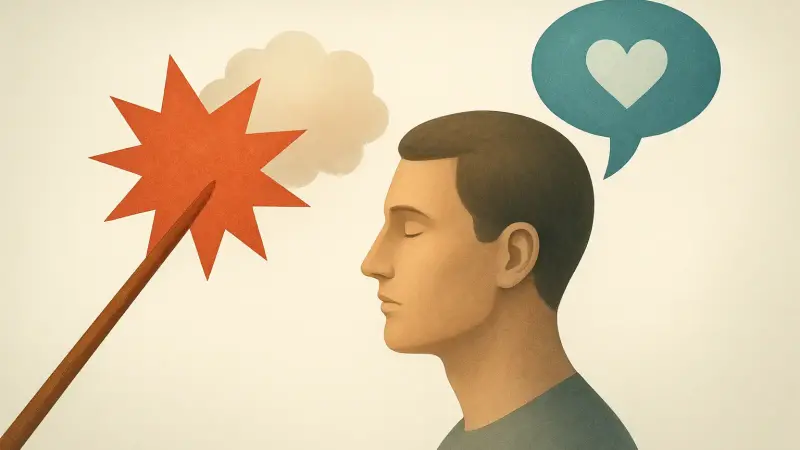
That one line that won’t leave
This isn’t one single event tied to one place. It’s a pattern people notice in offices, families, and online spaces everywhere—New York, Seoul, Nairobi, anywhere people talk. A coworker says, “Good job,” and it slides off. Later, one offhand jab—“You’re not really leadership material”—plays back for days. The core mechanism is simple: the brain treats potential social threat as urgent. It tags it for extra attention and stronger storage. Praise can feel nice, but it rarely carries the same “something could go wrong” signal.
Negativity gets priority because it might matter for survival
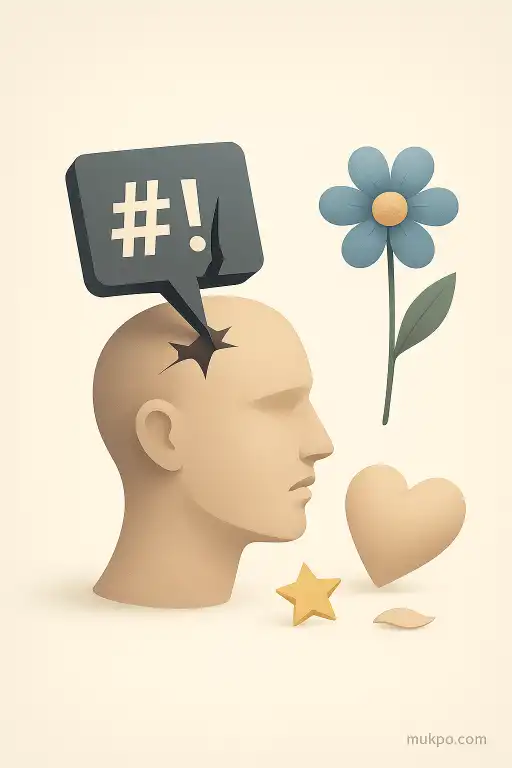
Humans are built with a negativity bias. Negative information grabs attention faster and holds it longer than neutral or positive information. Social insults land in that system because they can imply risk: loss of status, exclusion, conflict, or rejection. Even when the stakes are low, the nervous system doesn’t always calibrate perfectly. It reacts first, evaluates later.
That priority shows up in the body. A cutting comment can trigger stress responses that sharpen focus and narrow attention. That “locked in” state makes the moment feel important. The brain is more likely to store it as something to revisit, partly so it can predict and prevent a repeat.
Insults have clearer meaning than most compliments
An insult often points at a specific flaw or failure. “You’re careless” or “You always make it about you” is concrete enough to latch onto, even if it’s unfair. Compliments are frequently vague. “Nice work” can mean anything from genuine admiration to polite filler. When meaning is ambiguous, the brain has less to encode.
A detail people overlook is how much memory depends on context cues. An insult is usually tied to a sharp moment: a tone shift, a pause, other people watching, a sudden quiet. Those surrounding cues act like hooks. Compliments are often delivered while multitasking—walking past a desk, ending a meeting, scrolling—so there are fewer distinct hooks to hang the memory on.
Repetition happens inside the mind, not just in the room
Insults tend to be replayed. Not because someone enjoys it, but because the mind keeps checking the information. Did that person mean it? Is it true? Will others think the same? Each replay is another round of rehearsal, and rehearsal strengthens recall. A compliment is less likely to be “tested” in the same way, so it gets fewer repeats.
There’s also a social problem-solving loop. If a remark threatens belonging, the brain treats it like unfinished business. It keeps the file open. Praise often feels complete as soon as it’s received. No loose ends, no urgent questions, so the file closes quickly.
Compliments can fade because they conflict with self-image
People don’t store all information equally. Memory is shaped by what fits existing beliefs. If someone already doubts their competence, a compliment can bounce off because it doesn’t match the internal story. The mind may discount it—“They’re just being nice”—and discounted information is encoded weakly.
Insults, unfortunately, often match common insecurities. Even a small overlap can make the comment feel “diagnostic,” like it reveals a truth. That sense of relevance boosts memory. It’s not that insults are more accurate. It’s that they feel more usable for prediction, and the brain likes usable information.
Why a single insult can outweigh ten nice moments
Social life runs on error detection. One negative interaction can signal a change in how safe or stable a relationship is, so it gets weighted heavily. Compliments usually confirm what’s already hoped for—that things are fine—so they don’t demand the same scrutiny. A supervisor saying “Good presentation” rarely changes the map of the workplace. A supervisor saying “Don’t embarrass us again” can.
The imbalance also comes from how people tell stories to themselves. Negative remarks are easier to place into a cause-and-effect narrative: “They said X, so maybe Y is true, and then Z might happen.” Compliments often stop at the surface. They feel pleasant, but they don’t automatically generate a chain of implications, so they leave less behind.
Related reads
- How a single glance of eye contact can change a conversation
- The bar where tips were paid in rare sea glass found at low tide
- Why a stranger’s smile makes you lower your guard
- How sperm whale clicks sketch the seafloor
- How hammerhead sharks use a wide head to scan for prey
- How comet ice turns sunlight into streaming jets