

Most people learn that fiber “has no calories,” and then get confused when they hear that it can still feed you. This isn’t one single event in one place. It’s a basic gut process that shows up in many populations, from Japan to the US to rural Burkina Faso, and the details vary with diet and microbes. The core mechanism is simple: human enzymes can’t break many fibers down into sugars we absorb, but gut microbes can. They ferment those fibers into small molecules your colon can take up. A concrete example is inulin (a common “prebiotic” fiber) added to yogurts or cereal bars. The energy doesn’t come from chewing it into glucose. It comes later, after microbes work on it.
Fiber arrives mostly intact
Dietary fiber is a broad category. It includes things like cellulose in plant cell walls, beta-glucans in oats, pectins in fruit, resistant starch in cooled potatoes or rice, and added fibers such as inulin and psyllium. What they share is that they resist digestion in the small intestine. Human digestive enzymes are good at starch and table sugar, but they generally can’t cut the particular chemical bonds in many fibers.
So a lot of fiber moves through the stomach and small intestine without being “used” in the usual way. That’s the overlooked detail: the small intestine is where most calories are normally absorbed, but fiber largely skips that route. It becomes a delivery system to the large intestine, where different biology takes over.
Microbes do the cutting and trading
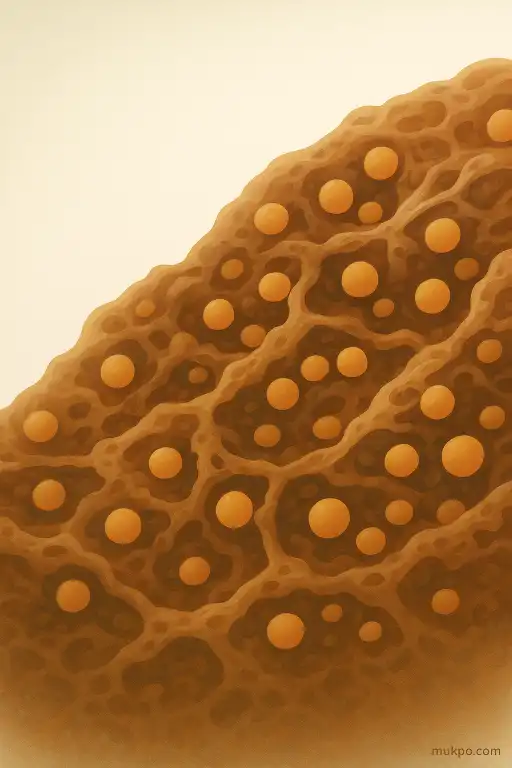
The colon is packed with microbes that carry enzymes humans don’t have. Many bacteria specialize in slicing big carbohydrates into smaller fragments, sometimes starting outside their own cell. Those fragments get pulled in and processed further. Different species are better at different fibers, so the “ability to use fiber” is often a community effort rather than one microbe doing everything.
They also trade. One species may break down a complex fiber into smaller sugars and acids, and another species consumes those products. This cross-feeding is why the end result can depend on who’s living there already. Two people can eat the same fiber and produce different mixes of fermentation products, because their microbial toolkits aren’t identical.
Fermentation turns fiber into absorbable fuel
The main energy-carrying products of fiber fermentation are short-chain fatty acids: acetate, propionate, and butyrate. These are small enough to be absorbed through the colon lining. They can be used locally by gut cells or sent into the bloodstream. Butyrate is a key fuel for colon cells, while acetate and propionate are more likely to circulate to the liver and other tissues.
This is where fiber’s “hidden calories” come from. It isn’t the same energy yield as fully digestible starch, and it varies by fiber type and by microbiome. Some fibers are highly fermentable and produce more short-chain fatty acids. Others, like parts of cellulose, can be much less fermentable and pass out mostly unchanged.
A real-life timeline inside the gut
Consider a bowl of oatmeal. The digestible starch portion is handled early, with glucose absorption happening in the small intestine. The beta-glucans and other resistant carbohydrates tend to reach the colon later. Fermentation happens there over hours, not minutes. That slower schedule is easy to miss because it doesn’t feel like anything dramatic, but it changes when and where energy is harvested from the same meal.
Another situational example is a snack bar with added inulin. Inulin can be fermented quickly by certain microbes, which can increase gas production for some people. That gas is a byproduct of fermentation, happening alongside short-chain fatty acid production. The presence or absence of those symptoms can reflect microbial differences, not just “sensitivity” in a vague sense.
What gets extracted depends on the ecosystem
Fiber doesn’t behave like a single nutrient. The energy extracted depends on the type of fiber, how it’s packaged in food, and the microbes present. Processing matters because it changes access. Finely milled grains expose more surface area than intact kernels. Cook-and-cool cycles can raise resistant starch. Even the plant cell wall structure can limit how much microbes can reach.
The ecosystem matters too. Antibiotics, recent diet patterns, age, and illness can all shift which microbes are available to do the work. That’s why studies comparing people in different countries or eating different traditional diets often find different fermentation patterns. The same general mechanism is there, but the output—how much acetate versus butyrate, and how much total energy—can vary quite a bit from person to person.
Related reads
- Why you blush before you speak even when no one heard you
- Why insults stick in memory but compliments fade
- How a single glance of eye contact can change a conversation
- The bar where tips were paid in rare sea glass found at low tide
- Why a stranger’s smile makes you lower your guard
- How sperm whale clicks sketch the seafloor